Estonia is the country that exists most completely on its own terms. A Baltic nation of 1.3 million people — smaller than Switzerland — that was occupied for 50 years by the Soviet Union, declared independence in 1991, and responded to its freedom by building the world’s most digitally advanced government, electing a startup founder as prime minister, covering 50% of its land in forest, designating its bog-walking trails as national recreation infrastructure, inscribing its Song Festival tradition on UNESCO’s Intangible Cultural Heritage list, and maintaining the most perfectly preserved medieval city centre in Northern Europe.
Estonia is also, secretly, one of the most naturally beautiful countries on the continent. The archipelago of 2,222 islands in the western Baltic holds some of the most undisturbed landscapes in Europe: juniper meadows, ancient windmills, meteor craters, and lighthouses at the ends of roads that end in the sea. The forests are dense and silent and full of elk. The bogs — the raba, the sphagnum moss plateaux that cover vast stretches of the country — are one of the great walking landscapes of the north. And the summer nights, when the light barely leaves the sky from June to August, produce a quality of evening that you cannot experience anywhere else in Europe.
This guide covers 101 things to do across Estonia — from Tallinn’s medieval towers to the islands of Saaremaa and Hiiumaa, the university city of Tartu, the Soviet border town of Narva, and the places that most visitors never reach.
Tallinn: The Medieval Digital Capital
Old Town (Vanalinn) — UNESCO World Heritage Site
- Toompea Castle & Riigikogu (Parliament Hill) — The limestone castle on the Toompea hill that has housed Estonia’s rulers for 800 years — from Danish knights to Swedish governors to Tsarist governors to Soviet occupiers to the elected Riigikogu (parliament) that meets there today. The Hermann Tower above the castle flies the blue-black-white Estonian flag that was banned for 50 years under Soviet rule and raised again on the night of 24 February 1989 — before independence was formally declared — by a group of Estonians who could not wait. The castle interior is not publicly accessible, but the hill, the courtyard, and the view from the tower steps are free.
- Tallinn Old Town Walking Tour — The best-preserved medieval city in Northern Europe: the 13th-century city walls (still 80% intact), the Town Hall Square (Raekoja plats) with the Gothic Town Hall of 1404 and the Town Hall Pharmacy (the oldest continuously operating pharmacy in Europe, since 1422), the Dominican Monastery ruins, the Great Guild Hall (now the Estonian History Museum), and the narrow lanes of the lower town that have changed almost nothing since the Hanseatic merchants built them. The entire UNESCO-listed area is 1.8 square kilometres and walkable in an hour; thoroughly understanding it requires considerably longer.
- Tallinn Town Hall & Tower — The Gothic Town Hall on the main square: the only surviving Gothic town hall in Northern Europe, with a tower open to visitors in summer for the finest view of the Old Town rooftops, the Toompea cliff, and the copper church spires. The Vana Toomas (Old Thomas) weathervane on the tower has been watching over Tallinn since 1530.
- Alexander Nevsky Cathedral, Toompea — The Russian Orthodox cathedral built by the Tsarist government in 1900, deliberately positioned to dominate the view from the lower town and assert Russian imperial authority: a bulbous-domed confection of onion towers and mosaic decoration that is the most visually dramatic building on Toompea hill. Contested in its history, beautiful in its detail.
- Toompea Viewpoints: Kohtuotsa & Patkuli — The two viewing platforms on the eastern and northern edges of Toompea hill give the finest panoramas of Tallinn’s lower city and the Baltic Sea beyond: Kohtuotsa (the more visited, facing the Old Town rooftops and spires) and Patkuli (the steeper and more dramatic, reached by a staircase down the limestone cliff, with the harbour and the towers below).
- St Olaf’s Church Tower (Oleviste Kirik) — The 159-metre church tower that was the tallest building in the world from 1549 to 1625 (and for much of the time between): the climb to the observation platform rewards with the finest panoramic view of Tallinn, the harbour, and the Gulf of Finland. The tower was used as a KGB surveillance post during the Soviet era; it now functions as it did in the Middle Ages: a landmark visible from the sea.
- Church of the Holy Spirit (Pühavaimu Kirik) — The most beautiful church in Tallinn: a 14th-century Gothic church on the lower town, with the oldest surviving clock in Tallinn (1684) on its exterior, the original carved wooden altarpiece (1483) attributed to Bernt Notke (who also carved the Dance of Death in Lübeck), and an interior of whitewashed walls and medieval atmosphere that is the finest 30 minutes of religious architecture in the city.
- Tallinn Town Hall Square (Raekoja plats) — The cobbled main square of the lower Old Town, with the Town Hall, the Town Hall Pharmacy, the outdoor cafés, and the Christmas Market (December, consistently voted among the finest in Europe) making it the social centre of the city year-round. The square at midnight in summer, under the pale northern light, is Tallinn at its most quietly extraordinary.
- Three Sisters Houses & the Great Coastal Gate — The three medieval merchant houses on Pikk Street (the former trading spine of the Hanseatic city), preserved as a hotel, facing the Great Coastal Gate and the Fat Margaret tower — the round artillery tower that now houses the Estonian Maritime Museum. The ensemble of tower, gate, and three identical gable-fronted houses is the finest single architectural composition in the lower town.
- Estonian Open Air Museum (Vabaõhumuuseum), Rocca al Mare — Four kilometres west of the Old Town, on the sea: 12 farmsteads, a windmill, a chapel, a fire station, and a village inn, relocated from across Estonia and reassembled on a wooded headland above the Bay of Tallinn. The finest outdoor heritage museum in the Baltic states, with the Kolu Tavern serving traditional Estonian food.
Tallinn Beyond the Old Town
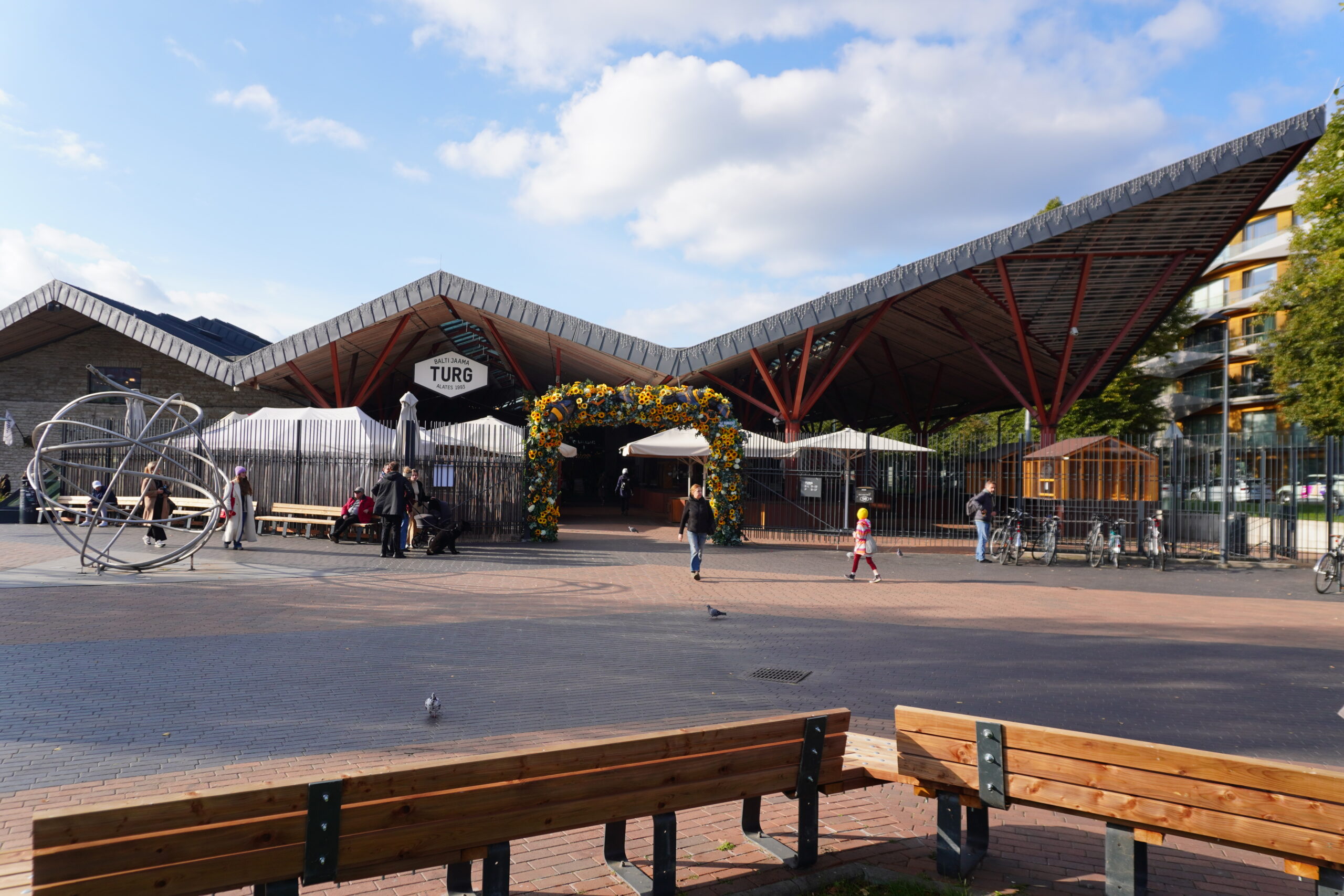
- Kalamaja Creative Quarter — The most interesting neighbourhood in Tallinn outside the Old Town: a grid of colourful wooden houses (Estonian vernacular architecture of the early 20th century), Telliskivi Creative City (a former factory complex converted into cafés, art studios, flea markets, and the finest live music venue in Tallinn), and the Balti Jaam (Baltic Station) market, where Estonian food producers sell directly from their farms on weekends. The neighbourhood of 30 Seconds to Mars, cafés serving Estonian craft beer and rye bread, and the emerging creative class of the Baltic world.
- Telliskivi Creative City — The repurposed factory complex in Kalamaja: galleries, studios, the finest street food in Tallinn (the Balti Jaam Street Food market), the Fotografiska Tallinn (the Baltic outpost of the Stockholm photography museum), and the Kultuurikatel (Culture Cauldron) — a former power plant now hosting major cultural events. The most concentrated creative district in Estonia.
- Seaplane Harbour (Lennusadam) — The finest museum in Tallinn: a hydroplane hangar of concrete and steel, built in 1917 with a system of intersecting vaulted domes (the engineering masterpiece of its era), now housing the Estonian Maritime Museum’s collection of historic ships, submarines, and aircraft. The Lembit submarine (a 1930s British-built vessel used by both the Estonian and Soviet navies), the icebreaker Suur Tõll, and the Marat (a 1940s Soviet patrol boat) are the centrepieces. The building alone is worth the ticket.
- KGB Museum, Hotel Viru — The Hotel Viru was the only hotel in Soviet Tallinn permitted to house foreign visitors — and was consequently maintained as a comprehensive surveillance facility by the KGB. The museum on the 23rd floor (a floor whose existence was not acknowledged on any hotel directory) preserves the original monitoring equipment, the agent communications protocols, and the extraordinary story of a building that was simultaneously a tourist facility and a state security installation. The guided tour is the finest Soviet-era experience in Tallinn.
- Fotografiska Tallinn, Telliskivi — The Baltic outpost of the Stockholm photography institution, in a beautifully converted brick building in Telliskivi Creative City: a programme of world-class photography exhibitions ranging from documentary to fine art, with the finest photography museum shop in the Baltics and a rooftop bar with views of the Kalamaja wooden houses.
- KUMU Art Museum, Kadriorg — The finest art museum in the Baltics: a building of limestone, glass, and copper on the Lasnamäe plateau, with the most comprehensive collection of Estonian art from the 18th century to the present, and the finest temporary exhibition programme of any institution in Estonia. The permanent collection — the 19th-century school of Estonian Romantic painting, the avantgarde of the 1920s, and the dissident art of the Soviet era — tells the complete story of Estonian visual culture.
- Kadriorg Palace & Park — The Baroque palace built by Peter the Great for Catherine I in 1718, surrounded by formal gardens and a park of mature trees: the most elegant building in Tallinn outside the Old Town, now housing the foreign art collection of the Estonian Art Museum. The Japanese Garden, the Swan Lake, and the Rose Garden around the palace are the finest palace gardens in the Baltic states.
- Pirita Beach & the Olympic Sailing Centre — The sandy beach north of Tallinn, with the ruins of the Pirita Convent (1407, burned by Ivan the Terrible in 1577), the Olympic Sailing Centre built for the 1980 Moscow Olympics, and the finest sea swimming accessible from the capital. The Tallinn TV Tower (314 metres, open to visitors) is 10 minutes north, with the finest panoramic view in the greater Tallinn area.
Tartu: The University City
- Tartu Old Town & the University Quarter — Estonia’s second city and its intellectual capital: the University of Tartu (founded 1632), the most important institution in Estonian cultural history — the university where the Estonian language was standardised, where the first Estonian newspapers appeared, and where the national identity was forged in the 19th century. The main building of Neoclassical grandeur, the Toome Hill park, the Kissing Students fountain, and the compact old town with its cafés and bookshops constitute the finest university town experience in the Baltic states.
- Estonian National Museum (Eesti Rahva Muuseum), Tartu — The finest ethnographic museum in the Baltic states, in a spectacular new building opened in 2016 on the site of the former Soviet airstrip: the building’s 335-metre roof traces the line of the old runway, acknowledging history rather than erasing it. The permanent collection — Estonian folk costume, traditional crafts, song culture, and the complete story of the Finno-Ugric peoples — is the most comprehensive single introduction to Estonian cultural identity.
- Tartu Cathedral Ruins & Toome Hill — The ruins of the 13th-century Gothic cathedral on Toome Hill, now partially housing the Natural History Museum, with the Anglicised ruins of the nave (roofless, with the forest growing through the floor) providing the most atmospherically extraordinary setting in Tartu. The Angel’s Bridge and Devil’s Bridge at opposite ends of the hill connect the campus in a layout that reflects the university town’s 18th-century self-confidence.
- Tartu Art Museum (TARTMUS) — The finest dedicated visual art museum in Southern Estonia: the permanent collection of Estonian painting and decorative arts, and a consistently excellent temporary exhibition programme, in a Neoclassical townhouse on Raekoja Plats facing Tartu’s Town Hall. The museum shop has the finest selection of Estonian art books and prints available outside Tallinn.
- AHHAA Science Centre, Tartu — One of the finest interactive science museums in the Baltic states: a hands-on science and technology museum in the Tartu City Centre shopping complex, with exhibits on physics, biology, astronomy, and the surprisingly engaging Estonian science culture. The planetarium inside is the finest in Estonia.
- KGB Cells Museum, Tartu — The cells of the Tartu KGB headquarters, used for interrogation and detention during the Soviet occupation: the preserved cells, the isolation chambers, and the exhibition on the deportation of Estonians to Siberia (over 10,000 were deported in a single night in June 1941) constitute the most immediate and the most harrowing Soviet-era history experience in southern Estonia.
- Tartu Town Hall Square & Kissing Students Fountain — The elegant Neoclassical Town Hall (1789) with the Kissing Students fountain at its base — a bronze sculpture of two embracing students under a shared umbrella, reflecting the city’s eternally student-centred identity — and the surrounding street of university buildings, bookshops, and cafés. The finest town hall square in Estonia outside Tallinn.
Western Islands: Saaremaa, Muhu & Hiiumaa
Saaremaa
- Kuressaare Episcopal Castle — The finest medieval castle in Estonia: a 14th-century Bishop’s Castle on the southern coast of Saaremaa, with a remarkably complete exterior — the towers, the moat, the drawbridge, and the convent courtyard — and a detailed museum of Saaremaa’s history inside. The Saaremaa Opera Festival (July) uses the castle courtyard as its stage: one of the finest alfresco opera experiences in the Baltic states.
- Kaali Meteorite Crater — A 110-metre-wide crater lake formed by a meteorite impact approximately 3,500–4,000 years ago, ringed by a raised crater wall and the remains of the fortification wall built around it by Bronze Age peoples who considered it sacred. The most extraordinary geological feature in Estonia and the largest of the eight Estonian meteorite craters. Free to visit; deeply strange.
- Angla Windmill Hill — Five traditional post windmills standing on a hill above the Angla village: the finest surviving windmill ensemble in the Baltic states, with the largest wooden post windmills in Estonia. The view from the hill over the surrounding juniper meadows and the sea beyond is exceptional.
- Saaremaa Spa Hotels & Mud Treatments — Saaremaa’s thermal mud (bluish-grey sea mud from the shallow coastal waters, used medicinally since the 19th century) is the foundation of the island’s spa culture: the Georg Ots Spa Hotel and the Saaremaa Spa Hotel offer the traditional Saaremaa mud bath alongside contemporary wellness programmes. The combination of clean island air, forest, and genuine therapeutic mud is entirely specific to this island.
- Panga Cliff — The highest coastal cliff in Estonia (22 metres) on the north coast of Saaremaa: a vertical limestone escarpment above the Baltic Sea, with the finest coastal panorama on the island. The cliff’s edge is unguarded; the view of the sea and the dramatic geology below is one of the finest natural viewpoints in the Baltic states.
- Sõrve Peninsula — The narrow peninsula extending south from Saaremaa into the sea, with the Sõrve Lighthouse (the most photographed lighthouse in Estonia), the German and Soviet war cemeteries from the battles of 1941 and 1944, and the landscape at the very southern tip where the peninsula narrows to a few hundred metres between two seas. The drive south from Kuressaare to the tip is the finest coastal road on the island.
- Vilsandi National Park — The westernmost national park in Estonia, encompassing the Vilsandi Island archipelago off Saaremaa’s west coast: grey seals (the largest seal colony in the Baltic Sea), breeding eider ducks, and over 250 bird species in a protected marine environment accessible by boat from Lümanda. The most biodiverse coastal landscape in Estonia.
Muhu & Hiiumaa
- Koguva Village, Muhu — The most intact traditional Estonian village in the country: a 19th-century fishing and farming village of stone-walled yards, thatched-roof farmhouses, and juniper hedges on the western shore of Muhu, preserved as a museum village with several houses open to visitors. The village atmosphere — the silence, the smell of juniper, the views across the sea to Saaremaa — is the finest encounter with pre-industrial Estonian rural life.
- Muhu Island Crossing — The 2.5-kilometre causeway connecting the Estonian mainland to Muhu Island, and the 5-kilometre road across Muhu to the bridge to Saaremaa, is one of the finest approaches in Estonia: the sea on both sides, the juniper meadows, and the first view of Saaremaa’s coast produce the specific quality of island arrival that defines the western Estonian islands.
- Kõpu Lighthouse, Hiiumaa — One of the oldest lighthouses in the world still in operation (first lit in 1531, rebuilt repeatedly): a massive limestone structure on the highest point of Hiiumaa island, with the finest view of the Hiiumaa forests, the Baltic Sea, and the Estonian islands stretching to the horizon. The interior tour includes the original lantern mechanism; the exterior view from the base is free.
- Hiiumaa Juniper Meadows & Tahkuna Peninsula — Hiiumaa is the quietest and most ecologically intact of Estonia’s large islands: the juniper-meadow landscapes of the Kõpu Peninsula, the Tahkuna Lighthouse (where the evacuation of Hiiumaa residents in 1941 was coordinated, with a memorial bell to those who drowned when Soviet bombers attacked the evacuation ships), and the walking trails of the island’s northern tip. The most peaceful destination in Estonia.
- Kärdla Town & Hiiumaa’s Creative Culture — The small capital of Hiiumaa, with the Viscosa Cultural Factory (a former rayon textile plant converted into an arts centre), the Kärdla Market (the finest local food market on the island), and a community of artists and creatives who have made Hiiumaa one of the most culturally active small communities in Estonia.
Nature: Bogs, Forests & the Estonian Landscape
- Soomaa National Park & Bog Walking — The “land of bogs” national park in western Estonia, with the finest bog walking trails in the country: the Riisa Bog (a 6-kilometre boardwalk circuit through open sphagnum bog), the Kuresoo Bog (the largest raised bog in Estonia), and the “fifth season” flooding phenomenon, when the entire park’s forest and meadow network floods to 1–2 metres in spring and can be navigated only by boat or canoe. The most distinctly Estonian natural experience available.
- Lahemaa National Park — The first national park established in the Soviet Union (1971), on the northern coast of Estonia: the limestone cliffs and seaside manor houses of the Bay of Lahemaa, the ancient erratic boulders deposited by retreating glaciers, the Kasmu fishing village (the “Captain’s Village,” with the finest concentration of sea captains’ houses in Estonia), and the bog boardwalk trails of the interior. An hour from Tallinn; the finest single day in Estonian nature.
- Bog Walk & Swimming at Endla or Viru Bog — The Viru Bog in Lahemaa National Park (the most accessible bog in Estonia, 40 minutes from Tallinn) and the Endla Nature Reserve in central Estonia offer the finest bog-walking experiences in the country: a wooden boardwalk across the open sphagnum plateau, with the extraordinary visual horizon of the bog, the dwarf pines, and the sky. Swimming in a natural bog pool (the water is warm, brown, and extraordinarily buoyant) is the most distinctive summer activity in Estonia.
- Alam-Pedja Nature Reserve — The largest contiguous wilderness area in the Baltic states: a floodplain forest, bog, and river landscape in the centre of Estonia, with white-tailed eagles, greater spotted eagles, and black storks. Accessible by guided tours from Tartu; the finest birdwatching in southern Estonia.
- Matsalu National Park & Migratory Birds — The most important bird reserve in the Baltic states: a wetland of reed beds, coastal meadows, and shallow sea bays on the western coast, where up to 2.5 million birds stop during spring and autumn migration. The crane gathering in September (200,000+ cranes assembling before their southward migration) is the finest wildlife spectacle in Estonia.
- Emajõgi River Canoeing, Tartu to Laeva — The Emajõgi (Mother River) connects Lake Võrtsjärv to Lake Peipus through the landscape of southern Estonia: a slow, wide river of forest banks, water lilies, and beaver lodges. The three-day canoe route from Tartu to the Peipus shore is the finest multi-day river journey in Estonia.
- Lake Peipus & the Old Believers’ Villages — The enormous freshwater lake on the Russian border — the fifth-largest in Europe — is fringed on the Estonian side by fishing villages, the onion-domed churches of the Old Believer Russian Orthodox community (who fled Peter the Great’s religious reforms in the 17th century and have maintained their traditions here ever since), and the beach resorts of the western shore. The smoked fish market at the Old Believers’ village of Kolkja is the finest food experience in eastern Estonia.
- Taevaskoja Sandstone Cliffs, Põlva County — The most dramatic inland geological formation in Estonia: red and yellow sandstone cliffs rising from the Ahja River in the southeastern forests, with cave chambers, spring-fed streams, and ancient carvings on the cliff faces. The canoe route along the Ahja River below the cliffs is the finest short nature experience in southern Estonia.
- Otepää Winter Sports Resort & Summer Trails — The “Estonian Alps” (the rolling hills of Otepää, Estonia’s highest point at 318 metres) are the country’s winter sports centre: cross-country skiing, biathlon, and ski jumping. In summer the same hills offer mountain biking, swimming in the peat-brown lakes, and the excellent Pühajärv (Holy Lake) resort. The Estonian flag was consecrated here in 1884; the Otepää church graveyard contains the stone of the consecration.
Eastern Estonia: Narva & the Russian Border
- Narva Castle & the River Border — The most dramatic border in Europe: the 14th-century Narva Castle on the Estonian bank and the 15th-century Ivangorod Fortress on the Russian bank face each other across a 60-metre stretch of the Narva River — a symbolic confrontation of NATO and Russia visible from the castle ramparts. The castle museum tells the full story of Narva’s contested history; the view from the Hermann Tower is the most historically charged view in Estonia.
- Narva Art Residency & the City’s Transformation — Narva, 96% Russian-speaking and among the most economically challenged cities in the EU, has been undergoing a remarkable cultural renaissance: the Narva Art Residency (NART) is the most internationally significant contemporary art institution in eastern Estonia, with artist residencies and exhibitions that bring European contemporary art to the border city. The contrast between the Soviet-era city and the contemporary art culture is the most interesting cultural tension in Estonia.
- Ivangorod View from Narva — Watching the Russian fortress from the Estonian ramparts across the narrowest national border in Europe — a border that has separated families, changed sides multiple times, and is now one of the most geopolitically fraught in the world — is an experience that no other border in Europe provides at such visual and physical proximity.
- Narva-Jõesuu Beach Resort — The former Soviet beach resort town 13 kilometres north of Narva on the Gulf of Finland, with the finest beach on the northeastern coast, Art Nouveau and Soviet-era wooden villas, and a combination of faded resort culture and genuine natural beauty that makes it one of the most evocative places in Estonia.
The Estonian Song Festival Tradition (UNESCO)
- Estonian Song Festival (Laulupidu) — Every 5 Years — The most important cultural event in Estonia: the Song Festival, held every five years in Tallinn’s Song Festival Grounds, gathers 25,000 singers in a choir and 80,000 audience members for a concert of Estonian choral music that is simultaneously a cultural celebration, a national affirmation, and the continuation of a tradition that sustained Estonian identity through Soviet occupation. The 1988 Singing Revolution — when Estonian choirs began singing forbidden national songs at the Song Festival, and the movement became a mass political demonstration — is the most peacefully extraordinary revolution in history.
- Song Festival Grounds, Tallinn (Lauluväljak) — The permanent outdoor amphitheatre of the Tallinn Song Festival, with the famous arched stage that can accommodate 15,000 singers: open year-round as a park, with a small museum of Song Festival history. The ÕlleSummer (Beer Summer) music festival and other major events are held here.
- Viljandi Folk Music Festival (July) — The finest folk music festival in the Baltic states, held in the ruins of Viljandi Order Castle each July: an international line-up of traditional and fusion folk music across multiple stages in the castle ruins, the hilltop park, and the streets of Viljandi, with nightly concerts running until the summer dawn. The most atmospheric music festival in Estonia.
- Viljandi Order Castle Ruins — The ruins of the largest Livonian Order castle in Estonia, on a hill above the town of Viljandi: the massive stone walls, the underground tunnel (accessible during the folk festival), and the views of the surrounding lake and forested hills from the castle ramparts make it one of the finest ruined castle settings in the Baltic states.
Pärnu: The Summer Capital
- Pärnu Beach & the Summer City — The most popular beach resort in Estonia: the 7-kilometre sandy beach on the Gulf of Riga, with the promenade, the beach bars, the villa quarter (the finest Art Nouveau and Functionalist resort architecture in Estonia), and the spa hotels that have made Pärnu “the summer capital of Estonia.” The beach is at its most animated in July and August; the town is quietest and most beautiful in May and September.
- Pärnu Mud Treatment Spa — Pärnu’s therapeutic mud, harvested from the Gulf of Riga’s shallow coastal waters, has been used for medical purposes since 1837. The historic Estonia Spa and the Tervise Paradiis (Health Paradise) waterpark and spa are the two finest spa facilities in the city; a full Pärnu mud treatment is the most traditionally Pärnu experience available.
- Pärnu Old Town Walk — The well-preserved historic core of Pärnu: the Red Tower (the only surviving medieval structure), the Tallinn Gate (a 17th-century Baroque city gate), the historic Art Nouveau villas of the resort district, and the Chaplin Cinema — a 1920s Art Deco cinema still operating in its original building. The 1930s Functionalist architecture of the resort district (beach pavilions, the old casino) is the finest in the Baltic states.
Food, Drink & Estonian Culture
- Estonian Rye Bread (Leib) — The dense, dark, moist rye bread of Estonia is the country’s most fundamental food: sourdough-fermented, with caraway seeds, baked in a long rectangular loaf and eaten with butter, smoked fish, or fresh white cheese. The best is bought directly from a farm bakery; the Kolu Tavern (at the Open Air Museum) and the Leib Resto in Tallinn’s Old Town serve the finest versions in the capital.
- Smoked Fish at a Baltic Market — The smoked fish culture of Estonia is the finest in the Baltic states: sprats (kilud), Baltic herring (räim), freshwater perch, and bream, cold-smoked over alder wood. The best places to buy are the Balti Jaam market in Tallinn, the Kolkja Old Believers’ village market on Lake Peipus, and directly from the fishermen at Käsmu or Võsu in Lahemaa.
- Elk Stew (Põdraguljass) at a Forest Restaurant — Estonian game — elk, wild boar, deer — forms the finest part of traditional Estonian cooking. Elk stew with bilberries and juniper, served with roasted root vegetables and rye bread, is the most specifically Estonian meal. Found at the rural restaurants of Lahemaa, Soomaa, and the forest guesthouses of the central highlands.
- Estonian Craft Beer (Õlu) at a Tallinn Bar — The Estonian craft beer scene has produced some of the finest ales in the Baltic states: Põhjala Brewery (the most awarded Estonian brewer, with Baltic Porter and the extraordinary Night Owl imperial stout), Tanker (the most consistently experimental), and Lehe (the most locally rooted in Estonian ingredients — juniper, herbs, and bog blueberry). The Põhjala bar in Tallinn, the Ill Kurat in Kalamaja, and the Valli Bar in the Old Town are the best addresses.
- Vana Tallinn (Estonian Liqueur) — The dark, rum-based herbal liqueur produced since 1960, with a flavour of cinnamon, citrus peel, and vanilla: the most recognisable Estonian spirit, available everywhere and best drunk cold or with cream over ice. The most specifically Estonian souvenir available in liquid form.
- Kohuke (Estonian Curd Snack) — The glazed curd bar: a cylinder of sweet curd (quark) coated in chocolate, vanilla, or strawberry glaze, sold at every petrol station and corner shop in Estonia. The most Estonian of convenience foods, the favourite after-school snack of every Estonian child, and the cheapest way to eat like a local.
- Traditional Sauna (Saun) Culture — Estonia’s sauna culture predates its Christian history: the smoke sauna (suitsusaun), heated by burning wood in a room without a chimney until the walls are saturated with heat and smoke, is Estonia’s most ancient wellness tradition. UNESCO has inscribed it as Intangible Cultural Heritage. The finest smoke sauna experiences are at the Mooska Farm in Võrumaa, the Nohipalo Farm in southern Estonia, and the Kiidjärve Sauna Festival.
- Eating at a Soviet-Era Sööklа (Canteen) — The legacy Soviet canteens that still operate in Estonian towns — particularly in Narva, Sillamäe, and the industrial districts of Tallinn — serve the original self-service lunch of Soviet institutional cooking: cabbage soup (kapsasupp), potato salad, roast pork, and kissel (fruit jelly), for €3–5. The most historically specific dining experience available in Estonia outside a museum.
Digital Estonia: The World’s Most E-Governed Country
- E-Estonia Showroom, Tallinn — The official demonstration centre for Estonia’s digital governance: a tour of the e-residency programme (which has issued digital identities to 100,000 non-Estonians globally), the e-voting system, the digital health records system, and the blockchain-backed land registry. The most concentrated explanation of why Estonia has been the most technologically innovative small government in the world since independence.
- Startup Tours, Tallinn Tech Scene — Tallinn is home to Skype (founded here in 2003), TransferWise (Wise), Pipedrive, and dozens of Baltic unicorns. Tallinn’s startup culture — centred on the Ülemiste City tech campus — is the most productive per capita in Europe. Guided startup tours operate from the Ülemiste City visitor centre; the campus café culture is open to all.
- Ülemiste City Tech Campus — The former Volta industrial complex east of Tallinn’s Old Town, now the largest technology campus in the Baltic states: 500 companies, 14,000 employees, and the largest concentration of digital talent in the region. The public spaces, the co-working cafés, and the visitor tours give access to the physical infrastructure of Europe’s most digitally advanced small country.
Architecture & Heritage
- Haapsalu: The Romantic Spa Town — The small coastal town on the western coast of Estonia, connected to the mainland by a narrow causeway: the Haapsalu Bishop’s Castle (one of the most complete medieval castle ruins in Estonia, with the White Lady ghost legend), the Art Nouveau promenade and villas, and the Tchaikovsky connection (the composer spent three summers here in the 1860s and 1870s, and the Haapsalu Tchaikovsky Festival each summer celebrates it). The most charming small town in western Estonia.
- Palmse Manor, Lahemaa — The finest Baroque manor house in Estonia, restored from Soviet collective farm use to its 18th-century Baltic German grandeur: the formal gardens, the rose garden, the distillery (producing the Manor estate spirits), and the coach house museum. The Baltic German manor culture — the German-speaking nobility who administered Estonia for 700 years before 1919 — is most completely represented here.
- Sagadi, Vihula & the Lahemaa Manors — The cluster of Baltic German manor houses in Lahemaa National Park: Sagadi (the finest manor hotel in Estonia, with an original 18th-century interior and a forestry museum), Vihula (a restored manor complex with spa and restaurant), and the ruined Kolga Manor (the most atmospheric manor ruin in the park). Together they constitute the finest estate landscape in Estonia.
- Paide & Järva County — The geographical centre of Estonia: a small market town in the Järva County heartland, with the Vallitorn (the tower of the Livonian Order fort, the only surviving medieval structure in central Estonia), the best traditional food market in central Estonia, and the Estonia 200 national museum project (commemorating the 200th anniversary of Estonian statehood) due to open here in 2026.
- Rapla: Estonian Vernacular Architecture — The small towns of Rapla County — Märjamaa, Rapla, Kehtna — preserve the finest collection of late 19th and early 20th-century Estonian vernacular wooden architecture outside Tallinn, in a landscape of agricultural fields and forests that is entirely representative of the historical heartland of north-central Estonia.
Festivals & Events
- Tallinn Music Week (April) — The largest showcase of new Baltic and Nordic music: five days across 30 venues in Tallinn, with the most concentrated programme of new Estonian, Latvian, Lithuanian, Finnish, and Nordic music available. The conference element (the Baltic Sea Music Forum) runs alongside; the evening concerts are the finest introduction to the current Estonian music scene.
- Jazzkaar Jazz Festival, Tallinn (April) — One of the finest jazz festivals in Northern Europe: ten days each April in Tallinn, with a programme of international and Baltic jazz in the best concert spaces in the city. The most musically serious annual event in Tallinn’s cultural calendar.
- WRC Rally Estonia, Tartu/South Estonia (July) — A round of the FIA World Rally Championship on the gravel roads of southern Estonia, using the same road network (loose gravel, high-speed straights, blind crests) that has made Estonia one of the most technically demanding rally stages on the WRC calendar. The stages south of Tartu are the finest spectator rally experience in the Baltic states.
- Viljandi Folk Music Festival (July) — Already mentioned (item 53), but worth emphasising as a standalone event: the combination of the ruined castle setting, the international line-up, and the complete immersion in European folk music tradition makes it the finest music festival in Estonia and one of the finest in Northern Europe.
- Midsummer (Jaanipäev, 23–24 June) — The most important celebration in the Estonian calendar: the summer solstice, marked with bonfires, singing, and dancing in the open air throughout the country. The countryside bonfires (jaanituled) are a tradition that predates Christianity, and the combination of the near-white midsummer night (it barely gets dark between June and August in Estonia) and the fire is one of the most atmospheric events in the country.
- Black Nights Film Festival (PÖFF), Tallinn (November) — One of the most important film festivals in Northern Europe, held in Tallinn for two weeks each November: a programme of international competition, Estonian premieres, and retrospectives. The dark, cold November atmosphere of Tallinn at its most cinematic.
- Tallinn Christmas Market, Town Hall Square (December) — Consistently voted one of Europe’s finest Christmas markets: the medieval Town Hall Square transformed with wooden stalls, the smell of glögi (mulled wine) and grilled sausage, Estonian handicrafts, and the city’s medieval architecture illuminated in the winter dark. The most beautiful single venue Christmas market in the Baltic states.
Hidden Estonia & Unexpected Discoveries
- Sillamäe: The Soviet Secret City — A closed Soviet city on the northeastern coast, built in the 1940s to house the workers of a uranium enrichment plant (the city did not appear on Soviet maps until 1989): an extraordinary example of Stalinist neoclassical architecture — monumental apartment buildings, a Culture Palace, a Stalin-era town hall — preserved almost entirely intact on the Estonian coast. The most complete example of Soviet urban planning visible in the EU.
- Setomaa: The Seto People & their Culture — The southeastern corner of Estonia, straddling the Russian border, is the homeland of the Seto people — a Finno-Ugric community with their own dialect, their own polyphonic singing tradition (leelo, a UNESCO Intangible Cultural Heritage), and their own cultural identity distinct from mainstream Estonian. The Obinitsa Seto village, the Seto Farm Museum, and the annual Seto Kingdom Day (August) are the finest encounters with this extraordinary community.
- Võru & the Võro Language Region — The town of Võru, in southeastern Estonia, is the centre of the Võro dialect region — a southern Estonian language sometimes considered a separate language, with its own grammar and a community of speakers actively maintaining it. The Võro Institute and the Institute’s annual dictionary (the Võro-Estonian dictionary, the only one) reflect an extraordinary cultural effort in a small country.
- Endla Nature Reserve Canoe Trail — The canoe trail through the Endla bog and lake system in central Estonia: the wildest multi-day natural journey in the country, through primary forest, open bog, and the Endla Lake, with osprey, crane, and black stork as regular companions. Accessible with a guided operator from Tallinn or Tartu.
- Piusa Caves, Põlva County — A network of sandstone mine tunnels near Piusa in southeastern Estonia, abandoned after the Second World War and now colonised by the largest winter bat colony in Northern Europe: 3,000–5,000 bats of five species hibernate here from October to March. The cave tour is available from October to March; the sandstone formations are extraordinary.
- Padise Monastery Ruins — A 14th-century Cistercian monastery in the Harju County forests west of Tallinn, burned by Ivan the Terrible in 1577 and never rebuilt: the roofless nave, the chapter house, the cloisters, and the surrounding agricultural landscape constitute the most atmospheric monastic ruin in Estonia. A 45-minute drive from Tallinn; almost no visitors.
- Laulasmaa Beach & Pakri Peninsula — The beaches west of Tallinn on the Pakri Peninsula: the finest limestone coast in Northern Estonia, with the Pakri cliffs (the highest sea cliffs on the eastern Baltic coast, 20 metres) and Laulasmaa’s private beach resort — the finest luxury coastal experience near the capital. The Paldiski Soviet naval base ruins at the peninsula’s tip are the most dramatic Soviet-era industrial heritage in the region.
- Ihamaru Lighthouse, Eastern Estonia — The most remote lighthouse in mainland Estonia: at the tip of the Pärispea Peninsula in Lahemaa, a red-and-white striped lighthouse at the end of a forest road, accessible only on foot through the Lahemaa forest. The view from the base across the Gulf of Finland to Finland on clear days is extraordinary.
- Estonian Outdoor Sauna Championships — The Võru region hosts annual sauna endurance competitions: competitors compete to remain longest in increasingly hot conditions. The event is the most specific expression of Estonian sauna culture, and the surrounding countryside of southeastern Estonia provides an appropriately pine-forested setting.
- Cycling the Coastal Route: Tallinn to Pärnu — The 240-kilometre coastal cycling route from Tallinn south to Pärnu, through Lahemaa’s coast, the Matsalu wetlands, and the western coast bays: the finest multi-day cycling journey in Estonia, along a largely flat route with the sea visible throughout and guesthouse accommodation at regular intervals.
- Kihnu Island: The Women’s Cultural Space — A tiny island in the Gulf of Riga, 12 kilometres off the Pärnu coast: the most traditional community in Estonia, where the women maintained the island’s customs, crafts, and striped skirts (kört) tradition through centuries of maritime absence by the men. The Kihnu culture is UNESCO Intangible Cultural Heritage; the ferry from Pärnu takes 1.5 hours; staying overnight reveals a community of extraordinary cultural continuity.
- Ruhnu Island: The Swedish Heritage — The smallest inhabited island in the Gulf of Riga, with a Swedish-speaking community that fled in 1944 and a village of extraordinarily intact 17th-century wooden church and farmhouses. The Ruhnu ferry (from Pärnu or Kihnu) operates in summer only; the island’s combination of Swedish history, lighthouse, and Baltic island silence makes it the finest small island experience in Estonia.
- Ontika Limestone Escarpment, Northern Coast — The 50-kilometre limestone escarpment that forms the northern edge of the Estonian plateau, dropping to the sea in cliffs up to 55 metres high between Narva-Jõesuu and Ontika: the most dramatic coastal geology on the northern coast, with the Ontika and Pakri viewpoints giving the finest cliff-top views in northern Estonia.
- Tartu Observatory & Estonian Astronomical Heritage — The Tartu Observatory (founded 1808), associated with the great astronomer Friedrich Georg Wilhelm von Struve, who measured the first arc of the Earth’s meridian from here as part of a chain of triangulation points from Hammerfest to the Black Sea (the Struve Geodetic Arc, now a UNESCO World Heritage Site). The observatory museum and the remaining transit instruments are the finest scientific heritage site in southern Estonia.
- Estonian Song Bowl Walk at Laulasmaa — The outdoor amphitheatre at Laulasmaa, used for informal song gatherings in the tradition of the Song Festival, is one of the most acoustically perfect outdoor singing venues in Estonia — and one of the most beautiful, surrounded by pine forest above the sea. The singing picnic culture here, among Estonians who continue the informal tradition outside the five-year cycle, is entirely free to observe.
- Driving the Road to Ruhnu on Ice — In deep winters, when the Gulf of Riga freezes solid, temporary ice roads are marked between the Estonian mainland and the outlying islands. Driving on an official ice road across the Baltic Sea is one of the most extraordinary driving experiences in Europe — available only in January and February, and only when the temperature is sufficiently below freezing.
- Lahemaa Night Stargazing — The Lahemaa National Park’s Dark Sky areas, particularly around Käsmu and the Oandu forest, produce some of the darkest skies in the EU within a 1-hour drive of the capital. The Estonian Astronomical Society organises guided nights; the clear winter skies produce Milky Way visibility of extraordinary quality.
- Saaremaa E-Bikes: Island Circumnavigation — Cycling the full coastal perimeter of Saaremaa — approximately 210 kilometres — on electric bicycle, staying at island guesthouses: the finest multi-day island cycling experience in the Baltic states, combining the meteorite crater, the windmills, the sea cliffs, the castle, and the spa in a single continuous journey.
- Tallinn’s Kadriorg in Late Autumn — The Kadriorg park in October and November, when the mature trees turn colour and drop their leaves across the formal gardens and the lakeside paths: the finest free visual experience in Tallinn outside the Old Town, and the one most completely missed by summer visitors.
- An Estonian Farm Dinner in the Lahemaa or Soomaa Forest — The farmhouse restaurants and guesthouse dinners of Lahemaa (Lahemaa Guesthouse, the Kolu Tavern) and Soomaa (the Tori Guesthouse, the Riisa Farm) serve multi-course meals of Estonian forest and farm cooking: smoked eel, wild mushroom cream soup, roast wild boar with pickled lingonberries, rye bread pudding with whipped cream. The combination of the food, the wood-heated rooms, the forest outside, and the Estonian sauna finishing the evening is the most complete cultural immersion available in rural Estonia.
- Watch the Midsummer Dawn from the Bog, Soomaa — On the night of 23 June, drive to the Soomaa National Park bog access point, walk out to the observation platform on the Riisa Bog as the midsummer darkness deepens to its lowest point — barely a smear of grey above the horizon — and wait. The Estonia that lies in the bog doesn’t change: the dwarf pines, the cotton grass, the still dark water of the bog pool, the absolute silence except for a distant goose, and then the light returning — slowly, then faster, then with a rush of colour above the flat horizon — in the longest day of the northern year. This is the country before the cities, before the digital infrastructure, before the independence movements: the same bog, the same light, the same silence that Estonians have felt on this night for as long as they have been here. It is the most Estonian thing you can do, and it is completely free.
Quick Facts for Visitors
| Best time to visit | May–September (warmest, all attractions open, festivals) |
| Summer nights | June–August — barely dark; midsummer barely gets dark at all |
| Winter | November–March — cold (-10°C possible), beautiful in snow, sauna season |
| Currency | Euro (€) |
| Language | Estonian (English widely spoken, especially by under-40s) |
| Getting around | Car hire essential outside Tallinn; excellent bus network (Tpilet) · Tallinn has trams and buses |
| Capital | Tallinn |
| E-Residency | Any visitor can apply for Estonian e-Residency and access the digital state remotely |
| Ideal trip length | 3–4 days Tallinn · 7 days adds Tartu, islands, and nature · 10+ days for the full country |
| Islands ferry | Pre-book all island ferries in summer — they sell out weeks ahead |
Estonia does not announce itself. It opens slowly, like a forest path: the medieval towers, then the wooden houses, then the bog silence, then the song. Give it time and it gives you something genuinely rare — a country that has survived everything and remained, quietly and completely, itself.