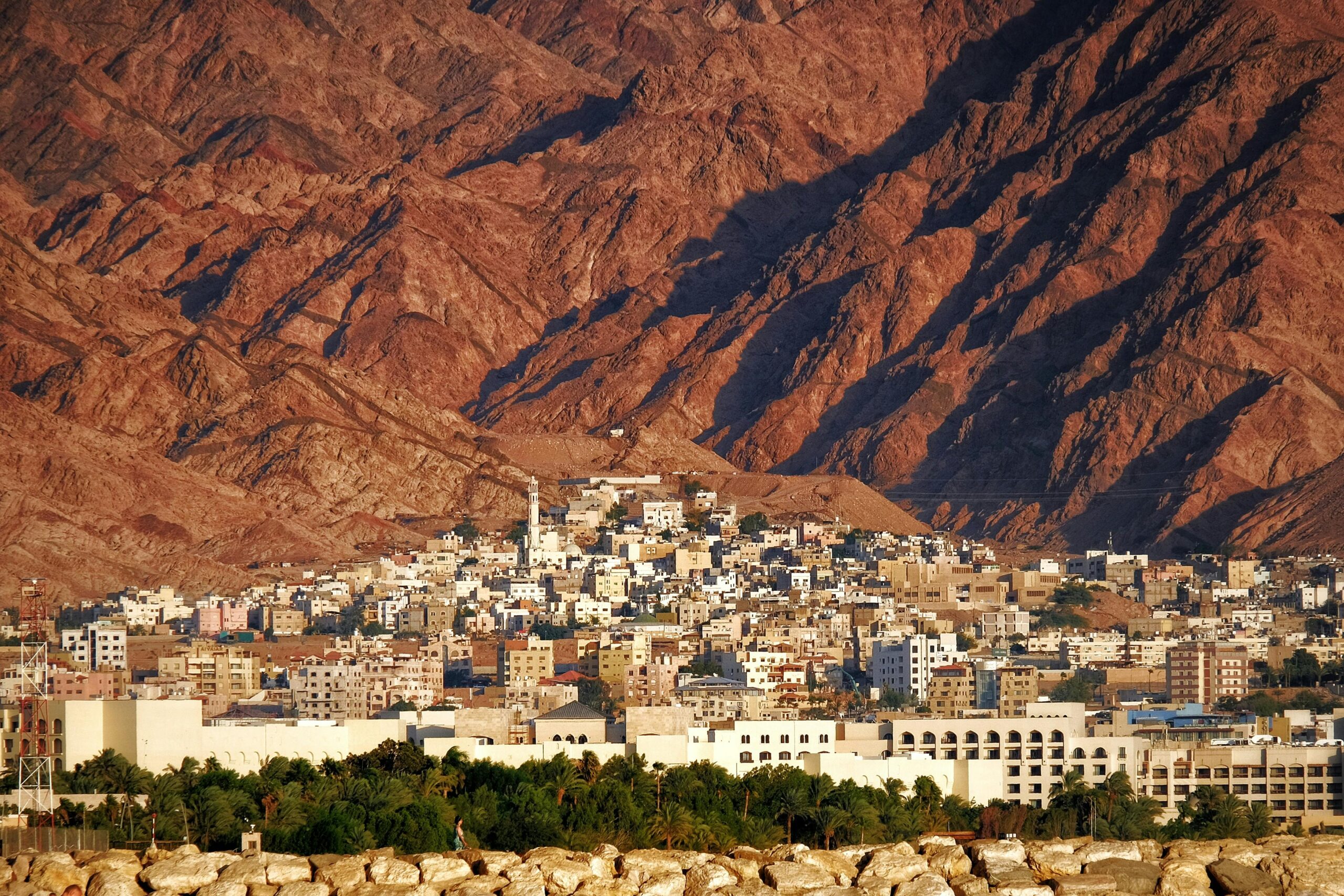
Oman is one of the most extraordinary travel destinations in the Arab world — and one of its most under-visited. A country of dramatic contrasts, it packs 4,000-year-old forts, UNESCO World Heritage mud-brick cities, fjords indistinguishable from Norway, turtle nesting beaches, soaring desert dunes, and emerald-green mountain wadis into a territory no larger than Italy. Its capital, Muscat, is among the most beautiful cities in the Middle East — a sprawling, immaculate arc of white buildings nestled between the blue Gulf of Oman and the stark teeth of the Al Hajar Mountains.
This guide covers 101 things to do across Oman and Muscat, from the iconic to the quietly extraordinary.
Muscat: The Capital
Heritage & History
- Sultan Qaboos Grand Mosque — Oman’s most iconic landmark and one of the world’s most magnificent mosques. Its main prayer hall contains a hand-woven Iranian carpet — one of the largest in the world — and a Swarovski crystal chandelier of staggering scale. Non-Muslim visitors are welcomed every morning except Friday.
- Mutrah Souq — One of the oldest and most atmospheric markets in Arabia. A labyrinth of narrow covered lanes overflowing with frankincense, Omani silver jewellery, khanjar daggers, embroidered textiles, and spices. Come in the late afternoon when the light is golden and the lanes are alive.
- Mutrah Corniche — The sweeping, palm-lined promenade along Muscat’s ancient harbour, framed by green-painted hills and the turquoise sea. Walk it at dusk, when the dhow boats glow in the fading light and the mountains turn purple.
- Al Alam Palace — The ceremonial palace of the Sultan, flanked by twin towers of blue and gold, faces the sea in Old Muscat. The palace itself is not open to the public, but the approach — through the old city gates, past the two Portuguese forts — is one of the finest short walks in Muscat.
- Al Jalali Fort — A 16th-century Portuguese fortress perched on a crag of rock at the entrance to Muscat Harbour. Now a museum, it overlooks the sea alongside its twin, Al Mirani Fort, in one of the Gulf’s most dramatic harbour settings.
- Al Mirani Fort — The second of the two Portuguese fortresses guarding the old harbour. Together, Al Jalali and Al Mirani have defined Muscat’s skyline for over 400 years.
- Old Muscat Walled City — Walk through the ancient city gates into the compact, pristine walled quarter that contains the Sultan’s Palace, the two Portuguese forts, and several restored traditional Omani buildings. One of the most photogenic corners of the capital.
- Bait Al Baranda Museum — An excellent visitor centre and history museum in Muttrah that tells the story of Muscat from its geological formation through ancient trading civilisations to the modern era. A superb orientation before exploring the rest of the city.
- Bait Al Zubair Museum — A beautifully curated private museum in Old Muscat, housed in a restored traditional Omani residence. Its collection covers Omani heritage including weaponry, jewellery, costumes, documents, and household artefacts spanning centuries.
- Omani French Museum — A small but fascinating museum in Old Muscat dedicated to the historic diplomatic and commercial relationship between Oman and France — one of the oldest bilateral relationships in the Arab world.
Culture & the Arts
- Royal Opera House Muscat — One of the finest performing arts venues in the Middle East, hosting opera, ballet, classical concerts, and Arabic music from world-class international companies. Even if you cannot attend a performance, the building’s Moorish-inspired architecture is worth a visit in its own right.
- National Museum of Oman — A landmark contemporary museum in the heart of Muscat, opened in 2016, tracing Oman’s history from prehistoric times through the maritime age to the present. Exceptionally well designed, with excellent English-language displays.
- Qurum Natural Park & Rose Garden — A large, beautifully maintained green park in central Muscat with a lake, fragrant Sultan Qaboos Rose Garden, and shaded walking paths — a rare urban retreat in a Gulf capital.
- Amouage Perfume Factory Tour — Oman’s world-renowned luxury fragrance house, founded by royal decree, offers tours of its Muscat factory. See how iconic fragrances like Gold and Jubilation are crafted, and shop the full collection at the source.
- Oman Across Ages Museum, Manah — A state-of-the-art museum near Nizwa that opened in 2022, telling the complete story of Omani civilisation across 10,000 years. Among the most impressive museums in the Arabian Peninsula.
- Bait Al Falaj Fort & Armed Forces Museum — A restored 19th-century fort in Ruwi housing Oman’s Armed Forces Museum, with exhibits on Oman’s military history and the modernisation of the Sultanate under Sultan Qaboos.
- Mutrah Fish Market — Wake early for the daily morning catch auction at Mutrah’s working fish market — one of the most vivid, local, and entirely untouristy experiences in Muscat.
- Al Alam Palace Approach Walk — Walk the ceremonial route from the Old Muscat gates through the Portuguese-era harbour, past the flanking forts to the palace gates — a short walk that spans 500 years of Omani history in under 30 minutes.
- Muscat Festival (January–February) — An annual celebration of Omani culture, heritage, and the arts, held across multiple venues in Muscat with traditional music, dance, crafts, and food from across the Sultanate.
- Khanjar Shopping at Nizwa — The curved Omani dagger, the khanjar, is the national symbol of Oman. Buy an authentic handmade example — from a working craftsman if possible — as the most meaningful souvenir you can take home.
Beaches & Waterfront
- Qurum Beach — Muscat’s most popular city beach, a long, gently curving stretch of soft sand where locals gather in the evenings. The 4-kilometre-long shoreline is ideal for walking, swimming, and watching the sun set over the Gulf.
- Bandar Khayran — A stunning natural bay about an hour southeast of Muscat, fringed by rocky inlets, turquoise coves, and completely undeveloped coastline. Reachable by boat or 4WD, and ideal for snorkelling and picnicking.
- Fahal Island (Cat Island) — A rocky uninhabited island visible from Muscat, reached by boat, with exceptional diving and snorkelling around its underwater walls and caves. One of Muscat’s top dive sites.
- Daymaniyat Islands — A protected marine reserve of nine remote islands northwest of Muscat, accessible only by boat. Widely regarded as the finest snorkelling and diving in Oman, with thriving coral reefs, sea turtles, and tropical fish in brilliant visibility.
- Sunset Dhow Cruise from Mutrah — Board a traditional Omani wooden dhow from Mutrah Harbour for a sunset cruise along Muscat’s dramatic coastline — the city’s white buildings and the green mountains glowing in the fading light is an unforgettable image.
- Dolphin Watching Cruise — Muscat’s coastal waters are home to pods of spinner, bottlenose, and common dolphins. Morning boat trips from Mutrah regularly encounter large groups riding the bow wave just outside the harbour.
- Scuba Diving, Muscat — Multiple PADI-certified dive centres operate from Muscat, with sites ranging from shallow coral gardens for beginners to deep wrecks and dramatic wall dives for experienced divers.
- Aviation Beach (Shell Beach) — A quiet beach near Seeb, known for its extraordinary collection of shells and starfish — one of the richest shelling beaches in the Gulf. Bring a bag.
- Kayaking, Bandar Jissah — Rent a kayak and paddle through the rocky sea caves and hidden coves of Bandar Jissah, a beautiful natural bay south of Mutrah used by the luxury Shangri-La resort.
- Fishing in the Gulf of Oman — Join a local fishing trip from Mutrah or Sib for hammour (grouper), kingfish, and red snapper in the rich waters of the Gulf — a properly Omani way to spend a morning.
Wadis: Oman’s Natural Wonder
- Wadi Shab — The crown jewel of Omani wadis, and one of the most spectacular natural experiences in the entire Middle East. A two-hour hike through a canyon of towering limestone cliffs leads to a series of turquoise pools connected by narrow passages — one of which conceals a hidden waterfall inside a cave. The final swim-through to reach it is a genuine thrill.
- Wadi Bani Khalid — The most accessible of Oman’s famous wadis, located in the Eastern Hajar region. Its deep, clear turquoise pools are surrounded by date palms and dramatic canyon walls — perfect for swimming even in the hotter months.
- Wadi Tiwi — A long, lush wadi running parallel to Wadi Shab, lined with date palm plantations, traditional stone villages, and a river that can be followed deep into the mountains. Less visited than its neighbour and all the more beautiful for it.
- Wadi Ghul (Grand Canyon of Oman) — Near Jebel Shams in the Al Hajar Mountains, this immense gorge plunges over 1,000 metres — comparable in scale and drama to the American Grand Canyon. The Balcony Walk along the rim is one of the most thrilling hikes in Oman.
- Wadi Bani Awf — A challenging 4WD route through the northern Al Hajar Mountains, passing through some of the most dramatic mountain scenery in Oman, with ancient villages clinging to near-vertical cliff faces.
- Wadi Arbaeen — A remote, boulder-strewn wadi in the eastern Hajar region, requiring a 4WD and some route-finding ability. Rewards adventurous visitors with deep green pools and complete solitude.
- Wadi Al Abyad — A dramatic white-walled canyon wadi near Muscat, accessible by 4WD and popular for half-day adventure trips. The white limestone rock formations give it an other-worldly, lunar quality.
- Wadi Darbat, Salalah — In the southern Dhofar region, Wadi Darbat transforms during the khareef monsoon (June–September) into a roaring cascade of waterfalls over green cliffs — one of Oman’s most dramatic seasonal spectacles.
- Snake Gorge, Wadi Bani Awf — A technical canyoning route through a narrow, winding gorge that requires swimming, scrambling, and some nerve. One of Oman’s most exciting adventure hikes for experienced trekkers.
- Birkat Al Mawz Village & Falaj — At the foot of Jebel Akhdar, this beautiful traditional village is threaded with ancient falaj irrigation channels — a UNESCO-listed water distribution system that has kept Omani villages green for millennia.
Mountains & Highland Adventures
- Jebel Akhdar (Green Mountain) — Oman’s most famous mountain range, rising to over 2,000 metres in the Al Hajar range. Its high plateau is covered with terraced rose gardens, pomegranate orchards, and traditional stone villages with a cool, alpine climate utterly unlike the Gulf coast.
- Rose Harvest, Jebel Akhdar (March–April) — Time your visit for the spring rose harvest, when the terraces of Al Jabal Al Akhdar are carpeted in the Damask roses used to produce Oman’s world-famous rosewater. A beautiful and fragrant experience unlike anything else in the country.
- Jebel Shams Summit (3,009m) — The highest peak in Oman and the Arabian Peninsula’s second-highest mountain. Drive to the summit plateau for sweeping views over the Al Hajar range and into the abyss of Wadi Ghul far below.
- Balcony Walk, Jebel Shams — A two-hour ridge walk along the rim of Wadi Ghul with vertigo-inducing views down the canyon walls — one of the finest and most dramatic hiking trails in the entire Middle East.
- Terraced Villages of Jebel Akhdar — Walk between Al Ain, As Sharaijah, and Wadi Bani Habib — ancient stone villages on the terraced slopes of the Green Mountain, many partially abandoned but powerfully atmospheric.
- Star Gazing on Jebel Shams — The altitude, dry air, and minimal light pollution of the Jebel Shams plateau produce some of the darkest skies in Arabia. Bring a blanket and stay until midnight.
- Wadi Bani Awf Mountain Drive — One of Oman’s great 4WD experiences, a full-day loop through the dramatic northern Hajar mountains connecting Rustaq to Nizwa via a series of ancient villages and jaw-dropping passes.
- Al Hamra Village — One of the best-preserved traditional mud-brick villages in Oman, at the foot of Jebel Shams. Wander the narrow lanes of this 400-year-old settlement and visit Bait Al Safah, a living museum of traditional Omani domestic life.
- Misfat Al Abriyeen — A breathtaking terraced village of ancient stone houses clinging to a cliff above a palm-filled wadi near Al Hamra. One of the most photographed villages in Oman and genuinely one of its most beautiful.
- Jebel Akhdar Hiking Trails — Multiple marked trails weave across the plateau, through rose gardens, past ancient falaj channels, and to the cliff edge — ideal for a morning of walking with exceptional views.
Nizwa & the Interior
- Nizwa Fort — Oman’s most visited historic site outside Muscat, and one of the most impressive 17th-century forts in Arabia. The massive circular tower rises above the old city, with labyrinthine interiors and panoramic views from the battlements.
- Nizwa Souq — Beneath the shadow of the fort, Nizwa’s ancient souq is the most authentic traditional market in Oman. Browse silver jewellery, Omani halwa, dried limes, frankincense, pottery, and locally made khanjars.
- Nizwa Friday Livestock Market — Every Friday morning, farmers from across the interior bring their cattle, goats, and camels to the weekly animal market behind Nizwa Souq — an extraordinary, entirely local scene.
- Jabrin Castle — An architectural masterpiece 40 kilometres west of Nizwa, featuring elaborately painted ceilings, the famous Sun and Moon Room, and intricately carved plasterwork. More palace than fort, and one of Oman’s most beautiful historic buildings.
- Bahla Fort — A UNESCO World Heritage Site, one of the largest mud-brick fortifications in the Arab world, set within the ancient oasis town of Bahla. The fort and its 13-kilometre perimeter wall are an extraordinary feat of pre-modern construction.
- Bat & Al-Khutm Archaeological Sites — A UNESCO-listed Bronze Age necropolis near Ibri, containing one of the world’s most complete collections of third-millennium BC beehive tombs — a genuinely remote and haunting place.
- Rustaq Fort — A large and imposing multi-towered fort in the Batinah region, once the capital of Oman and the seat of the Ya’aruba dynasty. The interior contains a hot spring — a remarkable and unexpected feature.
- Nakhal Fort — A spectacularly sited fort in the Al Batinah foothills, built into a rocky outcrop with a natural hot spring at its base. The setting, with the Al Hajar Mountains as backdrop, is among the finest of any fort in Oman.
- Tanuf Ruins — The haunting ruins of a village bombed by the RAF during the 1950s Jebel War, in a wadi setting of date palms and a cold freshwater stream. A melancholy and beautiful place.
- Ibra Old Town & Wednesday Women’s Market — The ancient mud-brick old quarter of Ibra, with its crumbling merchant houses and narrow lanes, and the famous Wednesday market where Bedu women sell jewellery, textiles, and traditional goods.
Desert: Wahiba Sands & Beyond
- Wahiba Sands (Sharqiya Sands) Desert Safari — Oman’s great desert, a sea of copper and gold dunes stretching 200 kilometres from the Eastern Hajar to the Arabian Sea. Dune bashing by 4WD, camel rides at sunset, and overnight camping under a sky impossibly thick with stars.
- Sandboarding on Wahiba Sands — Rent or bring a sandboard and ride the steep face of a 100-metre dune — the Omani desert equivalent of skiing, and considerably warmer.
- Overnight Desert Camp, Wahiba — Spend a night in a Bedouin-style camp deep in the dunes, with a traditional Omani dinner, a bonfire, live music, and silence so complete you can hear the sand shift in the wind.
- Sunrise Photography, Wahiba Sands — The first light over the dunes transforms the desert into a palette of amber, rose, and deep shadow. Set an alarm, climb the nearest high dune, and wait.
- Meet a Bedouin Family — Several camps in Wahiba offer the chance to visit a local Bedouin family, drink sweet tea in a traditional tent, and learn about a way of life that is changing fast.
- Camel Trekking, Wahiba — Explore the dunes by camel at dawn or dusk — slower and stranger than a 4WD, but infinitely more atmospheric.
- Al Wasil Village & Wadi Bani Khalid Combo — The classic Wahiba day-trip pairing: a morning in the desert at Wahiba Sands followed by an afternoon swim in the crystalline pools of Wadi Bani Khalid, less than an hour apart.
The Coast: Sur, Turtles & the Eastern Shore
- Ras Al Jinz Turtle Reserve — One of the most important green turtle nesting sites in the Indian Ocean, on Oman’s easternmost point. Night tours (booked well in advance) allow visitors to watch nesting turtles haul out of the sea and lay their eggs — a profoundly moving wildlife experience.
- Sur Dhow Yard — The ancient dhow-building city of Sur still has active boat yards where craftsmen build traditional wooden vessels by hand using age-old techniques. Watch the work in progress and walk the restored Omani dhow museum alongside.
- Al Ayjah Lighthouse & Bridge, Sur — The pretty village of Al Ayjah across the creek from Sur is reached by a small bridge; the old lighthouse and the traditional Omani houses reflected in the water make it one of the most photogenic corners of eastern Oman.
- Bimmah Sinkhole (Hawiyat Najm Park) — A perfectly formed, vivid turquoise sinkhole of natural limestone, 45 minutes east of Muscat, where you can swim in clear, slightly brackish water while small fish nibble your toes. One of the most popular natural attractions in Oman.
- Fins Beach — A remote and spectacular beach south of the Bimmah Sinkhole, with dramatic limestone cliffs, translucent water, and no facilities — one of the most beautiful stretches of coastline in Oman.
- Wadi Shab to Qalhat Loop — A classic eastern Oman road-trip loop combining Wadi Shab, the ancient ruined city of Qalhat (a UNESCO World Heritage Site), the Bimmah Sinkhole, and the Ras Al Jinz turtle beach in a single multi-day drive.
Musandam: Oman’s Norwegian Fjords
- Khasab Dhow Cruise, Musandam — Sail through the dramatic fjords of the Musandam Peninsula — the “Norway of Arabia” — on a traditional wooden dhow, with dolphins riding the bow wave and cliff walls rising sheer from the water beside you.
- Dolphin Watching, Musandam — The sheltered fjords of Musandam are home to one of the densest dolphin populations in the world. Morning boat trips routinely encounter pods of hundreds of animals.
- Snorkelling, Musandam — The clear, sheltered waters of the Musandam fjords contain excellent coral and reef fish. Most dhow cruises include a snorkelling stop at a secluded bay.
- Telegraph Island (Jazirat al-Maqlab) — A tiny island in the Musandam fjords that was once a British telegraph relay station in the 1860s. The expression “going round the bend” is said to originate with sailors losing their minds stationed here.
- Khasab Fort — A beautiful 17th-century Portuguese fort in the centre of Khasab, housing the Musandam Museum — a well-curated collection on the heritage, fishing culture, and ancient trade routes of this remote enclave.
- Al Jebel Al Akhdar of Musandam — Mountain Village Drive — Drive the high mountain roads above Khasab through ancient Shihuh tribal villages with views of the fjords far below — a little-visited and strikingly beautiful part of Oman.
Salalah & Dhofar: The Green South
- Khareef Season, Salalah (June–September) — Every summer, the Indian Ocean monsoon transforms Salalah’s arid coastline into a landscape of green hills, rushing waterfalls, and cool mist. The khareef (monsoon) season is Salalah’s defining experience and draws thousands of Omani holidaymakers escaping the northern heat.
- Frankincense Trees, Dhofar — Oman has been the world’s premier source of frankincense for over 5,000 years. In the hills around Salalah, you can visit the ancient frankincense trees, still being tapped for their precious resin as they have been since antiquity.
- Wadi Darbat Waterfalls — During the khareef, Wadi Darbat near Salalah becomes a cascade of waterfalls and a lake of jade-green water — one of the most dramatic seasonal landscapes in Arabia.
- Al Baleed Archaeological Park & Museum — The UNESCO-listed ruins of the ancient port city of Zafar, once the world’s most important frankincense trading hub, sit at the edge of Salalah with a superb accompanying museum of Land of Frankincense archaeology.
- Al Mughsail Beach & Blowholes — A vast arc of white sand framed by sea cliffs on Salalah’s western coast. Natural blowholes in the limestone spray jets of seawater skyward in a spectacular show best seen in rough weather.
- Mirbat Fort & Old Town — A small, beautifully preserved coastal town east of Salalah with a 17th-century fort, an ancient mosque, and the site of the famous 1972 Battle of Mirbat — a pivotal moment in Oman’s modern history.
- Sumhuram Archaeological Site (Khor Rori) — The ruins of an ancient Hadhrami frankincense trading city at a stunning tidal creek, near Salalah. One of Oman’s most evocative archaeological sites.
Adventure & Sport
- Rock Climbing, Al Hajar Mountains — The limestone walls of the Al Hajar range offer world-class multi-pitch rock climbing. The area around Wadi Bani Awf and Jebel Misht draws visiting climbers from across Europe and the wider Middle East.
- Mountain Biking, Jebel Akhdar — Guided mountain bike tours across the high plateau of the Green Mountain, with technical trails, dramatic canyon views, and the extraordinary fragrance of the rose gardens in spring.
- Off-Road 4WD Driving — Oman is one of the world’s great 4WD destinations. Self-drive routes from easy wadi tracks to serious mountain traverses are accessible to anyone with a rental 4×4 and a good map — the roads less travelled here are remarkable.
- Paragliding over Muscat — A small but growing number of operators offer tandem paragliding flights above the Al Hajar Mountains, with views across Muscat, the Gulf of Oman, and the desert interior.
- Whale Watching, Dhofar — The waters off Salalah and Musandam are among the most whale-rich in the Indian Ocean. Sperm whales and humpbacks are regularly encountered on specialised boat tours, particularly between October and April.
- Camel Racing, Al Batinah — Traditional camel racing, now run with remote-controlled robot jockeys, takes place on several tracks in the Batinah coastal plain — an utterly surreal and very Omani spectacle.
Food, Drink & Local Life
- Eat Shuwa — Oman’s Great Slow-Cooked Dish — Marinated lamb or goat, wrapped in banana leaves and slow-cooked underground in a sealed pit for up to 48 hours. Shuwa is prepared for Eid and other celebrations, and is the most ceremonially significant dish in Omani cuisine.
- Omani Halwa with Qahwa (Coffee) — The combination of Omani halwa — a dense, spiced, rosewater-scented sweet made from ghee and starch — with bitter cardamom-laced Omani coffee is the country’s universal gesture of welcome. Accept it everywhere it is offered.
- Traditional Omani Breakfast at a Local Café — Seek out a neighbourhood restaurant for a breakfast of khamir bread, luqaimat (honey-soaked dumplings), balaleet (sweet vermicelli and egg), and fresh dates — the best possible start to a day of exploring.
- Seafood Dinner at a Waterfront Restaurant, Muscat — Freshly caught hamour, kingfish, and lobster, grilled simply with lime and spices, eaten at a table overlooking the illuminated harbour — one of the genuine culinary pleasures of Oman.
- Omani Dates — Buy at the Source — Oman produces dozens of varieties of date. Visit the date markets in Nizwa or the date farms of the Batinah plain to taste and buy directly, selecting varieties you will never find in a supermarket back home.
- Frankincense Shopping in Salalah or Mutrah — Buy pure Dhofari frankincense resin and a traditional Omani incense burner (mabkhara) in the souq. Burning frankincense at home is the most evocative souvenir Oman offers.
- Shisha Evening on Mutrah Corniche — Settle into one of the outdoor corniche cafés as the evening sea breeze comes in, order apple shisha and Omani tea, and watch the boats and the mountains in the fading light. The slow, unhurried pace of Omani life is most perfectly captured in moments like this.
Unmissable Experiences
- Watch the Sunrise from the Rim of Wadi Ghul — Set your alarm for 4:30am, drive to the canyon rim at Jebel Shams, and watch the first light fill the 1,000-metre-deep gorge below you. The Grand Canyon of Oman at dawn is one of the most extraordinary sights in all of Arabia.
- Sleep Under the Stars in Wahiba Sands — On your last night in Oman, unroll a mat on the crest of a high dune deep in Wahiba Sands, far from any camp or road, and lie still. The silence is absolute. The stars are unimaginable. And the sand, still warm from the day, holds you while the desert breathes around you. There is no better way to understand what makes Oman unlike anywhere else on earth.
Quick Facts for Visitors
| Best time to visit | October to April (25–30°C, clear and dry) |
| Salalah (Khareef) | June to September for monsoon greenery |
| Currency | Omani Rial (OMR) — one of the world’s strongest currencies |
| Language | Arabic (English very widely spoken) |
| Visa | Most nationalities receive visa on arrival or e-visa |
| Getting around | Car rental (4WD recommended for wadis and mountains) |
| Capital | Muscat — allow 2–3 days minimum |
| Ideal trip length | 7–10 days covers Muscat, Nizwa, Wahiba, and the coast |
Oman rewards slow travel. The country’s greatest experiences — a dawn wadi swim, a desert night, a conversation with a Bedouin — cannot be rushed. Give it time, and it will give you everything.