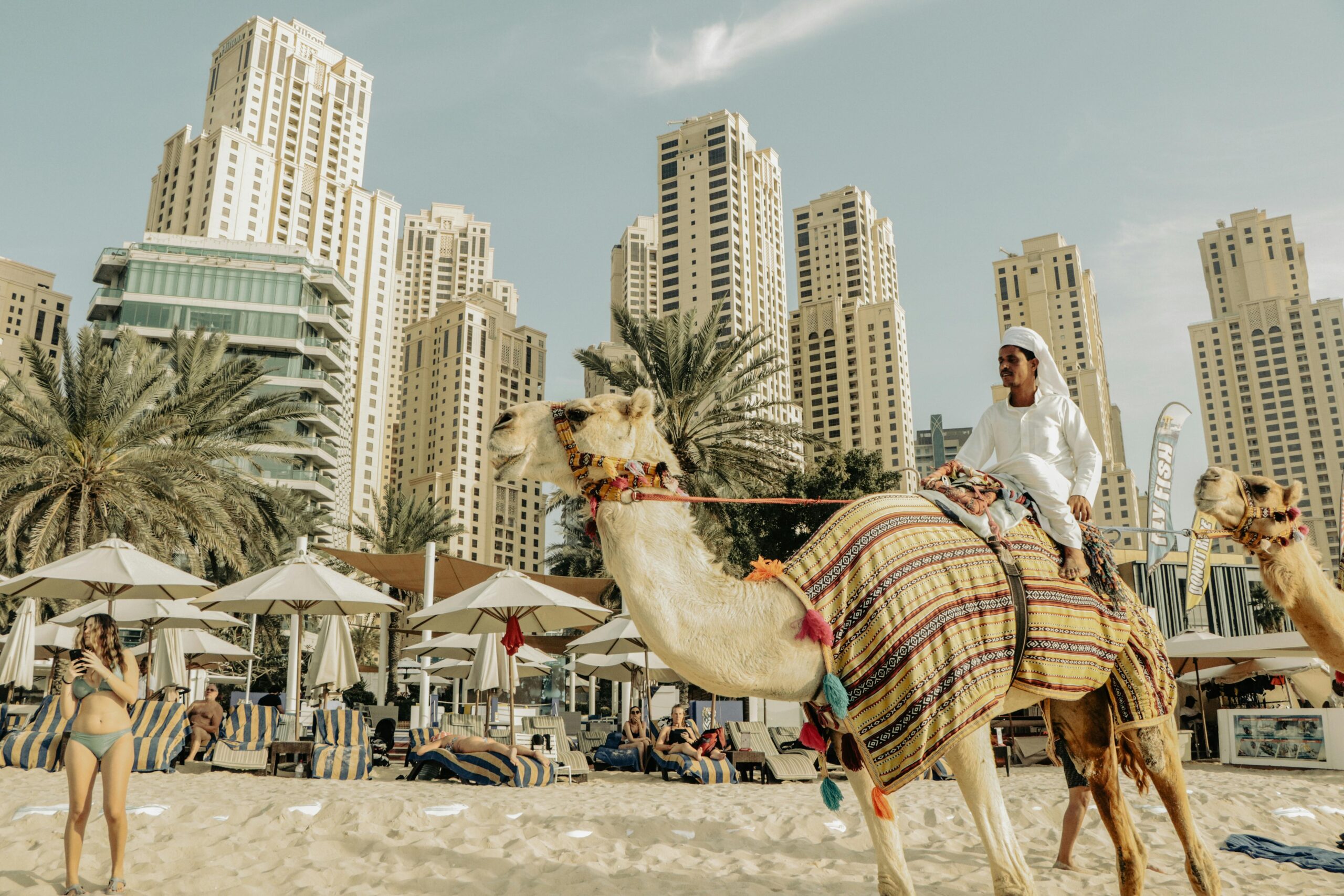
The United Arab Emirates defies easy summary. In the space of fifty years, a federation of seven desert sheikhdoms has built one of the most ambitious, contradictory, and genuinely surprising travel destinations on earth. Dubai has the world’s tallest building, the world’s largest mall, and the world’s longest zipline. Abu Dhabi has a branch of the Louvre, a Formula 1 circuit, and the most magnificent mosque in the Arab world. Sharjah is the cultural capital of the region. Ras Al Khaimah has ancient forts, wild mountains, and 68 kilometres of undeveloped coastline. And beyond all of them, the desert stretches to every horizon — silent, immense, and entirely itself.
This guide covers 101 things to do across all seven emirates: the iconic, the unexpected, the wild, and the experiences that reveal what the UAE is when you look beyond the skyscrapers.
Dubai: The City That Invented Itself
Icons & Skyline
- Burj Khalifa — At the Top — The world’s tallest building at 828 metres, with 163 floors and an observation deck at Level 124 that offers a view over the Gulf, the desert, and the city grid unlike anything accessible from the ground. The Top Sky experience on Level 148 is the highest observation point in the world. Book sunset or pre-dawn for the most dramatic light.
- Dubai Fountain — The world’s largest choreographed fountain system, in the Burj Lake below the Khalifa: 275 metres of water jets reaching 150 metres into the air, set to music ranging from Arabic classical to Broadway. Free to watch from the Burj Lake promenade every evening. One of the great free spectacles in the UAE.
- Burj Al Arab — The world’s most recognisable hotel, built on a man-made island in the form of a billowing dhow sail. Non-guests can access the interior with an afternoon tea reservation — an exercise in maximalist Arabian grandeur with 24-carat gold leaf applied to everything within reach.
- Palm Jumeirah Monorail & The View at The Palm — The Palm Jumeirah is the world’s largest artificial island: a trunk and 16 fronds extending into the Gulf, lined with hotels, residences, and restaurants. Take the monorail from the mainland to the Atlantis, and stop at The View at The Palm observation deck on the 52nd floor of The Palm Tower for the finest overhead view of the island’s full shape.
- Dubai Frame — A 150-metre picture frame on the border between old and new Dubai, with a glass-floored walkway connecting the two towers at the top. Look north for the glass towers of new Dubai; look south for the older creek districts. The juxtaposition is deliberate and striking.
- Museum of the Future — Opened in 2022, the torus-shaped building on Sheikh Zayed Road — covered in Arabic calligraphy cut into its stainless steel facade — houses an immersive exhibition on humanity’s possible technological futures. One of the most architecturally extraordinary buildings in the world and a genuinely thought-provoking interior experience.
- Dubai Marina Walk & Ain Dubai — A 7-kilometre promenade around the Dubai Marina canal, one of the largest man-made marinas in the world, with the world’s tallest observation wheel — Ain Dubai (250 metres) — at its Bluewaters Island end. Walk the marina at dusk, when the towers begin to glow.
- Atlantis Aquaventure & Aquatopia — The waterpark complex at Atlantis The Palm, consistently rated among the finest in the world, with the Leap of Faith nearly-vertical slide, the river ride around the island’s perimeter, and the Aquatopia indoor waterpark. The Atlantis’ The Lost Chambers aquarium, built into a simulated Atlantean ruin, is exceptional.
Heritage & Culture
- Al Fahidi Historical Neighbourhood — The oldest surviving neighbourhood in Dubai: a labyrinth of wind-tower houses, courtyard museums, art galleries, and cafés in an area of mud-brick architecture dating to the late 19th century. The best-preserved example of traditional Gulf architecture in Dubai and an essential counterpoint to the gleaming new city.
- Dubai Creek Abra Ride — The creek dividing Deira from Bur Dubai has been crossed by wooden abra boats for over a century. A crossing costs one dirham and takes four minutes; it is the most authentic and the best-value experience in Dubai.
- Gold Souq & Spice Souq, Deira — Two of the finest traditional markets in the Gulf, in the old Deira district north of the creek. The Gold Souq’s arcade of jewellery shops contains more gold on display than almost anywhere in the world. The Spice Souq’s narrow lanes are piled with frankincense, saffron, dried limes, and rose petals. Both are free to explore and entirely genuine.
- Dubai Museum, Al Fahidi Fort — Dubai’s oldest building (1787) now houses the emirate’s principal history museum, telling the story of Dubai’s transformation from a pearl-diving fishing village to a global city in under 100 years. The dioramas of pre-oil life are quietly moving in the shadow of what the city has become.
- Global Village — A sprawling open-air cultural and entertainment park open from October to April, with pavilions representing over 90 countries, cultural performances, international street food, and fairground attractions on a massive scale. Genuinely global and genuinely fun — one of the best family evenings in Dubai.
- Jumeirah Mosque — Open Doors, Open Minds — One of the most beautiful mosques in Dubai, and one of the few in the UAE that actively welcomes non-Muslim visitors on guided tours every morning. The Sheikh Mohammed Centre for Cultural Understanding runs the tours with warmth and depth — the best introduction to Emirati culture available in the city.
- Dubai Opera — A dhow-shaped performing arts venue on the Boulevard at Downtown Dubai, hosting opera, ballet, Broadway musicals, concerts, and Arabic performances. The rooftop terrace bar has a direct view of the Burj Khalifa’s nightly light show.
Adventure & Leisure
- Desert Safari from Dubai — The essential UAE experience: a late-afternoon 4WD dune-bashing excursion into the red sand desert south of the city, followed by a Bedouin-style camp dinner with camel rides, sandboarding, henna, and a sky full of stars. Available with overnight stays for the full desert immersion.
- Ski Dubai, Mall of the Emirates — A full-size indoor ski resort in the middle of a shopping mall: five ski runs, a black diamond slope, a snow park for tobogganing and snowball fights, and resident penguins. Peculiar, improbable, and genuinely impressive as an engineering achievement — a blizzard in the desert.
- Skydiving over the Palm — A tandem skydive from 15,000 feet above the Palm Jumeirah, with the artificial island’s full leaf-and-trunk shape visible below and the Gulf coast stretching to the horizon. One of the most dramatic jump zones in the world.
- Dubai Autodrome & Kartdrome — The Autodrome at Motor City is a FIA-licensed racing circuit with track days, karting, and GT car experiences. The Kartdrome operates year-round for all levels and is one of the finest outdoor karting facilities in the region.
- Dubai Creek Harbour & The Tower — The next mega-development: a waterfront district around the Dubai Creek with the forthcoming Dubai Creek Tower (designed to exceed the Burj Khalifa when complete) and a large park with flamingo sanctuary. Worth visiting now for the unobstructed view of Downtown from the east bank.
Shopping & Food
- Dubai Mall — The world’s largest shopping mall by total area: 1,200 shops, the Dubai Aquarium and Underwater Zoo (the world’s largest acrylic panel tank), an ice rink, a VR park, a dinosaur skeleton, and the Burj Khalifa on its doorstep. Come for the aquarium and the fountain view, not necessarily for the shopping.
- Dubai Food Festival & Eating on Al Seef — Dubai’s food scene is among the most diverse in the world: over 200 nationalities living in the city has created an extraordinary range of authentic restaurants. Al Seef along the historic creek waterfront, and the restaurant streets of Karama, offer the most genuine and affordable versions of this diversity.
- Friday Brunch at a Dubai Hotel — The UAE’s Friday brunch is a social institution: a multi-hour free-flow feast of international food and drink at a five-star hotel. The Westin Mina Seyahi, Atlantis, and the One&Only Royal Mirage are among the finest. An unapologetically indulgent Dubai tradition.
- Night at a Rooftop Bar — Dubai’s rooftop bar culture is world-class: Atmosphere at Burj Khalifa (Level 122, the world’s highest bar), Zeta 70 at Sofitel, and Ce La Vi at Address Beach Resort all offer combinations of extraordinary views and cocktails that are entirely specific to this city.
- Old Dubai Food Walk: Karama & Al Fahidi — The working-class Karama district serves the finest South Asian food in Dubai: Pakistani karahi, Malayali seafood, Indian thali, and Yemeni mandi rice. A guided or self-guided food walk through Karama and Al Fahidi is the most affordable and most authentic eating experience in the city.
Abu Dhabi: Culture & Capital
Heritage & Monuments
- Sheikh Zayed Grand Mosque — The greatest mosque in the Arab world outside Mecca and Medina, and one of the most beautiful buildings anywhere: white marble from 46 countries, the world’s largest hand-knotted carpet (the size of a football pitch), a chandelier of Swarovski crystal, and 82 domes. Non-Muslim visitors are welcomed daily except Friday morning. Entry is free; modest dress is provided.
- Louvre Abu Dhabi — Jean Nouvel’s extraordinary museum on Saadiyat Island: a vast disc of perforated steel floating above the shallows of the Gulf, casting a rain-of-light shadow across the spaces beneath. The collection — spanning 5,000 years from Mesopotamia to the 21st century in a single universal narrative — is the most ambitious museum project of the century so far.
- Emirates Palace Hotel — Not merely a hotel but a statement of cultural ambition: a 1-kilometre-long palace of hand-laid marble, 1,002 Swarovski chandeliers, and a beach of its own on the Gulf. Visit for the karak chai and gold-leaf cappuccino at Le Café, even if you’re not staying. The gardens and beach are among the finest in Abu Dhabi.
- Qasr Al Hosn — The White Fort — Abu Dhabi’s oldest building, a watchtower built around 1760 that grew into a fortified palace and became the seat of the ruling Al Nahyan family. Now a thoroughly restored cultural museum telling the full story of Abu Dhabi’s emergence from a pearl-diving settlement to a global capital.
- Heritage Village, Abu Dhabi Corniche — A reconstructed traditional Emirati village on the Corniche waterfront, with craftspeople demonstrating pottery, weaving, and traditional building techniques beside replicas of the barasti (palm-frond) homes that preceded the concrete city. Free to visit.
- Mangrove National Park, Abu Dhabi — A protected mangrove forest of extraordinary richness on the east side of Abu Dhabi island, accessible by kayak from Eastern Mangroves Promenade. Paddle through the root networks with herons, flamingos, and occasionally sea turtles in the water below. One of the most unexpectedly beautiful natural experiences in the capital.
- Saadiyat Island Cultural District — The ambitious cultural quarter under development on Saadiyat Island will eventually house the Louvre Abu Dhabi, the Guggenheim Abu Dhabi, the Zayed National Museum, and the Abrahamic Family House. The Louvre is open; the others are at various stages of completion and approaching opening.
Yas Island & Adventure
- Ferrari World Abu Dhabi — The world’s first Ferrari-branded theme park, under a vast curved roof on Yas Island, with Formula Rossa — the world’s fastest roller coaster at 240 km/h — as its centrepiece. The combination of engineering exhibition and genuine thrills makes it the best theme park in the UAE.
- Warner Bros. World Abu Dhabi — A fully indoor theme park on Yas Island with immersive lands dedicated to DC Comics, Looney Tunes, Hanna-Barbera, and now Harry Potter World (opening 2026). The most ambitious indoor theme park in the world.
- Yas Marina Circuit — Formula 1 Abu Dhabi Grand Prix — The Abu Dhabi Grand Prix is the final race of the Formula 1 season, held every November or December at the Yas Marina Circuit. The circuit straddles a marina with a hotel bridge that the cars pass through; the atmosphere over race weekend is extraordinary.
- Yas Waterworld — A waterpark themed around a 1001 Nights pearl-diving adventure, with 45 rides including Dawwama — the world’s largest tornado water ride — and the Jebel Drop slide. Among the finest waterparks in the region.
- Louvre Abu Dhabi at Sunset from the Sea — Hire a kayak or join a boat tour to approach the Louvre Abu Dhabi from the water at sunset, when Nouvel’s perforated dome creates its extraordinary light-and-shadow effect across the shallows. The building from the water, in that light, is one of the most beautiful things in the UAE.
Al Ain: The Garden City
- Al Ain Oasis (UNESCO) — The largest oasis in the UAE, a UNESCO World Heritage Site, threaded with 3,000 kilometres of underground falaj irrigation channels and shaded by 147,000 date palms. Walking the interior paths in the cool of the morning, with sunlight filtering through the palm canopy, is one of the most peaceful and distinctly Emirati experiences in the country.
- Jebel Hafeet — The UAE’s second-highest mountain (1,249 metres), a dramatic limestone ridge above Al Ain with a winding 11-kilometre road to the summit — one of the finest driving roads in the region. The view over Al Ain, the Omani border, and the desert plain is extraordinary, and the mountain’s base has hot-spring pools (Ain Khaled) for bathing.
- Al Ain Fort & Al Ain National Museum — The Sultan Fort, within Al Ain’s original walled town, is one of the finest examples of traditional Emirati mud-brick fortification architecture. The adjacent National Museum houses an important collection of Bronze Age artefacts from Hili and Hafeet.
- Hili Archaeological Park — A UNESCO-listed Bronze Age site on the outskirts of Al Ain, with 5,000-year-old communal tombs among the oldest large-scale structures in the UAE. The Hili Grand Tomb, with its carved hunting scenes, is the finest ancient monument in the country.
The Northern Emirates: Beyond the Headlines
Sharjah: Cultural Capital
- Sharjah Museum of Islamic Civilisation — The most comprehensive museum of Islamic art and civilisation in the Gulf, housed in a beautifully restored souq building on the Khalid Lagoon waterfront. The collection spans the full geographic and temporal range of Islamic culture — from Spain to Central Asia, 7th century to the present.
- Sharjah Heritage Area & the Blue Souq — The old Heart of Sharjah district has the finest collection of restored wind-tower architecture in the UAE. The Blue Souq (Central Market) — two linked buildings covered in blue mosaic tiles — is the best place in the UAE to buy traditional carpets, antiques, and handicrafts.
- Sharjah Art Foundation — One of the leading contemporary art institutions in the Arab world, with a permanent collection of major regional and international artists, and the Sharjah Biennial — the most important art event in the Gulf — held every two years.
- Mleiha Archaeological Centre — Sixty kilometres from Dubai in the Sharjah desert, Mleiha contains evidence of human habitation going back 130,000 years: Bronze Age tombs, a 3rd-century BC fort, fossil beds, and ancient camel tracks you can walk among. Guided 4WD excursions into the fossil landscape are available. One of the most genuinely significant historical sites in the UAE.
- Kalba Mangrove Reserve, Sharjah — The most northerly mangrove forest in Arabia, in Sharjah’s Kalba enclave on the east coast, home to the rare Collared Kingfisher and accessible by kayak. A remarkably tranquil contrast to the frenetic pace of the coast.
Ras Al Khaimah: Mountains, History & Adventure
- Jebel Jais & the World’s Longest Zipline — The UAE’s highest peak (1,934 metres) in the Hajar Mountains of Ras Al Khaimah, accessible by road from the coast in under an hour. The Jais Flight zipline stretches 2.83 kilometres at up to 150 km/h — the longest in the world. The Jais Sky Tour, via multiple shorter lines, is equally spectacular.
- Dhayah Fort — The last fort in the UAE to fall to British forces (1820), perched on a dramatic volcanic rock above the palm-filled Dhayah valley. The climb to the summit takes 20 minutes; the view over the mangroves, date palms, sea, and mountains is the finest in Ras Al Khaimah. Free to visit.
- Al Jazirah Al Hamra — The Ghost Village — An entire abandoned coral-stone fishing and pearling village on the RAK coast, preserved in a state of atmospheric decay since the 1970s when its population moved to the new city. The Al Hamra Fort, the old mosque, and the network of lanes are free to explore — the most evocative historical site in the northern UAE.
- Jais Adventure Peak & Via Ferrata — High on Jebel Jais, the Jais Adventure Peak offers a via ferrata (iron-assisted climbing route) and a sky bridge above the mountain ridgeline. The combination of altitude, views, and physical challenge makes it the best multi-activity mountain destination in the UAE.
- Wadi Shawka & the Hot Springs — A dramatic mountain wadi in the Hajar range above RAK, with sulphurous hot springs, a boulder-strewn river valley, and climbing routes on the limestone walls. One of the UAE’s most rewarding natural escapes.
- RAK Culinary & Desert Experiences — The Al Wadi Desert Reserve in RAK — a 1,200-acre private nature reserve with resident Arabian oryx and gazelles — offers falconry, horse riding, and desert sundowners at a level of seclusion and authenticity unmatched in the UAE.
Fujairah: The East Coast
- Fujairah Fort & the Hajar Mountains — The oldest fort in the UAE (believed to predate Islam), with walls of ancient stone rising from a rocky hillock in the old city. The Hajar Mountains rise directly behind the coast here, giving Fujairah a dramatic interior that is a short drive from the beach.
- Al Aqah Beach & Diving the East Coast — The east coast of the UAE faces the Gulf of Oman, not the Arabian Gulf, and its waters are richer in coral and marine life. Al Aqah is the best diving and snorkelling base on the east coast, with Seven Seas Divers offering access to pristine reefs and the Dibba Rock site.
- Wadi Wurayah National Park — The UAE’s first mountainous national park, in the Fujairah Hajar range, with permanent waterfalls (the only ones in the UAE), freshwater pools, and trails through acacia and ghaf forest. The wildlife — including caracal, Arabian tahr, and Egyptian vulture — is unlike anything on the coast.
- Snoopy Island, Dibba — A coral-fringed rocky island in Dibba Bay whose profile resembles the Peanuts character, reachable by swimming or kayak from the sandy shore. The snorkelling around the island is the finest in the UAE, with sea turtles, rays, and reef sharks in clear, shallow water.
- Khorfakkan Corniche & Al Rafisah Dam — The most beautiful harbour town on the UAE east coast, enclosed by the Hajar Mountains on three sides with a crescent bay of blue water. The Al Rafisah Dam in the mountains above the town offers kayaking in a freshwater lake surrounded by raw granite peaks.
Ajman & Umm Al Quwain
- Al Zorah Nature Reserve, Ajman — A protected coastal lagoon and mangrove ecosystem north of Ajman, with kayaking through the mangroves, flamingo watching, and a golf course and beach resort at its edge. One of the most unexpected nature experiences in the UAE’s smallest emirate.
- Dreamland Aqua Park, Umm Al Quwain — A large water park on a low-key island in Umm Al Quwain’s lagoon, away from the crowds and noise of Dubai — a favourite with UAE residents who want the experience without the peak-season pricing.
- UAQ Mangrove & Siniyah Island — Umm Al Quwain’s island of Siniyah is one of the richest wildlife areas in the UAE: nesting hawksbill and green turtles, dugongs in the shallow grass beds, and undisturbed mangrove forest. Boat tours from UAQ Marina are available and unhurried.
Desert, Mountains & the Wild UAE
- Liwa Oasis & the Empty Quarter — The Liwa crescent of oases at the edge of the Rub’ Al Khali (Empty Quarter) — the world’s largest sand desert — is the ancestral home of the Al Nahyan ruling family and the site of the most spectacular dunes in the UAE. The dunes at Moreeb Hill (300 metres) are among the highest on earth. The Liwa International Festival each July is a dune-driving event of extraordinary scale.
- Al Qudra Desert Lakes — A series of man-made lakes in the desert south of Dubai, reachable by 4WD or bicycle, surrounded by resident and migrating birds including flamingos, geese, and hawks. The cycling trail through the desert to the lakes from Dubai is one of the city’s great early-morning escapes.
- Camel Racing, Al Marmoom — The Al Marmoom camel racing track in Dubai, one of the world’s largest, hosts races from October to April with robot jockeys in colourful silks in lieu of the child riders of the past. Entry is free; the spectacle of racing camels and pursuing owner vehicles is uniquely Gulf.
- Falconry Experience — Falconry is the UAE’s most ancient sport and was inscribed on UNESCO’s Intangible Cultural Heritage list in 2016. Several desert camps and nature reserves offer tutored falconry experiences with trained birds — watching a peregrine or saker falcon fly to the fist remains one of the most powerful connections to the pre-oil Gulf.
- Hatta Dam Kayaking — Hatta, in the Hajar Mountains 90 minutes from Dubai, offers turquoise dam water surrounded by rust-red mountains, with kayaks, paddleboards, and pedal boats available for hire. The Heritage Village above the dam is free, and the 360 Observatory watchtower built in 1880 gives views across three countries.
- Wadi Shees, Ras Al Khaimah — A remote mountain wadi in the northern Hajar range, requiring a 4WD and a spirit of adventure. Cascading waterfalls after rain, ancient falaj irrigation channels, and abandoned stone villages in a landscape of startling beauty.
- Stargazing at Mleiha or Liwa — Both Mleiha in Sharjah and the Liwa Desert are designated Dark Sky areas with minimal light pollution. Guided stargazing evenings — with telescopes, astronomy guides, and camp dinners on the dunes — offer the clearest skies and most satisfying introduction to Arabian astronomy.
- Ras Al Khor Wildlife Sanctuary, Dubai — A protected coastal lagoon in the heart of Dubai, within sight of the Business Bay towers, where over 500 flamingos feed year-round among mangroves and mudflats. The flamingo hides are free and open daily. One of the most improbable wildlife encounters in any major city on earth.
Culture, Art & the UAE Beyond Tourism
- Sheikh Mohammed Centre for Cultural Understanding (SMCCU), Dubai — Regular breakfasts and lunches in traditional Emirati homes, with Emirati hosts explaining religion, customs, and daily life. The most direct and honest cultural exchange available to visitors in Dubai — far more illuminating than any guidebook.
- Alserkal Avenue, Al Quoz (Dubai) — A former industrial zone in Al Quoz transformed into Dubai’s most dynamic arts district: contemporary galleries, artist studios, an independent cinema (Cinematheque), and creative businesses in a series of warehouse spaces. The best concentration of serious contemporary art in Dubai.
- Etihad Museum, Dubai — The museum dedicated to the founding of the UAE in 1971, on the site where the rulers signed the union document, with an exceptional exhibition on the seven rulers, the negotiations, and the extraordinary story of a nation built in a single generation.
- Abrahamic Family House, Abu Dhabi — A mosque, a church, and a synagogue designed by David Adjaye, each distinct and each aligned with the same courtyard, on Saadiyat Island. Opened in 2023, it is the most powerful architectural statement of interfaith coexistence in the world.
- Sharjah Biennial — Held in odd years since 1993, the Sharjah Biennial is the most important contemporary art event in the Arab world, bringing major international and regional artists to Sharjah’s heritage area and warehouses. The 2025 edition drew over 200,000 visitors. The next edition is 2027.
- Dubai Design Week (November) — Annual celebration of regional and international design, held across multiple venues including the Dubai Design District (d3), with exhibitions, installations, talks, and the Dubai Design Award. The best week of the year in Dubai for design and architecture enthusiasts.
- Arabic Calligraphy Workshop — Several cultural centres in Dubai and Sharjah offer workshops in the art of Arabic calligraphy, inscribed on UNESCO’s Intangible Cultural Heritage list in 2021 and deeply embedded in the visual culture of every building, mosque, and public space in the UAE.
Food, Hospitality & Emirati Life
- Emirati Breakfast: Balaleet, Chebab & Karak — The traditional Emirati morning meal — sweet vermicelli with egg (balaleet), thin pancakes (chebab) with date syrup, and a glass of spiced karak tea — is found at local cafés and cultural restaurants throughout the UAE. Al Fanar in Dubai and Sheikh Mohammed Centre for Cultural Understanding offer it in an authentic context.
- Friday Seafood at Souk Al Arsah, Sharjah — The old Souq Al Arsah in Sharjah’s heritage area is the most atmospheric covered market in the UAE, and the Friday seafood lunch at the traditional restaurants nearby is a genuinely local experience that most tourists never reach.
- Camel Milk & Camel Burger — Camel milk is the national dairy product of the UAE, rich in vitamin C and with a distinctive slightly salty flavour. Camel milk chocolate, camel milk café latte, and — at specialised restaurants — camel burger: a set of only-in-UAE food experiences worth seeking out.
- Lebanese & Levantine Dining in Dubai — The largest non-South Asian community in Dubai is Lebanese and Syrian, and the Levantine restaurant scene is exceptional. The restaurants of Jumeirah Beach Road and Garhoud serve mezze, mixed grills, and fresh seafood at a standard that competes with Beirut.
- Dates Shopping at the Dates Souq, Deira — Dubai’s Deira Dates Souq is one of the finest covered markets in the Gulf, stacked floor to ceiling with dozens of varieties of fresh, dried, and stuffed dates — the UAE’s most fundamental food and a universally excellent souvenir.
Beaches, Water & the Gulf
- JBR Beach & The Beach, Dubai Marina — The finest public beach in Dubai: 1.7 kilometres of free sand at Jumeirah Beach Residence, with the towers of the Marina on one side and the Gulf on the other, flanked by the outdoor restaurant complex of The Beach. Hire a lounger or bring a mat; the water is warm year-round.
- Corniche Beach, Abu Dhabi — Eight kilometres of blue-flag public beach along the Abu Dhabi Corniche, with separate family and singles sections, water sports hire, and a promenade walk that passes the city’s main landmarks. Free, well maintained, and among the best urban beaches in the Gulf.
- Snorkelling in the Daymaniyat Islands — A protected group of nine uninhabited islands northwest of Muscat (accessible as a day trip from both Muscat and Fujairah), with the richest coral reef system in the Gulf of Oman. Dive trips from Fujairah or RAK reach the islands in under an hour.
- Sunset Dhow Cruise, Dubai Creek or Dubai Marina — Board a traditional wooden dhow for an evening cruise along the creek or marina, with dinner, soft drinks, and a city that looks extraordinary from the water as the towers light up around you.
- Kite Beach, Dubai — The long, free beach below Umm Suqeim, south of the Burj Al Arab, popular with kitesurfers, paddleboarders, open-water swimmers, and volleyball players. The most genuinely local beach in central Dubai, with the Burj Al Arab visible at one end and the skyline at the other.
Events, Spectacle & Only-in-UAE Experiences
- Dubai Shopping Festival (January–February) — The world’s largest retail festival, running the length of January and into February, with global sales, raffles, concerts, fireworks, and an atmosphere that turns the city’s already extraordinary retail offer into something genuinely festive.
- Dubai Airshow (November, odd years) — One of the world’s greatest air shows, held at Al Maktoum International Airport, combining the finest military and civil aerobatic displays with a major aerospace industry trade exhibition. The public days are among the most spectacular aviation events in the world.
- Abu Dhabi Art (November) — The UAE’s premier international art fair, held in the Manarat Al Saadiyat cultural complex on Saadiyat Island each November, with over 90 galleries from across the world alongside site-specific commissions and institutional programmes.
- Liwa Date Festival (July) — An annual celebration of the UAE’s date palm heritage, held in the Liwa oases with competitions for the finest dates, camel racing, traditional markets, and a unique opportunity to experience the deep interior of Abu Dhabi emirate far from the coast.
- Eid Al Fitr & Ramadan Nights — Experiencing Ramadan in the UAE — the evening iftar breaking of the fast at sunset, the late-night street life, the atmosphere of collective spiritual seriousness mixed with communal celebration — is one of the most affecting cultural experiences available. The Ramadan tents at the great hotels are the most accessible version; the neighbourhood mosques and community iftars are the most authentic.
Hidden Gems & Unexpected UAE
- Al Bithnah Fort & East Coast Drive — A beautifully preserved 17th-century fort in the Fujairah foothills, set against a backdrop of dramatic rock faces, with a small museum and a wadi that runs with water in winter. The drive from Sharjah over the Hajar Mountains to Fujairah on Route 88 is one of the great scenic drives of the UAE.
- Sir Bani Yas Island & Arabian Wildlife Park — A remote island off the Abu Dhabi coast, reached by ferry from Jebel Dhanna, with the largest wildlife reserve in the Arabian Peninsula: cheetahs, hyenas, Arabian oryx, giraffes, ostriches, and over 10,000 free-roaming animals in 4,500 hectares of restored desert habitat.
- Liwa Sunset from Moreeb Hill — Drive to the base of Moreeb Hill — the highest dune in the UAE at approximately 300 metres — and climb it on foot at late afternoon. The descent of the entire Empty Quarter spread to the south, in colours that shift from gold to copper to purple, is the most overwhelming natural view in the country.
- Hatta Mountain Biking — The Hatta Wadi Hub’s 50+ kilometres of marked mountain bike trails in the Hajar foothills, with rental bikes and a café at the base, is one of the UAE’s best-developed outdoor recreation areas. The red and black trails are properly technical; the blue routes are accessible to beginners.
- Traditional Boat Building, Ajman Dhow Yard — Ajman’s traditional dhow-building yard is one of the last places in the Gulf where craftsmen still build large wooden boats by hand. The scale of the vessels — ocean-going wooden ships built without plans or modern tools — is extraordinary to stand beside.
- Al Ain Zoo & Arabian Breeding Programme — The finest zoo in the UAE, with a serious conservation mission and one of the world’s largest breeding populations of rare Arabian species including the Arabian oryx, the sand gazelle, and the scimitar-horned oryx. The night safari is exceptional.
- Fossil Rock (Jebel Maleihah), Sharjah — A dramatic inselberg in the Sharjah desert whose slopes are covered in 80-million-year-old marine fossils — sea urchins, oysters, ammonites — at an altitude that was once a shallow tropical sea. One of the UAE’s most otherworldly natural sites, free to visit.
- Kayaking the Abu Dhabi Mangroves at Dawn — Launching a kayak from the Eastern Mangroves before sunrise and paddling into the mangrove channels as the city wakes behind you — with herons fishing the roots, mullet jumping in the still water, and the towers of Abu Dhabi fading into the morning haze — is the most peaceful and most surprising hour available in the UAE’s capital.
- Al Dhafra Festival, Abu Dhabi (December) — The world’s largest camel beauty pageant: thousands of camels judged on the perfection of their features, with competitions in traditional poetry, falconry, and saluki racing. An insight into Bedu culture of total authenticity, and one of the most remarkable cultural events in the Arab world.
- A Meal in a Workers’ Neighbourhood, Dubai — The Deira and Bur Dubai districts of Al Rigga, Naif, and Meena Bazaar are home to the South Asian and East African working communities who built this city. The restaurants here — Pakistani karahi houses, Malayali toddy-shops, Somali tea stands — serve the most honest, affordable, and excellent food in Dubai. A meal here is a reminder of who actually made the UAE.
- Watch the Desert Dawn from a Dune in Liwa — On your final morning in the UAE, rise before 4am, drive south through the empty desert, park the car at the base of a dune in the Liwa crescent, and climb to the crest in darkness. Wait. The sky lightens from black to indigo to orange, and the Empty Quarter — 650,000 square kilometres of sand extending to the horizon in every direction — catches the first sun in colours that no photograph has ever quite captured. The camels below move. The silence is absolute. And the UAE — extravagant, contradictory, ancient, futuristic, and entirely, stubbornly itself — makes complete sense for the first time.
Quick Facts for Visitors
| Best time to visit | November to March (25–30°C, clear and dry) |
| Summer | June–September — extreme heat (45°C+); indoor attractions only |
| Currency | UAE Dirham (AED) — pegged to the US Dollar |
| Language | Arabic (English universally spoken) |
| Getting around | Dubai Metro (excellent), taxis, Uber/Careem · Car hire for northern emirates |
| Dress code | Modest dress in public; swimwear at pools and beaches only |
| Alcohol | Available in licensed hotel restaurants and bars |
| Emirates covered | Dubai · Abu Dhabi · Sharjah · Ras Al Khaimah · Fujairah · Ajman · Umm Al Quwain |
| Ideal trip length | 5–7 days for Dubai + Abu Dhabi · 10+ days for all seven emirates |
The UAE is a country that rewards the curious over the comfortable. Its greatest pleasures are not always in the tallest buildings or the most expensive hotels — they are in a desert dawn, a mangrove at sunrise, an Emirati host explaining their faith over cardamom coffee, and the 130,000-year-old human footprints in the sand at Mleiha. Go beyond what you already know, and the UAE will surprise you completely.