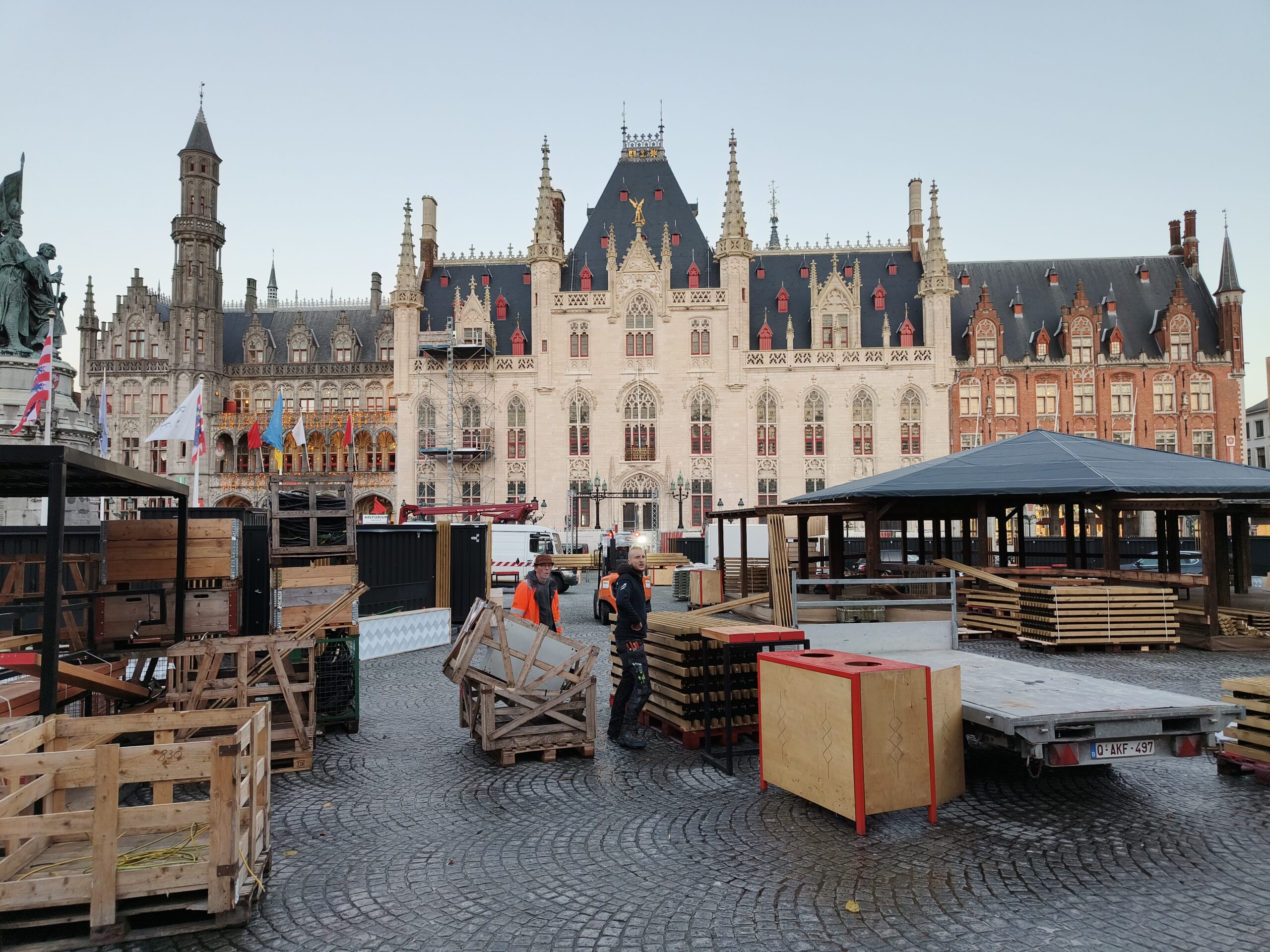
Belgium is Europe’s most underestimated country. Sandwiched between France, Germany, the Netherlands, and Luxembourg, it is routinely overlooked by travellers passing through on their way to more famous destinations — which is their loss and your gain. This small, rain-washed, endlessly surprising nation contains more castles per square kilometre than anywhere else on earth, more Michelin-starred restaurants per capita than France, the world’s greatest concentration of Art Nouveau architecture, the finest medieval city canal system in Europe, the planet’s most complex beer culture, and a chocolate tradition so serious it borders on religion.
Belgium also contains the Western Front, the Waterloo battlefield, the forests of the Ardennes, a wild North Sea coast, and cities — Bruges, Ghent, Antwerp, Leuven, Mechelen — each so distinct they might belong to different countries. This guide covers 101 things to do across all of them.
Brussels: The Capital
Grand-Place & City Centre
- Grand-Place (Grote Markt) — One of the most magnificent city squares in Europe, and a UNESCO World Heritage Site. Ringed by opulent 17th-century guild houses in Flemish Baroque gold and the soaring Gothic Town Hall, the square was described by Victor Hugo as the most beautiful theatre in the world. At night, floodlit in gold, it is genuinely overwhelming. Visit at dawn for an hour before the crowds arrive.
- Manneken Pis — Brussels’s tiny, beloved bronze statue of a small boy urinating into a fountain, sculpted in 1619 and the city’s most eccentric mascot. The statue has an enormous wardrobe of over 1,000 costumes, changed regularly on official occasions. Smaller than you expect, more charming than it has any right to be.
- Galeries Royales Saint-Hubert — The first covered shopping arcade in Europe, opened in 1847, its vaulted glass gallery housing chocolatiers, bookshops, cafés, a theatre, and a cinema. One of the finest 19th-century interior spaces in Belgium and the ideal rainy-day refuge.
- Belgian Comic Strip Centre (Centre Belge de la Bande Dessinée) — Belgium invented the modern comic strip: Tintin, the Smurfs, Lucky Luke, Spirou, and Asterisk all emerged from Belgian studios. This superb museum, in a glorious Victor Horta–designed Art Nouveau building, tells the full story of a genuinely Belgian art form with humour and depth.
- Magritte Museum — The world’s largest collection of works by René Magritte, the master of Belgian Surrealism, housed in the neoclassical Rue de la Régence. Men in bowler hats, apples obscuring faces, skies inside rooms — the full, extraordinary range of the most quietly subversive painter of the 20th century.
- Royal Museums of Fine Arts of Belgium — A vast complex of interconnected museums covering Belgian art from the 15th century to the present, including the Old Masters Museum (Bruegel the Elder, Rubens, Van Dyck), the Magritte Museum, and the Museum of Modern Art with its extraordinary underground extension.
- Atomium — A 102-metre structure of nine steel spheres representing an iron crystal magnified 165 billion times, built for the 1958 World’s Fair. The interior houses permanent and temporary exhibitions; the top sphere has a panoramic view across Brussels and the Sonian Forest. One of the most distinctive buildings of the 20th century.
- Mini-Europe, Laeken — Over 350 scale models of Europe’s most famous monuments, arranged geographically in a beautifully maintained park beside the Atomium. Kitsch, yes — but genuinely enjoyable, and particularly good for children.
- Musical Instrument Museum (MIM) — One of the world’s finest instrument museums, housed in an extraordinary Art Nouveau department store with over 8,000 instruments from every culture. Visitors wear headphones that activate the sound of each instrument as they pass — an inspired and beautiful experience.
- Parc du Cinquantenaire & Triumphal Arch — A vast green park with a monumental triumphal arch at its centre, commissioned by King Leopold II for Belgium’s 50th anniversary. The three museums within the park — Military History, Art & History, and Autoworld — contain some of the finest collections in Belgium.
Art Nouveau Brussels
- Horta Museum (Hôtel Tassel & Hôtel Horta) — Victor Horta invented Art Nouveau architecture, and his own house in Saint-Gilles — now a UNESCO-listed museum — is its supreme expression: whiplash ironwork, mosaic floors, light wells, and the complete fusion of structure and decoration that defines the style.
- Art Nouveau Walking Tour, Saint-Gilles & Ixelles — The residential communes south of Brussels’s centre contain the highest concentration of Art Nouveau buildings in the world. Walk the streets of Saint-Gilles and Ixelles to discover facades by Horta, Paul Hankar, Ernest Blerot, and dozens of others — a free outdoor museum of extraordinary richness.
- Bozar (Centre for Fine Arts) — Victor Horta’s other masterpiece in Brussels: a complex of exhibition halls, concert halls, theatres, and cinema built in 1928, hosting the finest programme of visual art, classical music, and international cinema in Belgium.
- Ixelles Ponds & Flagey — The neighbourhood around the two Ixelles ponds and the great Art Deco Flagey building (Brussels’s former national broadcasting house, now a cultural centre) is the most genuinely Parisian quarter of the city — lined with cafés, gallery spaces, and the best Sunday market in Brussels.
- Parlamentarium, European Quarter — The visitor centre of the European Parliament offers a remarkable, immersive experience explaining the workings of the EU — its history, institutions, and current challenges — in a way that is genuinely engaging rather than dull. Free admission.
Bruges: Medieval Perfection
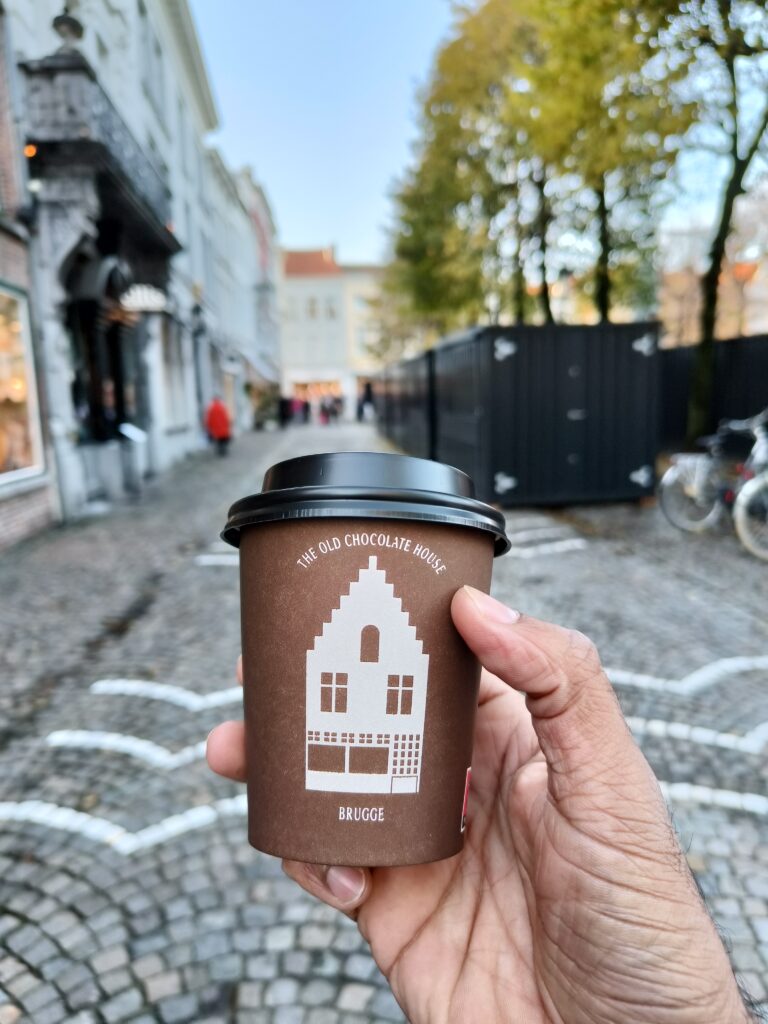
- Canal Walk, Bruges — The most complete medieval canal city in Europe, UNESCO-listed in its entirety. Walk the Dijver, Rozenhoedkaai, and Groenerei canals at dawn or dusk, when the water reflects the gabled facades and the swans drift below the stone bridges. Simply walking here — with no fixed itinerary — is one of the finest things Belgium offers.
- Bruges Belfry (Belfort) — The 83-metre Gothic belfry that dominates the Markt square, housing a 47-bell carillon and offering the finest panoramic view of the city and the flat Flemish plain beyond. Climb its 366 steps; the view is worth every one.
- Basilica of the Holy Blood (Basiliek van het Heilig Bloed) — A two-storey basilica in Bruges’s Burg square housing a venerated relic: a phial said to contain blood wiped from the body of Christ, brought from Jerusalem by the Count of Flanders in 1150. Every Friday the relic is exposed for public veneration in a ceremony of medieval solemnity.
- Groeningemuseum — The finest collection of Flemish Primitive paintings in the world, including Jan van Eyck’s extraordinary Madonna with Canon van der Paele and Hans Memling’s altarpieces. For anyone with an interest in the origins of Western painting, this is a place of pilgrimage.
- Minnewater (Lake of Love) — A serene lake at the southern edge of Bruges, fringed by willow trees and swans, reached through the Begijnhof (a tranquil medieval beguinage). The combination of the lake, the beguinage, and the Wijngaard gate is the most quietly beautiful corner of Bruges.
- Bruges Chocolate Experience — Bruges has more chocolate shops per square metre than anywhere in Belgium — a country that takes chocolate more seriously than most. Visit Chocolate Line, The Chocolate Corner, or Dumon for pralines made on the premises, or join a chocolate-making workshop to craft your own.
- De Halve Maan Brewery — The only remaining family brewery in the historic centre of Bruges, producing the Brugse Zot and Straffe Hendrik beers. The guided tour (ending in a tasting) is the best brewery tour in the city and takes in the underground beer pipeline — installed in 2016 — that runs three kilometres to the bottling plant outside the walls.
- Burg Square — The smaller, more intimate square beside the Markt, containing the City Hall (the oldest in the Low Countries, 1376), the Basilica of the Holy Blood, and a stunning Gothic arcade. Quieter than the main square, and more historically layered.
- Beguinage (Begijnhof) ten Wijngaarde — A UNESCO-listed medieval religious community, founded in 1245, where lay women lived in communal devotion without taking full religious vows. The whitewashed courtyard, enclosed by gabled houses, is a pocket of extraordinary calm at the edge of the city.
- Bruges Christmas Market — One of Europe’s finest Christmas markets, filling the Markt and Simon Stevinplein from late November to early January with over 100 wooden chalets selling glühwein, Belgian chocolates, waffles, and handmade gifts beneath the illuminated Belfry.
Ghent: Medieval & Modern
- Gravensteen Castle — A formidable 12th-century water castle rising from the centre of Ghent, built by Philip of Alsace on his return from the Crusades. The interior houses a collection of medieval torture instruments; the ramparts offer a spectacular view over the city’s rooftops and canals.
- Ghent Altarpiece (Adoration of the Mystic Lamb) — Jan van Eyck’s Ghent Altarpiece, completed in 1432, is the most important painting in the history of Western art — the first major oil painting in Europe, and a work of incomprehensible technical and spiritual ambition. It is housed in Sint-Baafskathedraal (Saint Bavo’s Cathedral) and has recently been fully restored. Seeing it in person is an experience unlike anything else in Belgium.
- Graslei & Korenlei Waterfront — The most beautiful medieval waterfront in Belgium: two parallel quays of guild houses, storehouses, and counting houses from the 12th to 17th centuries, reflected in the Leie River. The terraced café culture here on a summer evening is a very complete Belgian pleasure.
- Patershol Quarter — Ghent’s oldest neighbourhood: a tangle of narrow cobbled streets below Gravensteen, now home to the city’s finest restaurants and most atmospheric bars. Come for dinner at dusk and stay until the city quietens.
- STAM (Ghent City Museum) — A brilliantly conceived museum telling Ghent’s 2,000-year story through its objects, buildings, and people, housed partly in a former abbey. One of the finest city museums in Belgium.
- Design Museum Ghent — A beautifully curated collection of decorative arts and design from the 17th century to the present, with a particular strength in Art Nouveau and Art Deco. Housed in an 18th-century mansion with a striking contemporary extension.
- Street Art, Ghent — Ghent has cultivated an exceptional street art culture, with major works by ROA, Fin DAC, and dozens of international artists scattered across the Muide and Rabot districts north of the centre. The tourist office produces a free street art walking map.
- Friday Market (Vrijdagmarkt) — Ghent’s great historic square — the site of guild conflicts, executions, and popular uprisings for eight centuries — hosts a weekly Friday market and the finest collection of brown cafés (eetcafés) in the city.
- Ghent Light Festival (Lichtfestival) — Held every three years, the Ghent Light Festival transforms the entire medieval city into an immersive light art installation over four January nights. The 2025 edition drew over a million visitors. The next edition is in 2028.
- Delirium Tap, or Dulle Griet Beer Experience — Ghent’s old city is full of extraordinary beer cafés. The Dulle Griet requires you to deposit a shoe before it will serve you its largest glass of beer. It is everything a Belgian beer bar should be.
Antwerp: Fashion, Diamonds & Rubens
- Antwerp-Centraal Railway Station — Consistently voted the most beautiful railway station in the world: a cathedral of iron, glass, marble, and ornamental stone, opened in 1905, with multiple levels of platforms descending below the great dome. Worth an entire morning even if you have no train to catch.
- Rubenshuis (Rubens’s House) — Peter Paul Rubens, the greatest painter of the Flemish Baroque, built this magnificent townhouse and studio on the Wapper in 1610. His collection of antiquities, his baroque garden, and several of his paintings remain in situ — a uniquely intimate encounter with one of the masters.
- Cathedral of Our Lady (Onze-Lieve-Vrouwekathedraal) — The tallest Gothic church in the Low Countries, with a tower rising 123 metres above the Grote Markt. Inside, four major paintings by Rubens are still in the positions for which he painted them: the Descent from the Cross, the Raising of the Cross, the Assumption, and the Resurrection.
- Antwerp Diamond District — More than 80% of the world’s uncut diamonds pass through Antwerp. The few square kilometres around the railway station contain 1,500 diamond companies, 380 workshops, and four diamond bourses. The DIVA museum tells the full story of the diamond and silver crafts in which Antwerp has led the world for 600 years.
- MAS (Museum aan de Stroom) — A spectacular 10-storey riverside museum in the redeveloped port district MAS, with a collection covering Antwerp’s port history, world cultures, and the city’s role as a global trading hub. The rooftop panorama of the port and city is free.
- Grote Markt & Brabo Fountain, Antwerp — The main square of Antwerp, dominated by the Renaissance Town Hall and the guild houses, with the Brabo Fountain at its centre depicting the legendary giant-slayer who gave Antwerp its name (hand-werpen: throwing the hand).
- Plantin-Moretus Museum (UNESCO) — The 16th-century printing house of Christophe Plantin, the most important printer of the Renaissance, preserved intact with its original printing presses, type collections, library, and house. The only printing works to be UNESCO-listed — a remarkable survival.
- Antwerp Fashion District & MoMu — Antwerp is one of the fashion capitals of Europe, home to the Antwerp Six (Dries Van Noten, Ann Demeulemeester, Walter Van Beirendonck, and others) who reinvented fashion in the 1980s. The MoMu (Fashion Museum) and the design quarter around the Nationalestraat are essential for anyone interested in contemporary fashion.
- Zurenborg Quarter (Art Nouveau) — A neighbourhood of extraordinary Art Nouveau and Eclectic architecture east of the Centraal Station: entire streets of fantasy facades in every conceivable style, largely unknown to tourists and entirely free to wander.
- Red Star Line Museum — The story of the 2.5 million emigrants who sailed from Antwerp to America between 1873 and 1934 on the Red Star Line — including Albert Einstein and Irving Berlin — told in a beautifully designed museum in the restored Red Star Line sheds on the Scheldt waterfront.
Leuven, Mechelen & Flemish Brabant
- Leuven Town Hall — Arguably the most extravagant Gothic secular building in the world: three storeys of lace-like carved stone niches, statues, and pinnacles on the Grote Markt of Leuven, built between 1448 and 1469. Even by Belgian standards of Gothic excess, it is extraordinary.
- KU Leuven University Library & Stella Artois Brewery — Leuven’s ancient university (founded 1425, the oldest Catholic university in the world) gave the world both great scholarship and Stella Artois. Visit the university’s Romanesque Great Beguinage (UNESCO-listed) and the InBev brewery museum in a single afternoon.
- Great Beguinage, Leuven (UNESCO) — The largest surviving beguinage in Belgium, a self-contained medieval city-within-a-city on the Dyle River, with 72 houses and three churches still intact. Now a UNESCO World Heritage Site and residential quarter of the university.
- Mechelen (Malines) — The In-Between City — The former capital of the Habsburg Low Countries, halfway between Brussels and Antwerp, with a stunning Cathedral of Saint Rumbold (its tower was planned to be the highest in the world — it was never finished), exceptional bell-ringing traditions, and a completely untouristy old town of patrician houses and beguinages.
- Alden Biesen Commandery, Bilzen — The most impressive castle complex in Flemish Belgium: the former principal commandery of the Teutonic Knights in the Low Countries, a vast Renaissance fortified estate in the Haspengouw fruit-growing region, surrounded by orchards.
Wallonia: Bruges to the Ardennes
- Ypres (Ieper) & the Menin Gate — At 8pm every evening, the Last Post has been sounded beneath the Menin Gate at Ypres without interruption since 1928 (except during the German occupation). The ceremony commemorates the 54,896 Commonwealth soldiers lost in the Ypres Salient with no known grave. It is one of the most moving things you can witness in Europe.
- In Flanders Fields Museum, Ypres — The finest museum of the First World War experience in Belgium, housed in the reconstructed Cloth Hall, with an immersive and emotionally honest account of life in the trenches of the Ypres Salient. Essential visiting for anyone with European family history touching 1914–18.
- Tyne Cot Cemetery, Passchendaele — The largest Commonwealth war graves cemetery in the world: 11,956 graves arranged in silence under a Flemish sky, with the memorial panels listing another 34,887 soldiers with no known grave. A place of overwhelming stillness and sorrow.
- Waterloo Battlefield & Memorial 1815 — Thirty minutes south of Brussels, the gently rolling farmland where Napoleon was finally defeated on 18 June 1815 is preserved with extraordinary integrity. The Memorial 1815 visitor centre, the Lion’s Mound, and the panoramic painting of the battle together make the most complete Napoleonic battlefield experience in Europe.
- Dinant & the Citadel — A dramatically sited town on the Meuse river, squeezed between a vertical limestone cliff and the water, dominated by a 13th-century citadel reached by cable car. Dinant is the birthplace of Adolphe Sax, inventor of the saxophone — the town celebrates accordingly.
- Han-sur-Lesse Caves — A vast network of caves carved through the Ardennes limestone by the Lesse river, accessible only by boat (entering) and tram (exiting), with chambers of stalactites, stalagmites, and underground rivers on a scale that astonishes. The finest cave system in Belgium.
- Ardennes Forest & the High Fens (Hautes Fagnes) — The high plateau of the Hautes Fagnes in eastern Belgium — Europe’s largest peat bog landscape — offers extraordinary hiking through moorland, forest, and fens that feel unlike anything else in the Low Countries. The Signal de Botrange (694m), Belgium’s highest point, is here.
- Kayaking the Lesse or Semois River — Rent a kayak at Houyet or Chanxhe and paddle through the Ardennes: deep wooded valleys, limestone cliffs, medieval villages, and the extraordinary Château de Walzin visible from the water. The Lesse to Anseremme run is the classic Ardennes kayaking trip.
- Bastogne & the Battle of the Bulge — In December 1944, the town of Bastogne was surrounded by German forces in the largest land battle in US military history. The Bastogne War Museum and the Mardasson Memorial — a star-shaped monument listing every American state — tell the story of the soldiers who held and eventually broke the German advance.
- Namur Citadel — A vast fortified complex on a rocky promontory above the confluence of the Meuse and Sambre rivers, the most important fortress in the Ardennes. Walk the perimeter walls for views over two river valleys and the old city below.
- Liège & La Batte Sunday Market — Belgium’s most characterful Walloon city, working-class, energetic, and entirely untouristy, with the finest Sunday market in Belgium (La Batte, running 3 kilometres along the Meuse waterfront), magnificent Romanesque churches, and a ferociously proud local identity.
- Bouillon Castle — A spectacularly situated medieval castle above the Semois river, belonging to Godefroy de Bouillon — the leader of the First Crusade — before he departed for Jerusalem in 1096. The castle and the forested Semois valley below are the finest medieval landscape in Wallonia.
The Belgian Coast
- Ostend (Oostende) — Belgium’s largest coastal resort: a city of wide beaches, Belle Époque architecture, the finest seafood market on the Belgian coast, and the surprisingly excellent Fine Arts Museum (with major James Ensor collections). Walk the digue (seafront promenade) and eat at least one plate of grey shrimps.
- Knokke-Heist — The most fashionable Belgian seaside resort, at the Dutch border, with art galleries, designer boutiques, excellent restaurants, and beach cabins stretching towards the Zwin nature reserve — the finest birdwatching site on the Belgian coast.
- De Panne & the Westhoek Dunes — The wildest stretch of the Belgian coast: the Westhoek nature reserve at De Panne contains the largest mobile dune system in Belgium, with valleys, slack ponds, and beach access that feels genuinely remote. Landkiting and sandboarding on the beach are popular in season.
- Zwin Nature Reserve — A tidal inlet and salt marsh at the Belgian-Dutch border, an important wetland for migrating birds, with a well-designed nature centre and walking trails through the dunes to the sea. The original medieval sea inlet through which Bruges traded with the world.
Beer, Chocolate & Belgian Food
- Trappist Brewery Visit: Westvleteren or Chimay — Belgium has six Trappist breweries producing beer within the monastery walls by monks: Westvleteren, Rochefort, Chimay, Westmalle, Achel, and Orval. Westvleteren 12 is regularly rated the best beer in the world. Visit the abbey shop (no tours available) or the In de Vrede café opposite to drink it where it is made.
- Belgian Beer Weekend, Brussels (September) — Held each September on the Grand-Place, the Belgian Beer Weekend brings together over 400 beers from 80 breweries in the most extraordinary concentration of beer culture in Europe. Booking in advance is essential.
- Cantillon Gueuze Brewery, Brussels — The last traditional lambic brewery in Brussels, operating since 1900, producing spontaneously fermented beers of extraordinary complexity: gueuze, kriek, and faro in a brewery that has not changed since the 19th century. Tours and tastings in an atmospheric working building.
- Belgian Chocolate Workshop, Brussels or Bruges — Join a hands-on praline-making class with one of Belgium’s master chocolatiers. Learn the distinction between couverture, ganache, and praliné; understand why Belgian chocolate differs from every other; and go home with a box you made yourself.
- Pierre Marcolini, Laurent Gerbaud & Other Brussels Chocolatiers — Brussels’s grand chocolatiers make some of the finest confectionery in the world. Pierre Marcolini sources his own cacao and produces chocolates of intense purity; Laurent Gerbaud works with unusual origin chocolates from the Silk Road. A walking tour of the best chocolate shops in Brussels is a serious pleasure.
- Moules-Frites in Brussels — A pot of mussels steamed in white wine, celery, and cream, with a cone of twice-fried chips and a choice of twelve sauces. This is Belgium’s national dish, eaten with unselfconscious pleasure across the country. The restaurants around the Rue des Bouchers serve it all year; August is the mussel season’s height.
- Belgian Waffles: Liège vs Brussels — The debate between the yeasted, pearl-sugar-studded Liège waffle (eaten warm from a street stall) and the lighter, crisper Brussels waffle (eaten at a table with fruit and cream) has no correct answer. Eat both, repeatedly, and form your own opinion.
- Witloof (Belgian Endive) in a Waterzooi — Waterzooi is Ghent’s traditional stew — originally made with fish from the Leie River, now more commonly with chicken — a creamy broth of vegetables and cream that is the supreme expression of Flemish home cooking. Eat it in a Patershol restaurant in Ghent.
- Speculoos & a Proper Belgian Coffee — Belgium’s spiced shortcrust biscuit, flavoured with cinnamon, nutmeg, and cloves, is the standard accompaniment to a Belgian coffee. The combination — in any café in any city, morning or afternoon — is one of the small, recurring pleasures of travelling in Belgium.
Art, Architecture & Culture
- Royal Museum of Central Africa, Tervuren — A vast and extraordinary museum documenting Belgium’s colonial history in the Congo, recently and controversially recontextualised, with superb collections of Central African art, ethnography, and natural history in a Belle Époque palace surrounded by forest outside Brussels.
- Bruges Concert Hall (Concertgebouw) Rooftop — The roof terrace of Bruges’s modernist concert hall offers a view across the historic city from above that is entirely different from the ground-level experience — the belfry, the canals, and the flat Flemish plain laid out in a way you cannot see from anywhere else.
- Ghent’s S.M.A.K. (Museum of Contemporary Art) — One of the finest contemporary art museums in Belgium, adjacent to the Fine Arts Museum in Ghent’s Citadelpark, with an internationally significant collection and a consistently challenging programme of temporary exhibitions.
- Mons & the BAM (Museum of Art in Mons) — The European Capital of Culture 2015 transformed Mons into a city of cultural infrastructure. The BAM houses a superb collection of 19th and 20th-century art; the newly built Mundaneum nearby archives the dreams of the early information age.
- Train World, Schaerbeek (Brussels) — The finest railway museum in Belgium, opened in 2015, with a collection of historic Belgian locomotives and carriages in a beautifully restored Art Nouveau station. The storytelling is excellent and the hardware is extraordinary.
Cycling: Belgium on Two Wheels
- Cycling the Flanders Route — Belgium is the greatest cycling nation in the world, and Flanders is its cathedral. Cycle the cobbled climbs (Koppenbergberg, Oude Kwaremont, Paterberg) ridden by the Tour of Flanders — the most important cobbled Classic in the world — and understand why Belgians treat professional cycling as a secular religion.
- Cycling the Ardennes Valleys — The forested valleys of the Lesse, Semois, Amblève, and Ourthe rivers in Wallonia offer superb touring cycling on quiet roads through beech forest, past Romanesque churches, and along rivers of exceptional clarity.
- Bruges to Ghent by Bicycle — A gentle 60-kilometre cycle along canal towpaths and flat Flemish back roads connecting Belgium’s two great medieval cities. Entirely flat, largely car-free, and one of the finest day rides in the Low Countries.
- The Ravel Network — Belgium’s nationwide network of converted railway lines and canal towpaths provides thousands of kilometres of traffic-free cycling. The Ravel in the Meuse valley between Liège and Namur is particularly beautiful.
- Velodroom, Ghent — The Kuipke velodrome in Ghent has hosted the Six Days of Ghent cycle race since 1922 — one of the oldest and most atmospheric track cycling events in the world, held each November in a smoke-filled arena of extraordinary noise and passion.
Festivals & Events
- Bruges Beer Festival (February) — Over 700 Belgian beers in the Bruges Concert Hall, tasted across two days in February — one of the finest opportunities to work through the full range of Belgian brewing styles, from lambic to tripel to quadrupel.
- Ghent Festivities (Gentse Feesten — July) — Ten days in mid-July when the entire city of Ghent becomes one enormous outdoor festival: over 1,000 free concerts, street theatre, circus, and a world music programme across 50 stages. One of the largest free arts festivals in Europe.
- Ommegang Festival, Brussels (July) — A spectacular historical pageant commemorating a procession of 1549 in honour of Emperor Charles V, with 1,400 participants in period costume, horses, and banners filling the Grand-Place. One of the most theatrical historical events in Europe.
- Binche Carnival (Shrove Tuesday) — A UNESCO-listed carnival of extraordinary antiquity in the Walloon town of Binche, where the Gilles — men in elaborate wax-mask costumes and ostrich feather hats — parade through the streets throwing oranges at the crowd. Deeply strange and completely mesmerising.
- Tour of Flanders (Ronde van Vlaanderen — April) — The greatest one-day cycling race in the world, 260 kilometres across the cobbled climbs of the Flemish Ardennes. Watch from the Koppenbergberg, the Oude Kwaremont, or the finish in Oudenaard for an experience of Belgian sporting culture at its most passionate.
Hidden Gems & Unique Experiences
- Bokrijk Open-Air Museum, Genk — Over 100 historic Flemish and Limburg farmhouses, windmills, barns, and village buildings, dismantled and re-erected across 550 hectares of woodland and heath in the province of Limburg. The finest open-air folk museum in Belgium and largely unknown outside the country.
- Durbuy — Smallest Town in the World — A tiny medieval town in the Ardennes Ourthe valley, often claimed as the smallest officially recognised town in the world, with a 13th-century castle, cobbled lanes, artisanal food producers, and a setting of wooded hills and river meanders that is perfectly composed.
- Hallerbos Bluebell Forest, Halle — For three weeks in late April and early May, the ancient beech forest of Hallerbos south of Brussels is carpeted from edge to edge in bluebells — a blue haze stretching under grey beech canopy that attracts photographers from across Europe. Time it right and it is one of the most beautiful natural spectacles in Belgium.
- Coo Waterfalls & the Amblève Valley — The Coo waterfall in the Ardennes Amblève valley is the highest in Belgium — artificial, but dramatic — and the starting point for kayaking, mountain biking, and hiking in one of the Ardennes’ most beautiful river valleys.
- Walibi Belgium (Theme Park) & Aqualibi — Belgium’s largest theme park, near Wavre, with major roller coasters and a covered water park. The best family day out in Wallonia.
- Villers-la-Ville Abbey Ruins — The most romantic ruins in Belgium: a 12th-century Cistercian abbey in the Brabant Wallon forest, abandoned at the French Revolution and left to the elements. The roofless nave, the intact chapterhouse, and the forest growing through the cloister walls make it one of the finest atmospheric ruins in northern Europe.
- Sint-Truiden Fruit Blossom Route, Hageland — In April and May, the orchards of the Haspengouw region around Sint-Truiden erupt in white and pink blossom — one of the most beautiful seasonal landscapes in Flanders. Cycling or driving the blossom route between the fruit farms is a very Belgian spring pleasure.
- Grottes de Neptune & the Meuse Valley, Dinant — The Meuse valley between Namur and Dinant is one of Belgium’s most dramatic natural landscapes: towering limestone cliffs, forested hills, and medieval castles above the river. The boat trip from Dinant to Anseremme is the finest way to see it.
- Bruges by Night — Most visitors to Bruges leave in the late afternoon. Stay for the evening, when the day-trippers have gone and the canals and guild facades are lit in amber and gold. The city after dark is an entirely different and immeasurably more atmospheric experience.
- An Afternoon in a Belgian Brown Café — The traditional Belgian brown café (bruin café) — dark wood, worn tiles, a hundred beers on the menu, no music louder than conversation — is one of the great European institutions. Find one in any city, order a Westmalle Tripel or a Rochefort 10, and sit with it for as long as you like. Nobody will rush you. This is, in miniature, what Belgium does best.
- Watch the Last Post at the Menin Gate, Ypres — On your last evening in Belgium, drive to Ypres and stand beneath the Menin Gate as the buglers of the Last Post Association sound the Last Post at 8pm. They have done this every evening since 1928. The traffic stops. The crowd falls silent. Four buglers raise their instruments. The notes travel up into the carved arches where 54,896 names are recorded. In the silence that follows, Belgium reveals what it holds deepest, and why it is worth knowing so much better than most travellers ever take the trouble to find out.
Quick Facts for Visitors
| Best time to visit | April–June and September–October (mild, festivals, blossoms) |
| Christmas | November–December for the finest markets in Europe |
| Currency | Euro (€) |
| Languages | Dutch (Flanders), French (Wallonia), German (east), all three in Brussels |
| Getting around | Train (excellent between cities) · Bicycle (essential in Flanders) |
| Capital | Brussels |
| Ideal trip length | 5–7 days for the main cities · 10 days to add the Ardennes and coast |
| Beer note | Belgium has over 1,500 different beers. Take your time. |
Belgium rewards curiosity. The country’s greatest pleasures are hidden just off the main tourist path: a Trappist beer drunk in monastic silence, a canal reflected in pre-dawn stillness, a name on a wall at Ypres. The more attention you pay, the more it gives back.