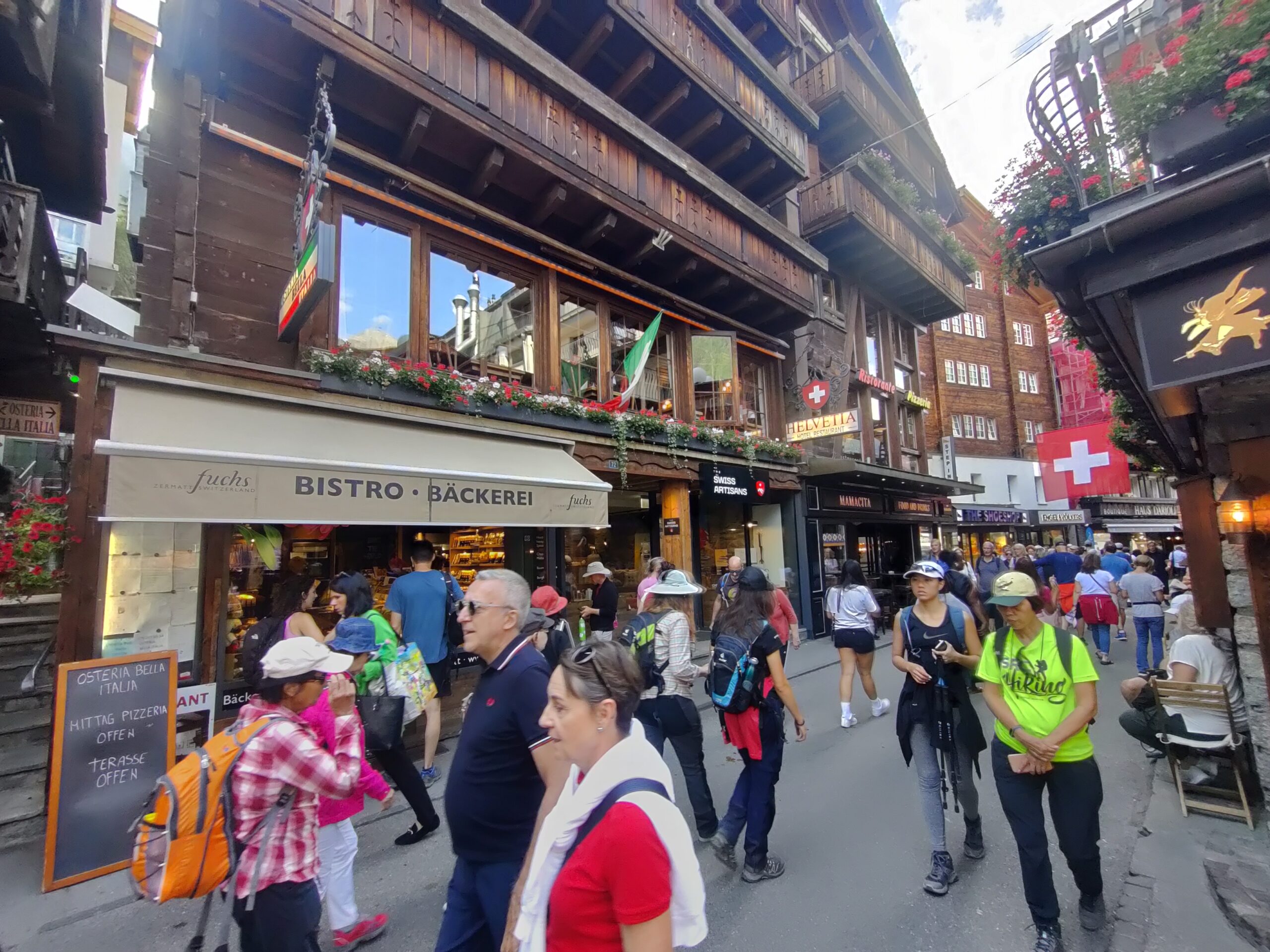
Switzerland is, quite simply, one of the most beautiful countries on earth. A small, landlocked nation in the heart of Europe, it packs within its borders the snow-capped Alps, shimmering glacial lakes, medieval old towns, car-free mountain villages, world-class ski resorts, and some of the finest train journeys on the planet. Whether you come in summer for the wildflower meadows and turquoise lakes, or in winter for the legendary ski slopes, Switzerland never disappoints — it only ever manages to exceed expectations.
This guide covers 101 things to do across the country, from the unmissable icons to the quietly extraordinary corners that most visitors walk straight past.
The Swiss Alps: Mountains & Viewpoints
- Jungfraujoch — Top of Europe — Ride Europe’s highest railway to a station carved into the Eiger and Mönch mountains at 3,454 metres. The views of the Aletsch Glacier — the longest in the Alps — and the surrounding peaks are otherworldly. The ride up, pausing at windows cut through rock walls, is part of the experience.
- The Matterhorn, Zermatt — One of the world’s most recognisable mountains: a perfect, solitary pyramid of rock rising to 4,478 metres above the car-free village of Zermatt. You cannot climb it without a guide, but simply standing in the village square watching it catch the morning light is reason enough to come.
- Glacier Paradise, Zermatt (3,883m) — Take the cable car to the highest viewpoint in the Alps accessible by lift, with views across 14 countries on a clear day. Explore the ice palace carved inside the glacier and walk on the eternal snow of the Klein Matterhorn.
- Jebel Schilthorn & Piz Gloria — The revolving restaurant at 2,970 metres above Mürren, made famous as the Bond villain’s lair in On Her Majesty’s Secret Service, offers a 360-degree panorama of 200 Alpine peaks. Come for breakfast as the Eiger, Mönch, and Jungfrau emerge from morning cloud.
- Mount Pilatus, Lucerne — Reach the jagged summit of Pilatus (2,132m) above Lucerne by the world’s steepest cogwheel railway, then descend by cable car and gondola in the classic Golden Roundtrip — one of the great Swiss mountain day trips.
- Mount Titlis, Engelberg — Take the world’s first revolving cable car to the summit at 3,020 metres for year-round snow, a dramatic suspension bridge over a crevasse, and views across the Central Swiss Alps.
- Grindelwald First & Cliff Walk — The Bernese Oberland’s most dramatic high-altitude walk: a steel walkway bolted to the cliff face at First (2,168m) above Grindelwald with a sheer drop beneath your feet and a panorama of the Eiger and the Wetterhorn directly ahead.
- Staubbach Falls & Lauterbrunnen Valley — The Lauterbrunnen valley is the inspiration for Tolkien’s Rivendell — a deep, sheer-walled glacial cleft with 72 waterfalls tumbling from the clifftops. Staubbach Falls, plunging 297 metres directly behind the village, is among the highest free-falling waterfalls in Europe.
- Harder Kulm, Interlaken — The local mountain above Interlaken, reached by funicular in 10 minutes, with the most dramatic view in the Bernese Oberland: Lakes Thun and Brienz stretching in opposite directions, with the Eiger, Mönch, and Jungfrau wall rising at the end of the valley.
- Rigi — Queen of the Mountains — The most beloved viewpoint in central Switzerland, above Lake Lucerne, was the first mountain railway in Europe (1871). Come for sunrise and watch the Mittelland emerge from fog beneath a sea of peaks.
- Aletsch Glacier Hike — The longest glacier in the Alps stretches 23 kilometres through a UNESCO World Heritage landscape. Walk the rim trail above the ice for perspectives that dwarf everything human.
- Gorner Glacier Viewpoint, Zermatt — The Gornergrat cogwheel railway climbs to 3,089 metres for a panorama of 29 peaks above 4,000 metres, including the Matterhorn and Monte Rosa — the most glacier-rich view in the Alps.
- Männlichen Panorama Walk — Take the world’s longest gondola from Grindelwald to Männlichen and walk the gentle ridge trail to Kleine Scheidegg — two hours of meadow walking with the north faces of the Eiger, Mönch, and Jungfrau directly in front of you.
- Säntis Summit, Appenzell Alps — The isolated peak of Säntis (2,501m) in northeastern Switzerland, reached by cable car, commands views across seven countries on clear days and a very different, wilder Alpine landscape than the well-trodden Bernese Oberland.
- Niesen — The Swiss Pyramid — A perfectly pyramid-shaped mountain above Lake Thun, reached by funicular, that offers a stunning view across the Bernese Alps from a summit that feels genuinely remote despite being easily accessible.
Scenic Trains & Rail Journeys
- Glacier Express: Zermatt to St. Moritz — The world’s most famous scenic train journey, crossing 291 bridges and 91 tunnels over eight hours between two of Switzerland’s greatest mountain resorts. The panoramic carriages with floor-to-ceiling windows frame an ever-changing masterpiece of glaciers, gorges, and Alpine villages. Lunch is served at your seat.
- Bernina Express: Chur to Tirano (Italy) — A UNESCO World Heritage railway crossing the highest point of any non-rack railway in the Alps at 2,253 metres. The route crosses the curved Landwasser Viaduct — one of the most photographed railway structures in Europe — before descending dramatically into the Italian lakes.
- GoldenPass Line: Lucerne to Montreux — A cross-Switzerland train journey linking the heartland to the Riviera, passing through the rolling hills of the Emmental, the resort town of Interlaken, and the vine-covered shores of Lake Geneva.
- Jungfrau Railway: Kleine Scheidegg to Jungfraujoch — The world’s highest railway station, bored through the Eiger and Mönch by hand over 16 years (1896–1912). The journey through the mountain is a remarkable feat of Victorian-era engineering.
- Centovalli Railway: Locarno to Domodossola — A little-known gem: a narrow-gauge train winding through the dramatic Hundred Valleys of Ticino, crossing dozens of stone bridges above forested gorges on its way from Switzerland to Italy.
- Brienz Rothorn Bahn — Steam Rack Railway — A vintage steam-powered cogwheel railway climbing from Lake Brienz to the Rothorn summit (2,350m), running in summer only. One of the most charming and old-fashioned mountain railway experiences in the Alps.
- Rigi Railway (World’s First Mountain Railway) — Ride history on the world’s oldest mountain railway, opened in 1871, climbing to the summit of the Queen of the Mountains above Lake Lucerne.
- Swiss Travel Pass — The single most useful thing any visitor to Switzerland can buy: unlimited travel on virtually every train, bus, and boat in the country, plus free or discounted entry to hundreds of attractions. The Swiss rail network is world-class and the best way to see the country.
Lucerne & Central Switzerland
- Chapel Bridge (Kapellbrücke) — Europe’s oldest wooden covered bridge, built in 1333, stretching across the Reuss River in Lucerne with a distinctive octagonal water tower and 17th-century triangle paintings depicting Lucerne’s history. The most photographed sight in Switzerland.
- Lucerne Old Town — A remarkably well-preserved medieval city with frescoed buildings, cobbled lanes, the ancient Musegg Wall and its nine towers, and the perfectly framed view of the bridge and the mountains beyond the lake. Simply walking is the thing to do here.
- Musegg Wall, Lucerne — The best-preserved medieval city wall in Switzerland, dating to the 14th century. Three of its nine towers are open to climb for panoramic views over the old town and Lake Lucerne.
- Lake Lucerne Cruise — Board one of the elegant Belle Époque paddle steamers on Lake Lucerne for a cruise through the most dramatic lakeside scenery in Switzerland — ringed by mountains on every side and studded with historic landing stages.
- Swiss Museum of Transport, Lucerne — Switzerland’s most visited museum, celebrating the country’s extraordinary contribution to the history of rail, road, air, and space travel. Genuinely fascinating for all ages.
- Lion Monument (Löwendenkmal) — Mark Twain called it the most mournful and moving piece of rock in the world. Carved directly into the sandstone cliff face in 1821, this dying lion commemorates the Swiss Guards killed during the French Revolution.
- Bürgenstock Resort Above Lake Lucerne — A dramatic clifftop plateau above Lake Lucerne accessible by Europe’s tallest outdoor elevator (car-free, reached by boat). One of the finest luxury spa settings in Switzerland, but worth visiting for the views alone.
Bern: The Federal Capital
- Bern Old Town (UNESCO World Heritage Site) — The best-preserved medieval city centre in northern Europe, with six kilometres of arcaded walkways (Lauben) shielding pedestrians from the weather, the 12th-century Rose Garden, and the dramatic bend of the Aare river below. One of the great underrated city walks in Europe.
- Zytglogge Clock Tower, Bern — The 13th-century astronomical clock tower at the heart of the old city performs an elaborate mechanical show four minutes before every hour — bells, bears, jesters, and a crowing cockerel in sequence.
- Einstein’s House, Bern — Albert Einstein wrote his four world-changing papers — including the Special Theory of Relativity — in a flat on Kramgasse 49 in 1905. The apartment is preserved as a small and affecting museum.
- Bern Bear Park — The bear has been Bern’s heraldic symbol since the 12th century. The riverside bear pit (now an open, naturalistic park) below the Rose Garden has housed live bears since 1513.
- Bern Rose Garden (Rosengarten) — A hillside garden above the old city with 220 varieties of rose in bloom from May to October, and the finest view of the Zytglogge, the old town, and the Aare below. Come at sunset.
- Bundeshaus (Federal Palace), Bern — Guided tours of Switzerland’s parliament building and its magnificent domed central hall are free and surprisingly rewarding — the building is as impressive as any European parliament.
Zurich: Culture, Commerce & the Lake
- Zurich Old Town (Altstadt) — Two medieval quarters on either bank of the Limmat, with Romanesque churches, guild houses, the narrow lanes of Niederdorf, and the twin towers of Grossmünster rising above the river. Best explored on foot, starting at dawn.
- Bahnhofstrasse — One of the world’s most exclusive shopping streets, running from the main station to the lake. The window displays alone are worth a slow stroll; the underground vaults beneath it are said to contain more gold than Fort Knox.
- Kunsthaus Zürich — One of the finest art museums in Europe, with the largest collection of Alberto Giacometti works in the world, a superb Impressionist collection, and a new Chipperfield-designed wing housing major works of contemporary art.
- Lake Zurich Swimming — In summer, Zurich transforms into a city of swimmers. The Zürichsee has dozens of public bathing spots (Badis) along its shores, where Zurichers plunge into the crystal-clear water directly after work. Join them.
- Uetliberg — Zurich’s Local Mountain — A 20-minute train ride from the city centre, then a short climb to the summit tower at 870 metres, with views across Lake Zurich, the Mittelland, and on clear days the entire Alpine chain from the Säntis to Mont Blanc.
- Fraumünster Church, Zurich — A Carolingian abbey church on the west bank of the Limmat, with five extraordinary stained-glass windows designed by Marc Chagall in 1970 — among the finest 20th-century ecclesiastical glass in Europe.
- Zurich West & Langstrasse — The city’s creative and nightlife quarter, built into former industrial buildings: galleries, design studios, riverside bars, and restaurants that bear no resemblance to the staid banking city of popular imagination.
- Swiss National Museum, Zurich — A vast neo-Gothic castle beside the main station housing the most comprehensive collection of Swiss cultural history, from the Stone Age through the Reformation to the present day.
- Boat Trip on Lake Zurich — Take the regular lake steamer from Bürkliplatz to Rapperswil at the far end of the lake — a two-hour journey past vineyard hillsides, historic villages, and the distant Alps.
Geneva & Lake Geneva
- Jet d’Eau — Geneva’s defining image: a column of water blasted 140 metres into the sky above the harbour, visible from across the city and beyond. Standing beneath it in a westerly wind is a guaranteed soaking.
- Lake Geneva Cruise — Ride the beautiful Belle Époque paddle steamers of the CGN fleet along the lake shore, stopping at Lausanne, Montreux, Chillon, and Vevey, with the Savoy Alps rising across the water throughout.
- Old Town Geneva (Vieille Ville) — Climb the hill to Geneva’s compact medieval quarter, centred on the Cathedral of Saint-Pierre (which Calvin made the capital of his Reformation) and the Place du Bourg-de-Four, the oldest square in Geneva.
- CERN Visitor Centre — The European Organisation for Nuclear Research, home of the Large Hadron Collider and the birthplace of the World Wide Web, offers fascinating public tours and exhibitions on the edge of Geneva. Book well in advance.
- Palais des Nations, Geneva — Guided tours of the European headquarters of the United Nations, in the beautiful park setting of the Parc de l’Ariana. One of the world’s great institutions, surprisingly open to public visitors.
- International Red Cross Museum — One of the most powerful and moving museums in Europe, telling the story of humanitarian action from the Battle of Solferino to the present day. Essential visiting for anyone with an interest in modern history.
- Château de Chillon, Montreux — A perfectly preserved 12th-century island castle at the edge of Lake Geneva, below Montreux, made famous by Byron’s poem The Prisoner of Chillon. One of the most visited historic buildings in Switzerland and one of its most beautiful.
- Lavaux Vineyard Terraces — A UNESCO World Heritage landscape of terraced vineyards above Lake Geneva between Lausanne and Montreux, dating to the 11th century. Walk the Lavaux Vineyard Trail in September during harvest for one of the finest wine-country walking experiences in Europe.
- Montreux Jazz Festival — Held every July since 1967, the Montreux Jazz Festival is one of the world’s great music events, staged against the backdrop of the lake and the Alps. Many outdoor concerts are free.
- Gruyères Village & Cheese Factory — Drive to the perfectly preserved medieval hilltop village of Gruyères in Fribourg canton, then visit the La Maison du Gruyère dairy to watch Switzerland’s most famous cheese being made. The HR Giger Museum — dedicated to the Alien artist who was born here — is a surreal and extraordinary addition to the village.
Interlaken & the Bernese Oberland
- Paragliding above Interlaken — Launch from the slopes above Interlaken for a tandem paraglide over the valley between Lakes Thun and Brienz, with the Eiger and Jungfrau filling the horizon — one of the most celebrated paragliding experiences in the world.
- Canyoning in Saxeten or Grimsel — Professional guides lead half-day canyoning trips through the gorges above Interlaken — jumping, sliding, and swimming through some of the most dramatic water-carved rock in the Alps.
- Lake Brienz — A luminously turquoise glacial lake east of Interlaken, considerably quieter than Lake Thun, with the perfectly photogenic village of Brienz on its shore and a boat service to Giessbach Falls.
- Lake Thun — The western lake of the Interlaken pair, with the grand Thun Castle reflected in the water, the Niesen pyramid rising beyond, and several excellent swimming beaches along its northern shore.
- Trümmelbach Falls — Inside the Lauterbrunnen valley cliff face, the meltwater of the Jungfrau glacier has carved a series of ten waterfalls through the living rock. Lifts and walkways let you enter the mountain and stand beside the torrent. One of Switzerland’s most spectacular natural wonders.
- Grindelwald Valley — The quintessential Alpine valley: wooden chalets, flower-filled meadows, and the north face of the Eiger rising sheer at the valley’s head. The starting point for hikes to First, the glacier gorge, and the Bachalpsee.
- Bachalpsee Lake, Grindelwald — A high alpine lake above First with reflections of the Schreckhorn and Finsteraarhorn on still mornings. A 45-minute walk from the First cable car station and one of the most beautiful short hikes in Switzerland.
- Wengen & Mürren — Car-Free Alpine Villages — Two traffic-free villages perched on cliff ledges above the Lauterbrunnen valley, accessible only by train or cable car. Both offer extraordinary mountain views, peaceful hiking, and an Alpine atmosphere untouched by the 21st century.
- Oeschinensee Lake, Kandersteg — A high glacial lake cupped in a bowl of cliffs and waterfalls above Kandersteg, reached by gondola and a short walk. The turquoise water, especially in late spring when the surrounding snowfields are still white, is among the most beautiful sights in the Alps.
- Via Ferrata Routes, Bernese Oberland — Fixed-iron climbing routes bolted into the rock above Grindelwald, Kandersteg, and Mürren allow non-technical climbers to access vertiginous positions with the security of a harness. A thrilling way to experience the high Alps without mountaineering experience.
Eastern Switzerland, Graubünden & Ticino
- St. Moritz & the Engadine Valley — The birthplace of Alpine winter tourism, and still its most glamorous address. The high Engadine valley — at 1,800 metres, with over 300 days of sunshine per year — is as beautiful in summer as in winter.
- Rhine Falls, Schaffhausen — The largest waterfall in Europe by volume, where the Rhine drops 23 metres in a roar of white water that shakes the viewing platforms. Accessible by boat to a rock at the centre of the falls.
- Appenzell Village — A beautifully preserved small town in northeastern Switzerland with brightly painted facades, an extraordinary local cheese (Appenzeller), and the distinction of being the last Swiss canton to grant women the right to vote — in 1991.
- Toggenburg Valley — A quiet, pastoral valley in eastern Switzerland between the Churfirsten peaks and the Säntis massif, with traditional farmhouses, cheese dairies, and hiking trails that feel entirely free of tourist infrastructure.
- Lugano & Lake Lugano (Ticino) — Switzerland’s Italian canton is the country’s warmest and most Mediterranean region. Lugano’s lakeside promenade, palm trees, and piazza culture feel closer to Como than Zurich. Monte San Salvatore and Monte Brè both offer gondola rides to superb viewpoints.
- Locarno & Lake Maggiore — A sun-drenched lakeside town in Ticino, famous for its August film festival (when the piazza becomes one of the world’s largest open-air cinemas), its Baroque pilgrim church above the town, and its access to the Verzasca and Centovalli valleys.
- Verzasca Dam, Ticino — James Bond bungee-jumped from the Verzasca Dam in GoldenEye — and you can too. At 220 metres, it is one of the world’s highest commercial bungee jumps, above an emerald-green reservoir in a dramatic Alpine gorge.
- Mustair Valley & Benedictine Convent (UNESCO) — In the far southeast corner of Switzerland, this Carolingian convent houses the most important collection of 9th-century frescoes in the world — a genuinely remarkable and rarely visited UNESCO treasure.
- Swiss National Park, Graubünden — Switzerland’s only national park, in the Lower Engadine, is one of the oldest in Europe (1914). No hotels, no cable cars, no interference — just 170 square kilometres of Alpine wilderness, chamois, ibex, bearded vultures, and wolves.
Winter Sports
- Skiing in Zermatt — One of the world’s great ski destinations: 360 kilometres of pistes, year-round skiing on the Klein Matterhorn glacier, the Matterhorn as a backdrop, and complete freedom from cars in the village streets.
- Skiing in Verbier — The Four Valleys ski area linked to Verbier is the most challenging and extensive in the Alps, popular with expert skiers and a famously lively après-ski scene in the village.
- Skiing in St. Moritz — The original Alpine resort, with the Corviglia and Corvatsch ski areas, the legendary Cresta Run (for bobsled), and a social scene that attracted royalty and film stars for over 150 years.
- Skiing in Davos-Klosters — Europe’s highest city and one of its largest ski areas, with 320 kilometres of pistes across six mountains. Prince Charles’s favourite Swiss resort for over four decades.
- Cross-Country Skiing in the Engadine — The high, flat Engadine valley above St. Moritz is perfect for cross-country (langlauf) skiing, with 200 kilometres of groomed trails through a winter landscape of extraordinary clarity and stillness.
- Ice Skating on Frozen Lakes — In a hard winter, several Swiss mountain lakes freeze solid enough to skate on. Lake Sils in the Engadine and the Lac de Joux in the Jura are the most reliable. There is nothing quite like skating across a frozen Alpine lake.
- Tobogganing (Schlitteln), Grindelwald — The toboggan run from Bussalp above Grindelwald, or from the First down to the valley, gives an entirely genuine high-speed Alpine experience with no special training required.
- Snowshoeing in the Bernese Oberland — Rent snowshoes in Mürren, Wengen, or Kandersteg and walk the quiet winter trails above the valley — through snow-laden forests and across open snowfields, completely alone.
Food, Drink & Swiss Culture
- Fondue in the Alps — There is no more Swiss experience than a pot of bubbling Gruyère and Emmental cheese, a glass of Fendant white wine, and a basket of bread cubes, eaten at a wooden table in a mountain restaurant with snow outside. Order it at Chez Vrony in Zermatt, at the Chalet de Gruyères, or almost anywhere in the Bernese Oberland.
- Raclette at a Mountain Restaurant — Half a wheel of Valais raclette slowly melted under a heat lamp, scraped onto boiled potatoes, cornichons, and pickled onions. Simpler than fondue, and some argue more satisfying. Best eaten outdoors in winter.
- Swiss Chocolate Factory Tour — Visit the Maison Cailler in Broc (near Gruyères), Lindt Home of Chocolate in Zurich, or the Läderach factory in Glarus for a proper exploration of Switzerland’s greatest sweet obsession.
- Lavaux Wine Tasting — The Chasselas white wines grown on the terraced shores of Lake Geneva are some of Switzerland’s finest and almost entirely unavailable outside the country. Visit a cave (wine cellar) in Epesses, Rivaz, or Chexbres for a tasting with lake views.
- Appenzeller Cheese Tasting & Dairy Visit — Visit the Schaukäserei (show dairy) in Stein-Appenzell to watch traditional Appenzeller cheese being made by hand, and taste the result alongside a cold glass of local cider.
- Zürich Brunch at a Lakeside Badi — In summer, Zurich’s waterside bathing establishments serve leisurely Saturday and Sunday brunches on their floating platforms — a very Swiss institution, best savoured slowly with the lake at your feet.
- Emmental Valley & Cheese Trail — Drive or cycle through the rolling green hills of the Emmental, the birthplace of the cheese, stopping at farmhouse dairies, flour mills, and the Emmentaler Schaukäserei in Affoltern. The landscape is as photogenic as the product.
- Basel Carnival (Fasnacht) — Held in February, Basel’s three-day carnival is the largest in Switzerland and the most extraordinary urban festival in the country — 15,000 masked participants in elaborately costumed processions, lanterns, fife and drum bands, and a city turned entirely upside down from 4am.
Hidden Gems & Unique Experiences
- Lauterbrunnen Valley at Night — Stay in Lauterbrunnen or Mürren overnight and walk the valley floor after dark, when the waterfalls catch the moonlight and the cliff walls are entirely black above you. Switzerland has almost no dark-sky spots quite like this.
- Brienz Woodcarving Village — The lakeside village of Brienz has been the centre of Swiss woodcarving since the 18th century. Walk the village and watch craftsmen at work in their studios, then visit the Swiss Open-Air Museum at Ballenberg just beyond.
- Ballenberg Open-Air Museum — Over 100 historic Swiss farmhouses and rural buildings, dismantled from across the country and re-erected in a beautiful outdoor setting near Lake Brienz. An astonishingly complete portrait of pre-industrial Swiss rural life.
- Rochers-de-Naye, Above Montreux — A cogwheel train climbs from Montreux to this 2,042-metre summit above Lake Geneva, where a colony of marmots can be hand-fed in summer and the panorama extends from Mont Blanc to the Bernese Alps.
- Aare Gorge (Aareschlucht), Meiringen — A narrow walkway cut into the cliff face lets you walk through a kilometre-long limestone gorge barely wide enough to stretch your arms. The river turns the rock an extraordinary shade of blue-green.
- Blausee (Blue Lake), Kandersteg — A tiny, impossibly blue glacial lake deep in a forest near Kandersteg, so clear you can see the bottom at four metres. Take the short forest walk, stay for lunch at the lakeside restaurant, and consider it one of Switzerland’s most underrated stops.
- Three Passes Road: Furka, Grimsel & Susten — Drive this high-altitude circuit through three Alpine passes in a single summer day — one of the great road trips of Europe, passing glaciers, mountain lakes, and landscapes of raw geological drama.
- Deltapark & NaturBad Thun — One of Switzerland’s finest outdoor bathing spots: a natural lake swimming area in the clean glacial outflow of Lake Thun, surrounded by the Bernese Alps, used by locals in summer with no fuss and no fee.
- Stein am Rhein — A perfectly preserved medieval town on the Rhine below Schaffhausen, with three-storey frescoed facades on every building in the market square — widely considered the best-preserved small medieval town in Switzerland and among the prettiest in Europe.
- Sunrise on the Bernina Pass — Drive or take the train to the Bernina Pass (2,328m) in the early morning, before any other vehicle is on the road. The light over the Morteratsch Glacier and the Piz Palü is different from anything else in the Alps — cool, blue, and completely still.
- Sit in an Alpine Meadow in June — Somewhere in the Bernese Oberland or Graubünden, on a warm June morning when the wildflowers are at their peak and the cowbells are audible across the valley and the snow is still on the ridgeline: find a meadow, sit down, and do nothing. Of all the things this remarkable country offers, this is the one that stays with you longest.
Quick Facts for Visitors
| Best time to visit | June–September (hiking, lakes) · December–March (skiing) |
| Currency | Swiss Franc (CHF) |
| Languages | German, French, Italian, Romansh (English widely spoken) |
| Getting around | Swiss Travel Pass — trains, buses, boats, unlimited |
| Visa | Schengen Zone — most Western nationals visa-free |
| Capital | Bern |
| Ideal trip length | 7–10 days covers the main regions; 2 weeks does it properly |
| Best rail passes | Swiss Travel Pass (tourists) · Half Fare Card (longer stays) |
Switzerland rewards the traveller who slows down. The country’s greatest experiences are not summits conquered or boxes ticked — they are a morning light on a mountain, a bowl of fondue in a snowstorm, a train winding through a valley you didn’t know existed. Go slowly, and it gives you everything.