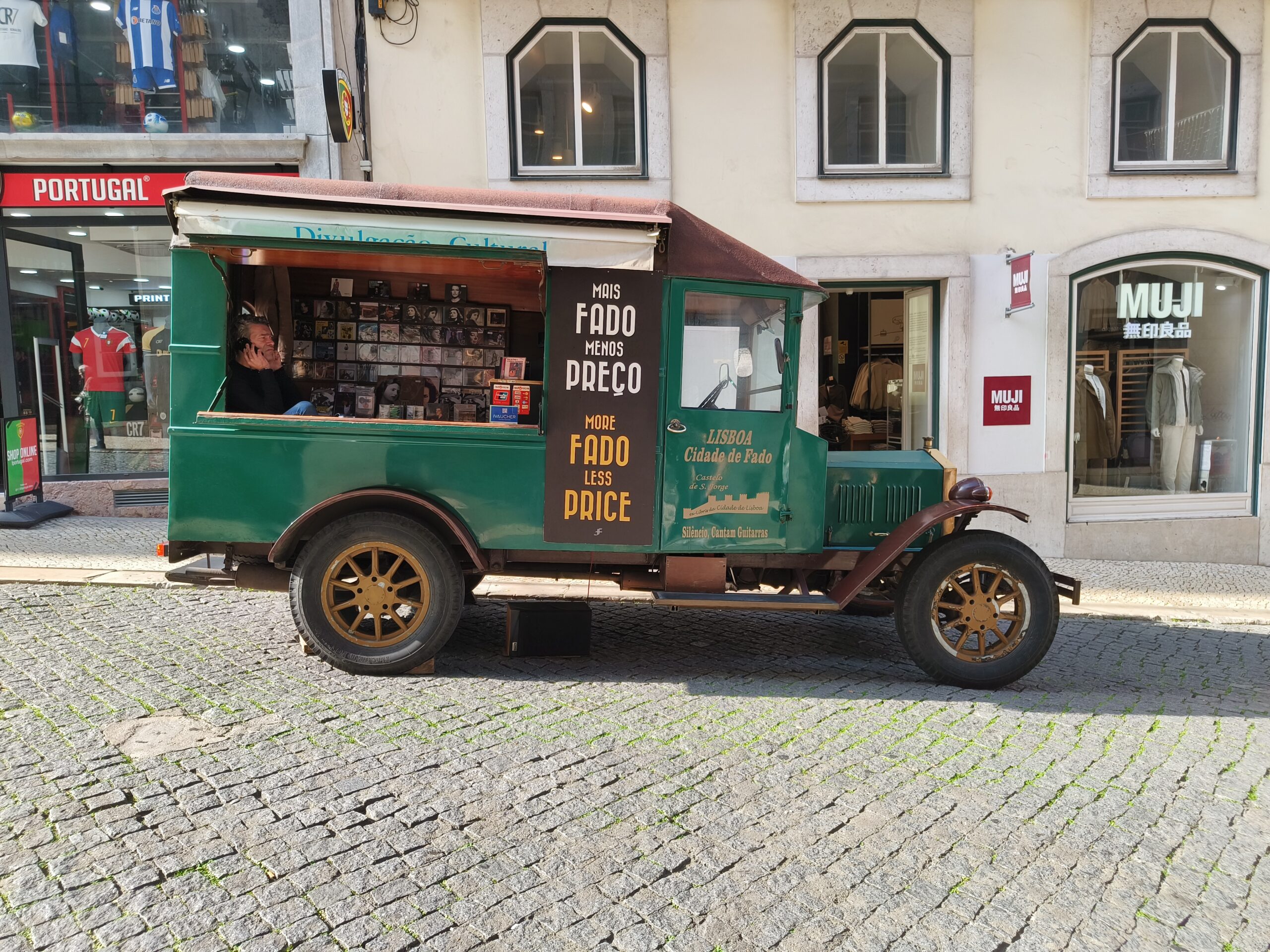
Portugal is, by almost any measure, one of the finest travel destinations in Europe. A sliver of a country on the Atlantic edge of the Iberian Peninsula, it contains within its modest borders one of the world’s great capital cities, a UNESCO-listed river valley of vineyards, fairy-tale palaces buried in forested hills, medieval walled towns unchanged since the Moors, cliff-backed golden beaches, the biggest waves on the planet, and two archipelagos of volcanic islands that feel like separate worlds entirely. It is warm, affordable, unhurried, and consistently, almost unfairly beautiful.
This guide covers 101 things to do across mainland Portugal, Madeira, and the Azores — from the unmissable icons to the quietly extraordinary experiences that most visitors miss.
Lisbon: The Capital
Heritage & Monuments
- Jerónimos Monastery, Belém — The supreme achievement of Manueline architecture and one of the most beautiful buildings in Europe. Built to celebrate Vasco da Gama’s discovery of the sea route to India, its cloisters are an extraordinary exercise in stone carved to resemble coral, rope, and the rigging of ships. A UNESCO World Heritage Site and Lisbon’s single most essential sight.
- Belém Tower (Torre de Belém) — The iconic 16th-century watchtower standing in the Tagus River at Belém, its Manueline stonework — armillary spheres, twisted rope, rhinoceros beneath the battlements — is among the most intricate in Portugal. Another UNESCO World Heritage Site and the defining image of Lisbon’s Age of Discovery.
- São Jorge Castle (Castelo de São Jorge) — The Moorish citadel crowning the highest hill in Lisbon, with walls that have enclosed Phoenicians, Romans, Visigoths, and Moors before the Portuguese. The battlements offer the finest panoramic view of the city, the Tagus, and the distant Arrábida hills.
- Monument to the Discoveries (Padrão dos Descobrimentos) — A 52-metre sword-shaped monument on the Tagus waterfront at Belém, bearing 33 figures from the Age of Discovery. The mosaic compass rose on the ground in front of it, a gift from South Africa in 1960, maps the routes of the Portuguese explorers across the world.
- Palácio Nacional de Queluz — A baroque and rococo royal palace on the outskirts of Lisbon, sometimes called the Portuguese Versailles, surrounded by formal French gardens with tiled canal walls and topiary. Less visited than Sintra and more refined for it.
Neighbourhoods & City Life
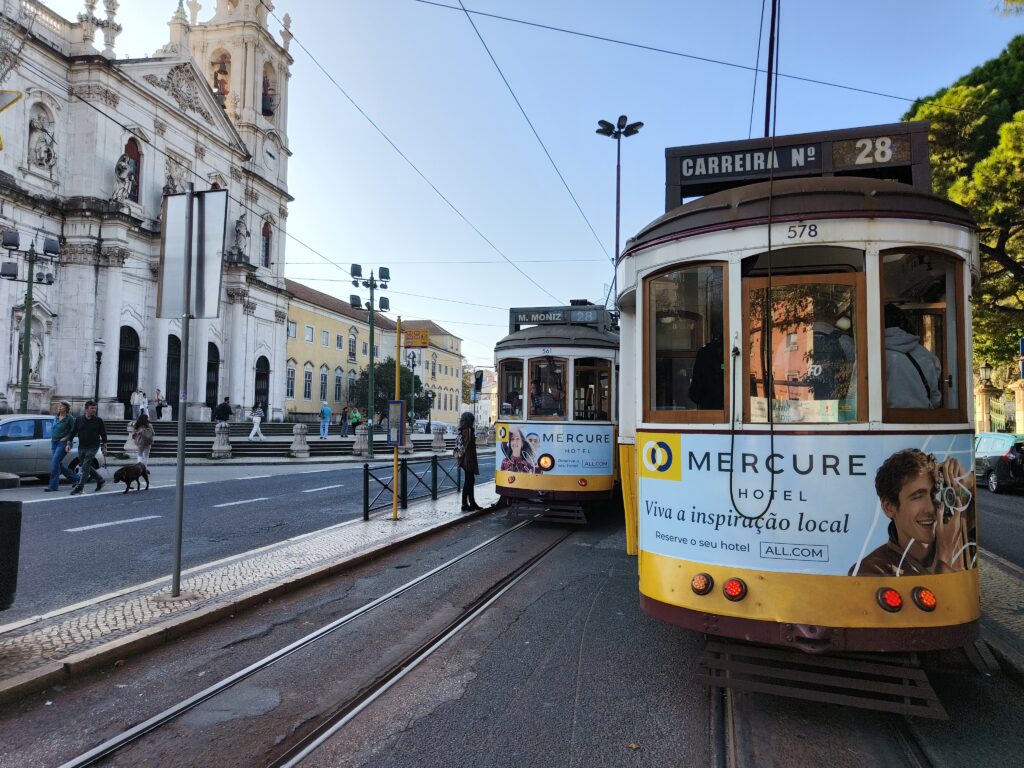
- Alfama Walking Tour — Lisbon’s oldest neighbourhood: a tangle of steep alleys, tiled facades, laundry lines, and miradouros (viewpoints) tumbling from the castle down to the Tagus. Get lost here in the morning before the tour groups arrive.
- Mouraria & the Fado Houses — The birthplace of fado, Portugal’s haunting national music of longing and loss, is this ancient Moorish quarter below the castle. Visit a traditional fado house for a live performance in an intimate space — one of the most affecting musical experiences in Europe.
- LX Factory, Alcântara — A Victorian industrial complex on the Tagus waterfront reinvented as Lisbon’s most creative district: independent bookshops, restaurants, design studios, and a spectacular Sunday market under iron railway arches.
- Tram 28: Martim Moniz to Estrela — The city’s iconic yellow tram, climbing through the tightest lanes of Alfama and Graça. It is crowded, slow, and absolutely worth it for the journey itself — one of the great urban rides in Europe.
- Miradouro da Graça at Sunset — Lisbon’s finest sunset viewpoint, less crowded than the more famous Miradouro da Senhora do Monte, looking west along the river with the castle, the 25 de Abril Bridge, and the statue of Christ framed in the light.
- Bairro Alto at Night — Lisbon’s nightlife neighbourhood, densely packed with wine bars, ginjinha (cherry brandy) kiosks, and fado clubs on narrow streets where the entire social life spills onto the pavement. Arrive after 10pm and follow the music.
- Time Out Market, Cais do Sodré — The original food market that spawned a global franchise: dozens of the city’s best chefs and restaurants in a single covered market hall at the edge of the Tagus. The model for every food hall that came after it.
- Elevador de Santa Justa — A neo-Gothic cast-iron lift designed by a student of Eiffel, connecting the lower city with the Chiado quarter. The rooftop walkway connecting to the ruined Carmo Convent offers one of the most unusual views in Lisbon.
- Museu Calouste Gulbenkian — Portugal’s finest art museum, housing the extraordinary personal collection of the Armenian oil magnate Calouste Gulbenkian: Egyptian antiquities, Islamic art, Flemish masters, Impressionists, and Lalique glass in a beautiful 1960s garden setting.
- Oceanário de Lisboa — One of Europe’s finest aquariums, in the Parque das Nações, with a central tank the size of an aircraft hangar containing sharks, rays, sunfish, and a dazzling community of open-ocean species. Unmissable for families.
Sintra & the Lisbon Coast
- Palácio Nacional da Pena, Sintra — A UNESCO-listed fantasy palace perched on the highest point of the Serra de Sintra, painted in vivid yellow and red, visible for miles across the Lisbon plain. Part Bavarian castle, part Moorish palace, part Disney fever dream — it is entirely, magnificently ridiculous and one of the most extraordinary buildings in Europe.
- Quinta da Regaleira, Sintra — A neo-Manueline estate of extraordinary richness: a palace, a chapel, and a garden riddled with secret tunnels, a 27-metre inverted tower descended by a spiral staircase, grottoes, lakes, and Templar symbolism at every turn. More mysterious and atmospheric than Pena and considerably less crowded.
- Moorish Castle (Castelo dos Mouros), Sintra — A 10th-century Moorish fortification threading along the rocky ridgeline above Sintra, offering panoramic views of the palace-studded hills, the Atlantic coastline, and on clear days the outline of Lisbon. The walk up through the forest is half the experience.
- Cabo da Roca — The westernmost point of continental Europe: a clifftop cape where the Sintra mountains meet the Atlantic, with a lighthouse, a simple stone marker, and the feeling of standing at the edge of the known world. Lord Byron visited; he was not the last to be moved.
- Cascais & the Estoril Coast — A charming former fishing village turned cosmopolitan coastal resort 30 minutes west of Lisbon by train. The old town, harbour, and beaches are lovely, and the daily train journey along the Tagus estuary and coast is one of the finest commuter routes in Europe.
- Arrábida Natural Park — A spectacular limestone mountain range south of Lisbon, dropping sheer to a coastline of turquoise sea and white-sand beaches backed by forested cliffs. Praia de Galapinhos, Praia de Portinho da Arrábida, and Praia dos Coelhos are among the finest beaches on the Portuguese mainland.
- Setúbal & the Sado Estuary — The base for exploring the Arrábida coast and the Sado Estuary, where a resident pod of bottlenose dolphins has lived for decades. Dolphin-watching boat trips from Setúbal have an excellent encounter rate year-round.
Porto & the North
- Ribeira & the Dom Luís I Bridge, Porto — The UNESCO-listed waterfront of Porto: a row of medieval merchant houses in terracotta and yellow plaster, the Douro River below, and the extraordinary double-deck iron bridge — designed by an assistant of Eiffel — arching above. Walk the lower deck for the waterfront view; walk the upper deck for the panorama across the city.
- Port Wine Cellars, Vila Nova de Gaia — Cross the bridge to the south bank and tour the great port wine lodges of Gaia — Sandeman, Taylor’s, Graham’s, Ramos Pinto — where the wine matures in cooler riverside air. A tutored tasting of aged tawny ports is one of the great wine experiences of Europe.
- Livraria Lello, Porto — Consistently ranked among the most beautiful bookshops in the world: a neo-Gothic fantasy of carved dark wood, a sinuous red staircase, and stained-glass ceiling, said to have inspired the Hogwarts library in J.K. Rowling’s early Porto years. Arrive early to beat the queues.
- Igreja de São Francisco, Porto — The most extraordinary church interior in Portugal: a Gothic church whose walls, ceiling, columns, and altars are encrusted floor to ceiling in gilded Baroque woodwork — 200 kilograms of gold leaf applied over a century. An overwhelming, magnificent excess.
- Clérigos Tower, Porto — The 75-metre Baroque tower that defines Porto’s skyline, built in 1763. Climb the 225 steps for the finest view over the city’s terracotta rooftops, the Douro, and the Atlantic horizon.
- Matosinhos Seafood Lunch — The working fishing port immediately north of Porto serves the freshest grilled seafood in northern Portugal. Matosinhos’s main street is lined with no-frills restaurants where whole fish are grilled over charcoal outside — lunch here is one of the essential Portuguese experiences.
- Douro Valley Wine Tour — A full day or overnight trip from Porto into the terraced vineyards of the Douro Valley: vine-covered schist hillsides plunging to the river, ancient quintas (wine estates), and a landscape of such beauty it has been designated a UNESCO World Heritage Site. Wine tasting, boat cruises, and quinta lunches are available throughout.
- Douro River Cruise: Porto to Pinhão — A full-day cruise up the Douro through the valley’s dramatic gorges and vine terraces, with the river narrowing between the schist hills as you travel deeper into the wine country. The section between Régua and Pinhão is the most beautiful.
- Braga & Bom Jesus do Monte — Portugal’s religious capital, with a magnificent Baroque cathedral and the extraordinary Bom Jesus sanctuary: a pilgrimage church on a hilltop reached by an 18th-century zigzag staircase flanked by chapels, fountains, and allegorical statues. The funicular, built in 1882, is the world’s oldest hydraulic cable car.
- Guimarães — Birthplace of Portugal — A beautifully preserved medieval city where Portugal’s first king, Afonso Henriques, was born in 1109. The 10th-century castle, the Palace of the Dukes of Bragança, and the cobbled old town are all UNESCO-listed. The locals still say: “Portugal was born here.”
- Viana do Castelo — A beautiful coastal town at the mouth of the Lima River in the Minho, with an extraordinary Romanesque cathedral, richly tiled town houses, and the pilgrimage church of Santa Luzia on the hillside above — reached by funicular, with sea views that stretch to the Galician coast.
- Peneda-Gerês National Park — Portugal’s only national park, in the far northeast, a wild and mountainous landscape of granite peaks, oak forests, waterfalls, and ancient villages with pre-Roman settlement traces. Home to wild Garrano ponies and one of the last Iberian wolf populations.
- Aveiro & the Moliceiro Canal Boats — Often called the Portuguese Venice, Aveiro is a city of canals, colourful boats (moliceiros, once used to harvest seaweed), Art Nouveau facades, and the extraordinary Costa Nova beach houses with their candy-stripe paintwork. Try the local ovos moles — egg yolk sweets in the shape of shells and fish.
Sintra to Alentejo: The Heartland
- Óbidos Medieval Town — A perfectly intact walled medieval town on a hilltop an hour north of Lisbon, entered through a 14th-century gateway. Walk the battlements, browse the white-and-blue-painted lanes, and drink ginjinha (cherry liqueur) from a chocolate cup — the local tradition. At Christmas the town hosts one of Portugal’s finest medieval markets.
- Batalha Monastery — One of the greatest Gothic buildings in the Iberian Peninsula, built to fulfil a vow made before the Battle of Aljubarrota (1385). The Founder’s Chapel and the Unfinished Chapels — open to the sky by royal decree, their vaulting never completed — are among the most haunting architectural spaces in Portugal.
- Tomar & the Knights Templar Convent — The headquarters of the Knights Templar in Portugal: a hilltop fortified convent with a 12th-century Romanesque rotunda modelled on the Church of the Holy Sepulchre in Jerusalem, and one of the most layered and mysterious UNESCO sites in the country.
- Coimbra & the Old University — Portugal’s ancient university city, home to one of the oldest universities in Europe (founded 1290), with a magnificent Baroque library (the Joanina) — its shelves housing 60,000 books and a colony of bats that eat the insects damaging them. The steep old town and the student fado tradition make Coimbra one of Portugal’s most distinctive cities.
- Évora — The Museum City — Alentejo’s capital is a UNESCO-listed medieval city with Roman and Moorish layers visible at every turn: a 1st-century Roman temple stands in the city centre beside the cathedral. The Chapel of Bones (Capela dos Ossos) — its walls lined with the skulls and bones of 5,000 monks, and the inscription “We Bones Here, Await Yours” — is one of the most extraordinary rooms in Portugal.
- Monsaraz — A tiny, perfectly preserved hilltop walled village above the Alqueva lake in the Alentejo, with whitewashed houses, a Moorish castle, and views across the largest artificial lake in Western Europe. Designated a Dark Sky reserve — the night sky here is extraordinary.
- Marvão — An eagle’s-nest village perched impossibly on a granite crag above the Spanish border, its medieval walls following the contours of the rock. The view from the keep takes in most of the Alentejo plain and, on clear days, the mountains of central Spain.
- Alentejo Wine & Olive Oil Route — The vast cork-oak and olive plains of the Alentejo produce some of Portugal’s finest wines and olive oils. Drive between the estate wineries around Évora, Reguengos de Monsaraz, and Borba for tastings in beautiful farmhouse settings.
- Mértola — A remote, whitewashed Alentejo town above the Guadiana river where the parish church is a converted Moorish mosque — the only such building in Portugal — and where Islamic, Roman, and prehistoric archaeological layers are all visible. One of the most quietly extraordinary towns in the country.
The Algarve
- Benagil Sea Cave — The most photographed natural wonder in Portugal: a cathedral-like sea cave with a natural skylight open to the sky and a tiny hidden beach on its floor. Reached only by kayak, paddleboard, or boat from the beach at Benagil — the approach through the limestone arches and stacks of the central Algarve coast is spectacular.
- Praia da Marinha — Consistently voted one of the most beautiful beaches in Europe, with golden limestone formations, sea arches, caves, and a luminous blue sea. The walk along the cliff path from Marinha to Benagil is the finest coastal walk in the Algarve.
- Lagos & the Ponta da Piedade — The dramatic golden limestone sea stacks, arches, and sea caves at Ponta da Piedade, just south of Lagos, are the Algarve at its most spectacular. Take a kayak or a boat to explore them from the water.
- Sagres & the Costa Vicentina — At the southwest corner of Europe, Sagres’s clifftop fortress was the legendary base from which Henry the Navigator planned the Portuguese Age of Discovery. The surrounding Costa Vicentina — the last wild Atlantic coast in southern Europe — has long, empty beaches, cold surf, and a raw, windblown beauty unlike anything to the east.
- Ria Formosa Natural Park — A fragile coastal lagoon system stretching 60 kilometres from Faro to Cacela Velha, encompassing barrier islands, salt marshes, tidal channels, and over 20 species of wading birds. Boat tours from Faro and Olhão explore the islands and the flamingos; the seafood in the lagoon villages is exceptional.
- Tavira — The most beautiful town in the Algarve: a grid of cobbled streets, tiled stairways, Roman bridge, and 37 churches in a town of modest size. The nearby barrier island of Ilha de Tavira, reached by ferry, has a long, undeveloped Atlantic beach that feels entirely separate from the crowded Algarve package resorts.
- Silves & the Moorish Castle — Algarve’s medieval capital under the Moors, when it was more populous than Lisbon. The vast red sandstone castle and the impressive cathedral still dominate the hill above the Arade River. The medieval fair in August fills the town with jousting, falconry, and period costume.
- Surfing at Sagres or Arrifana — The southwest Algarve coast receives powerful Atlantic swells year-round, with Sagres, Arrifana, and Castelejo offering consistently good waves in uncrowded settings. Several surf schools operate from the beaches in summer.
- Sunset at Ponta de Sagres — Stand on the westernmost cape of the Algarve at the last possible hour of the day, on the same limestone promontory where Magellan, Vasco da Gama, and Bartolomeu Dias once stood. The sun setting into the Atlantic from here is something you do not forget.
Nazaré, the Silver Coast & the Centre
- Nazaré Giant Waves — Between October and March, Nazaré’s Praia do Norte produces the biggest surfable waves on earth — regularly exceeding 20 metres — as deep-ocean swells amplified by an underwater canyon detonate against the beach. Watch from the clifftop viewpoint at the Promontório do Sítio for a perspective that makes the surfers look like toys.
- Óbidos to Nazaré Coastal Drive — The Silver Coast (Costa de Prata) between Lisbon and Porto is less visited than the Algarve and more dramatic: empty beaches, pine forests, fishing villages, and towering dunes. Drive it slowly, stopping at Ericeira, Peniche, São Martinho do Porto, and the extraordinary lagoon at Óbidos.
- Peniche & the Berlengas Islands — A working fishing port and world-class surf destination (it hosts a WSL Championship Tour event annually), with a ferry to the Berlengas — a remote granite archipelago with a Venetian-style fort, excellent diving, and nesting seabirds. One of the most wild and beautiful short trips from Lisbon.
- Fátima Pilgrimage Shrine — One of the most important Catholic pilgrimage sites in the world, visited by millions every year. Whether you are religious or not, the scale of faith on display here — particularly during the anniversary pilgrimages of May 13 and October 13 — is a deeply affecting experience.
- Serra da Estrela — Portugal’s Roof — The highest mountain range on the Portuguese mainland, with the country’s only ski resort, dramatic granite plateau landscapes, glacial valleys, and the villages where the famous Serra da Estrela cheese (a soft, creamy ewes’ milk cheese) is still made by hand.
The Islands: Madeira
- Levada Walks, Madeira — Madeira’s network of levadas — ancient irrigation channels threading across the island’s vertiginous terrain — provides the finest hiking in the Atlantic. The Levada das 25 Fontes leads through laurisilva forest to a series of waterfalls; the Levada do Caldeirão Verde passes through ancient cloud forest to a spectacular hidden valley.
- Cabo Girão Skywalk — A glass-floored platform cantilevered over the edge of one of the highest sea cliffs in Europe (580 metres), above the Atlantic. Look straight down through your feet to the sea and the tiny fishing boats far below.
- Pico do Arieiro to Pico Ruivo Hike — The classic high-altitude ridge walk across Madeira’s volcanic spine, connecting the island’s second and first highest peaks (1,818m and 1,862m respectively) through a landscape of basalt pinnacles, cloud sea, and extraordinary light. One of the great day hikes in Europe.
- Monte Toboggan Ride, Funchal — Descend from the hilltop village of Monte into Funchal in a traditional wicker toboggan steered by two men in white — a tradition dating to 1850. More elegant and exhilarating than it sounds, and a genuine Madeira institution.
- Whale & Dolphin Watching, Madeira — The deep waters around Madeira are home to some of the richest cetacean communities in the Atlantic: sperm whales (resident year-round), fin whales, pilot whales, and multiple dolphin species. Boat trips from Funchal have an exceptional encounter rate.
- Monte Palace Tropical Garden, Funchal — A spectacular tiered garden cascading down the Monte hillside, with a collection of 100,000 plants from every continent, ancient Azulejo tile panels, and views across Funchal and the sea.
- Madeira Wine Tasting — Madeira is one of the world’s great fortified wines — extraordinary for its longevity (bottles from the 18th century are still drinkable) and its unique oxidative character. Tour the historic wine lodges of Blandy’s, Henriques & Henriques, or Borges in Funchal for a proper tutored tasting.
- Santana Traditional Houses — The north coast village famous for its A-shaped thatched houses (palheiros), still inhabited, with flower-filled gardens under dramatic green cliffs. The drive along Madeira’s northern coast to reach them, with waterfalls cascading onto the road, is itself a reason to make the journey.
The Islands: The Azores
- Sete Cidades Crater Lake, São Miguel — The defining image of the Azores: twin lakes — one green, one blue — sitting in the caldera of an ancient volcano on São Miguel, surrounded by mist and forest. The viewpoints at Vista do Rei and the road around the rim are among the most dramatic natural viewpoints in Europe.
- Furnas Valley & Thermal Pools, São Miguel — A volcanic valley of geysers, bubbling mud pools, sulphurous fumaroles, and thermal bathing lakes on São Miguel. The cozido das Furnas — a hearty stew slow-cooked underground in volcanic heat for hours — is a once-in-a-lifetime eating experience.
- Whale Watching in the Azores — The deep mid-Atlantic waters of the Azores are the best place in the world to watch sperm whales year-round, alongside blue whales (spring), humpbacks, fin whales, and at least ten dolphin species. The whalers’ lookout towers (vigia) that once spotted prey for the whaling boats now spot whales for conservation tours.
- Pico Mountain Climb, Pico Island — The ascent of Pico (2,351m) — Portugal’s highest peak — begins in darkness and reaches the summit above the cloud layer at dawn. The view of the other Azorean islands scattered across the Atlantic below is unlike anything accessible from anywhere in Europe.
- Pico Island Vineyards (UNESCO) — Pico’s extraordinary wine culture: vines planted in black basalt-walled enclosures (currais) directly on the lava fields beside the sea, producing a mineral, smoky white wine unlike any other in the world. A UNESCO World Heritage landscape of haunting beauty.
- Flores Island — The most remote and arguably the most beautiful island in the Azores: a small, intensely green island of waterfalls, crater lakes, sea cliffs, and hydrangea-lined lanes. The diving around Flores, in water of exceptional clarity, is among the best in the Atlantic.
- Faial Island & the Capelinhos Volcano — The moon-like landscape at the western tip of Faial, where the Capelinhos volcano erupted in 1957 and added a square kilometre of land to the island, is preserved exactly as the lava left it. The underground museum built into the old lighthouse is exceptional.
- Terceira Island & Angra do Heroísmo (UNESCO) — One of the great colonial cities of the Atlantic: Angra’s historic centre is entirely UNESCO-listed, its grid of colonnaded streets, baroque churches, and hilltop forts essentially unchanged since the 16th century. The August Sanjoaninas festival, with bullfights (the bulls are not killed), fireworks, and street parties, is one of the most exuberant celebrations in Portugal.
Food, Wine & Portuguese Culture
- Pastel de Nata in Belém — The custard tart from the original Pastéis de Belém bakery (operating since 1837, with the recipe kept secret by three people) is the non-negotiable first food experience in Portugal. Eat it warm, with cinnamon and icing sugar, standing at the marble counter.
- Bacalhau (Salt Cod) Tasting — Portugal claims 365 ways to cook bacalhau — one for every day of the year. The classic bacalhau à Brás (shredded cod with egg, onion, and potato crisps) and bacalhau com natas (with cream) are essential; finding your favourite is a delicious ongoing project throughout the country.
- Seafood Cataplana in the Algarve — A copper clam-shaped cooking vessel sealing a combination of clams, prawns, white fish, tomato, onion, coriander, and white wine — opened at the table in a cloud of fragrant steam. The cataplana is the Algarve’s signature dish and one of the greatest one-pot meals in southern Europe.
- Fado Live Performance, Lisbon or Coimbra — Portugal’s UNESCO-listed music of saudade (longing) is best experienced live, in a small, intimate house, in near-darkness, with a glass of wine. Coimbra fado, sung only by men in the academic black cape, has a more classical and melancholy character than Lisbon’s more emotionally raw version.
- Vinho Verde Wine Tasting, Minho — The young, slightly sparkling wines of the Minho — consumed cold, and very fresh, usually under a year old — are among the most food-friendly and least expensive quality wines in Europe. Try them at a quinta or in any restaurant north of Porto.
- Port Wine Tasting, Douro or Gaia — Reserve, Late-Bottled Vintage, and aged tawny ports are among the world’s finest fortified wines. A tutored tasting comparing ruby, tawny, and vintage styles at a Gaia lodge or a Douro quinta is one of the great wine education experiences available anywhere.
- Ginjinha in Lisbon or Óbidos — A sweet cherry liqueur made with ginja berries steeped in aguardente, served in a small shot glass with or without the fruit. In Óbidos, tradition demands it be served in a chocolate cup, which you then eat. In Lisbon, two historic bars near Rossio have served nothing else since the 19th century.
- Alentejo Dinner: Açorda, Migas & Black Pig — The cuisine of the Alentejo is Portugal’s most ancient and most satisfying: bread-thickened soup (açorda alentejana), migas (fried bread crumbs with pork fat), and the local black Iberian pig (porco preto), eaten in a rural herdade or village restaurant with a bottle of Alentejo red. One of the great regional meals in Europe.
- Francesinha, Porto — Porto’s signature dish: a toasted sandwich of ham, linguiça sausage, and steak, blanketed in melted cheese and drowned in a spiced beer-and-tomato sauce, topped with a fried egg. Aggressively filling and entirely magnificent. Try it at Café Santiago.
- Petiscos (Portuguese Tapas), Lisbon — The petisco culture — small plates of cured meats, grilled octopus, cheese, and salt cod fritters, shared over wine — is Lisbon’s best way to eat. The Mercado da Ribeira, Intendente, and Mouraria neighbourhoods are full of excellent petisco bars.
- Azulejo Tile Workshop — Learn the art of Portuguese ceramic tile painting at one of Lisbon’s tile workshops, and take home a hand-painted azulejo — the blue-and-white decorative tile that covers the facades, churches, and railway stations of Portugal in one of the country’s defining art forms.
Adventure & the Outdoors
- Surfing at Ericeira — The only World Surfing Reserve in Europe, with a dozen breaks of varying levels within walking distance of a beautifully preserved whitewashed fishing village. Surfing here in October, when the Atlantic swells arrive and the summer crowds have gone, is as good as it gets in Europe.
- Rota Vicentina Hiking Trail — A 450-kilometre walking trail along Portugal’s southwest Atlantic coast, through the Alentejo and Algarve, passing deserted beaches, cork-oak forests, fishing villages, and clifftops with views of nothing but open ocean. The Fishermen’s Trail section — scrambling along the actual cliff edge — is the finest coastal walking in Europe.
- Kayaking in the Douro Valley — Paddle the Douro between wine estates on a guided kayak tour from Pinhão, with quintas on the slopes above and the reflections of vine terraces in the water below. One of the more peaceful and beautiful ways to experience Portugal’s most famous valley.
- Stand-Up Paddleboarding in the Algarve Sea Caves — Glide through the limestone arches and sea caves of Lagos and the Algarve’s central coast on a paddleboard — the best way to explore the sea stacks and caves that are inaccessible on foot.
- Coasteering in the Algarve — Jump, scramble, and swim along the base of the Algarve’s limestone cliffs on a guided coasteering trip — one of the best outdoor activities in southern Portugal for those who don’t mind getting wet.
- Hot Air Ballooning, Alentejo — The vast, flat cork and olive plains of the Alentejo are the finest ballooning landscape in Portugal: still air, exceptional visibility, and a horizon-to-horizon view of one of Europe’s most unspoiled rural landscapes.
- Mountain Biking in the Douro Valley — Cycling tours between the wine estates and viewpoints of the Douro Valley, on routes that combine tarmac descents and dirt tracks through the vine terraces. Several operators in Pinhão and Peso da Régua organise guided and self-guided routes.
Hidden Gems & Unique Experiences
- Castro Laboreiro & the Peneda Plateau — A remote granite plateau in Gerês on the Spanish border, with ancient communal granaries (espigueiros), a 12th-century castle, and the native Castro Laboreiro sheepdog — one of the oldest breeds in Europe — still working the hills.
- Miranda do Douro & the Pauliteiros — A remote city on the edge of a dramatic gorge at the Spanish border, where a distinct dialect (Mirandese) is still spoken and the Pauliteiros — men who dance in traditional costume with short sticks — perform a dance found nowhere else in Portugal.
- Monsanto — Most Portuguese Village — A village built into and on top of an enormous granite boulder field, with houses wedged between house-sized rocks, rooftops used as terraces, and the ruins of a 12th-century castle balanced on the highest boulder. Voted the most Portuguese village in Portugal in 1938, and the title still fits.
- Alqueva Dark Sky Reserve — The largest Dark Sky Reserve in Europe, centred on the vast Alqueva reservoir in the Alentejo, where astronomical tourism has grown into a genuine industry. Stargazing tours, telescope sessions, and Dark Sky accommodation are available in the villages around the lake.
- Ponte de Lima — Portugal’s Oldest Town — A beautiful, relatively unvisited small town in the Minho, straddling the Lima River on a Roman bridge, with a weekly market operating since 1125, baroque manor houses, and vineyards producing some of the finest vinho verde in Portugal.
- Cascais to Guincho Coastal Walk — Walk the 10 kilometres of Atlantic cliff and dune coast from Cascais to Guincho beach — one of Europe’s finest windsurfing beaches — through the Sintra-Cascais Natural Park. The walk back into the setting sun is extraordinary.
- Amarante — A lovely town in the Tâmega valley east of Porto, with a 16th-century monastery reflected in the river, a weekly food market, and a local sweet — the phallic-shaped Doces de Santo Gonçalo — with an origin story best investigated in person.
- Night Train: Lisbon to Porto — Take the last intercity train north from Lisbon Santa Apolónia as dusk falls over the Tagus, watching the light change across the vineyards and river valleys of the Ribatejo and Beira Litoral, arriving in Porto as the city glows. At under three hours, it is one of the finest train journeys in Iberia.
- Watch the Sunset from a Miradouro, Lisbon — On your last evening, climb to one of Lisbon’s hilltop viewpoints — Graça, São Pedro de Alcântara, or the Portas do Sol — as the sun goes down over the Tagus and the terracotta rooftops catch fire. The city spreads below you in every direction, the river is molten copper, and the light is doing things that light does nowhere else in Europe. There is no better place in the world to end a journey.
Quick Facts for Visitors
| Best time to visit | March–May and September–October (warm, fewer crowds) |
| Summer | June–August — hot, busy; ideal for beaches |
| Winter | November–February — mild, quiet, great for cities |
| Currency | Euro (€) |
| Language | Portuguese (English widely spoken in cities and tourist areas) |
| Getting around | Train (excellent between cities) · Car (essential for Alentejo, Douro, and the interior) |
| Capital | Lisbon |
| Ideal trip length | 10–14 days for mainland · Add 4–7 days for Madeira or Azores |
| Islands | Madeira and Azores require flights from Lisbon or Porto |
Portugal rewards slowness. The country’s greatest pleasures — a glass of wine on a quinta terrace, a long lunch of grilled fish by the sea, getting lost in an Alentejo village at noon — all require you to stop rushing. Slow down, and Portugal gives you everything.