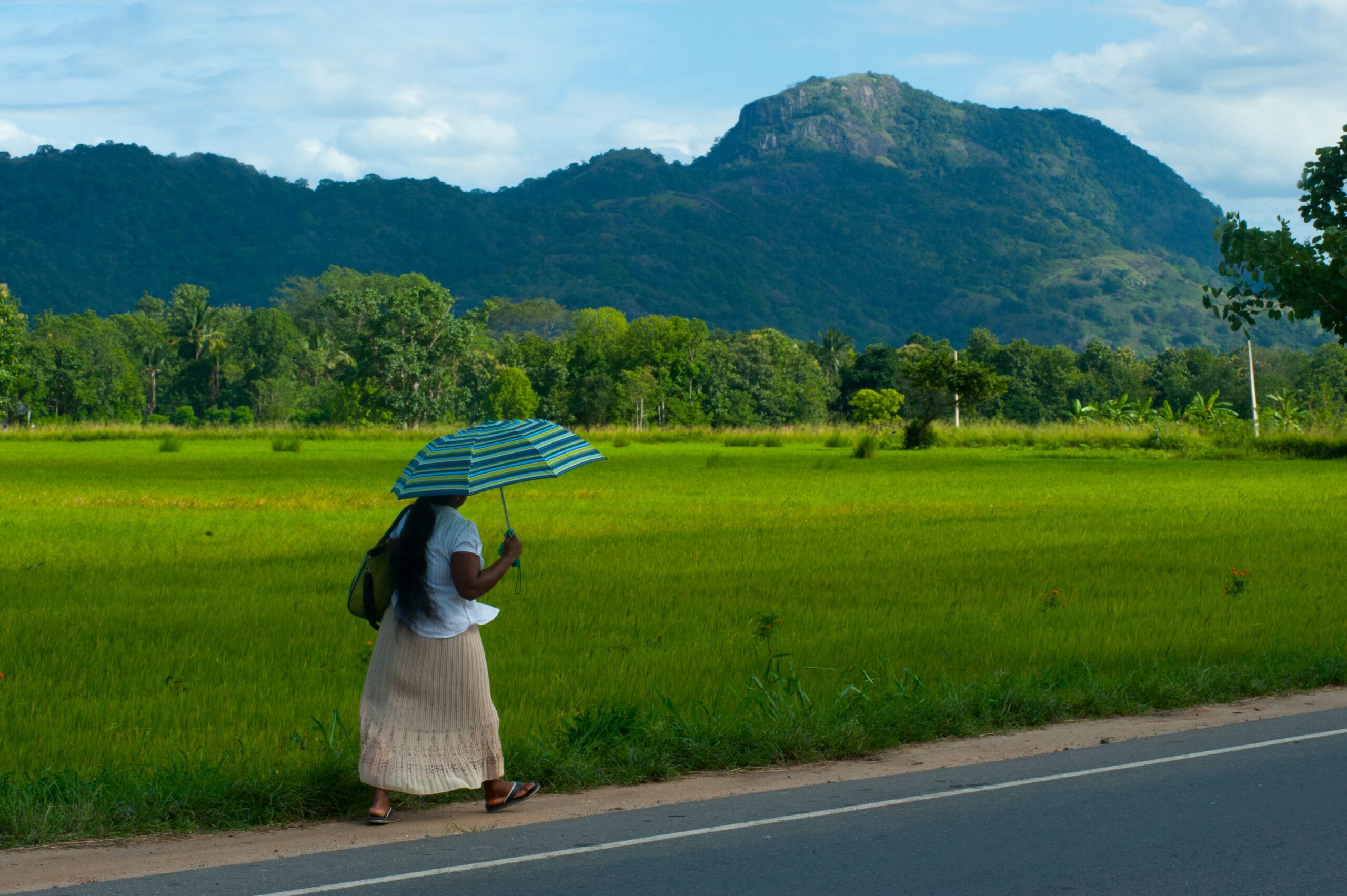
Sri Lanka is one of those rare places where the superlatives are accurate. A teardrop of an island in the Indian Ocean, it packs within its 65,000 square kilometres ancient cities older than Rome, a mountain spine covered in tea plantations of dreamlike beauty, wildlife that puts many African parks to shame, beaches facing two separate oceans, a UNESCO-protected ancient rock fortress with frescoed walls, a Buddhist culture of extraordinary depth, and a cuisine — spiced with cinnamon, curry leaves, and the coconut milk that runs through everything — that is among the finest in Asia.
It is also a country recovering with great energy from decades of civil conflict, opening its northern and eastern regions to visitors who now find them among the most rewarding destinations on the island: Jaffna, culturally distinct and deeply Tamil Hindu; the east coast’s lagoon beaches and ancient Buddhist ruins; and the wild forests of Wilpattu, where leopards walk the dried lake beds at dawn.
This guide covers 101 things to do across Sri Lanka — from the ancient cities of the Cultural Triangle to the surf breaks of Arugam Bay, the hill country railways, and the places that most visitors never reach.
The Cultural Triangle: Ancient Kingdoms
- Sigiriya Rock Fortress (UNESCO) — The most extraordinary sight in Sri Lanka: a 200-metre monolithic granite column rising from the jungle of the north-central province, with the ruins of a 5th-century palace on its summit, the famous frescoes of the cloud maidens (Apsaras) painted on the rock face at mid-height in mineral pigments still vivid after 1,500 years, and the Lion Paws — two enormous sculpted lion’s feet marking the original entrance gate. The climb takes 90 minutes; the summit view over the jungle plains to the surrounding peaks is one of the finest in South Asia. Arrive at opening (7am) to beat the heat and the crowds.
- Pidurangala Rock — The companion rock to Sigiriya, a few kilometres north: a lower, less-visited climb through jungle and past a reclining Buddha to a summit of exposed granite with the finest view of Sigiriya’s full profile — impossible to see from the fortress itself. Sunset from Pidurangala, with the Sigiriya rock turning gold to the south, is one of the most photographed natural scenes in Sri Lanka.
- Dambulla Cave Temples (UNESCO) — Five cave temples in a granite outcrop above the town of Dambulla, painted floor to ceiling with over 150 Buddha images in the finest Buddhist cave art in Sri Lanka. The largest cave contains 15 metres of ceiling fresco painted continuously over 2,000 years, from the 1st century BC to the 18th century AD. The oldest and most continuously active place of Buddhist worship in the country.
- Anuradhapura (UNESCO) — The first capital of the Sinhalese kingdom and one of the oldest continuously inhabited cities in the world: 2,500-year-old stupas (dagobas) rising 54–70 metres from the jungle, ancient irrigation tanks (wewas), the sacred Bodhi Tree (grown from a cutting of the tree under which the Buddha attained enlightenment, planted in 288 BC — the oldest historically documented tree in the world), and the ruins of palaces, monasteries, and hospitals of a civilisation of extraordinary sophistication. Best explored by bicycle, early in the morning.
- The Sacred Bodhi Tree (Sri Maha Bodhi), Anuradhapura — The oldest tree with a documented history in the world: a Ficus religiosa grown from a sapling of the original Bodhi tree in Bodh Gaya, India, brought to Sri Lanka in 288 BC by the Princess Sangamitta. Gold railings, gilded flowers, and the daily worship of hundreds of white-clad pilgrims surround the tree — a living connection to the Buddha’s time that is unlike any religious site in Asia.
- Polonnaruwa (UNESCO) — The second ancient capital of Sri Lanka, established in the 11th century and reaching its peak under King Parakramabahu I (1153–1186 AD): the Gal Vihara (four colossal Buddha figures carved from a single granite face — the finest rock-cut sculpture in Sri Lanka), the Royal Palace ruins, the Lotus Pond, the Vatadage (a circular relic house of extraordinary refinement), and the Parakrama Samudra — an artificial sea of 2,500 hectares, the greatest hydraulic engineering achievement of the ancient Sinhalese. Cycle between the ruins as dawn turns the stone gold.
- Gal Vihara, Polonnaruwa — The four figures carved into the granite face at Gal Vihara constitute the finest Buddhist rock sculpture in the world: a seated meditating Buddha (1.5 metres), a standing figure (7 metres), a reclining figure (14 metres — at the moment of the Buddha’s Parinirvana), and a smaller figure in a shrine chamber. The quality of the carving — the detail of the robes, the tranquillity of the expression — is incomparable.
- Ritigala Ruins — The most atmospheric ruined monastery in Sri Lanka: a forest monastery of the Pamsukulika (ascetic) sect, on a rocky escarpment in the North Central Province, with stone pathways, meditation platforms, and bathing pools emerging from secondary jungle in a state of intentional incompleteness. Virtually no tourist infrastructure; a guide is essential for navigating the ruins.
- Minneriya National Park & the Elephant Gathering — Between July and October, hundreds of elephants converge on the shoreline of the receding Minneriya tank to graze on the exposed grass — the largest gathering of wild Asian elephants in the world. The Minneriya Gathering can involve 200–300 animals simultaneously visible from a single vehicle. The finest wildlife experience in Sri Lanka and one of the finest wildlife spectacles in Asia.
- Aukana Buddha — A 12-metre standing Buddha carved from a single granite face beside the Kala Wewa reservoir, built in the 5th century AD, with the finest expression of any monumental Buddha sculpture in Sri Lanka. The statue is perfectly proportioned and stands in a posture of the Abhaya mudra (the gesture of protection); the surrounding forest and reservoir provide one of the most serene settings in the Cultural Triangle.
Kandy & the Hill Country Gateway
- Temple of the Tooth Relic (Sri Dalada Maligawa), Kandy — The most sacred Buddhist site in Sri Lanka, housing the left canine tooth of the Gautama Buddha, brought from India in the 4th century AD concealed in the hair of a princess. The evening puja ceremony (6:30pm) — with drumming, flute playing, and the opening of the inner casket — is the most significant daily religious event in the country. The Tooth Relic itself is almost never displayed; the experience is of collective devotion of extraordinary intensity.
- Kandy Esala Perahera (July/August) — The Kandy Perahera is the most spectacular Buddhist festival in the world: ten nights of procession through the city streets with over 100 adorned elephants, whip crackers, Kandyan dancers, acrobats, and torch-bearers, culminating in the night when the Golden Casket containing the Tooth Relic parades through the city on the back of the most magnificently decorated elephant in Sri Lanka. Book accommodation six months in advance for the Perahera nights.
- Kandy Lake Walk — The artificial lake at the centre of Kandy, created by the last king Sri Wickrama Rajasinha in 1807, with a cloud wall (a white battlement enclosing the lake) and the Temple of the Tooth on the north shore. The early-morning walk around the lake — with the Temple’s gilded roof across the water, fruit bats hanging in the trees, and the cloud wall catching the first light — is the finest hour in Kandy.
- Kandy Arts & Crafts Centre — The royal arts of Kandy — Kandyan dancing, lacquerwork, silversmithing, batik, and handloom weaving — are still practised in the city’s workshops and schools. The Cultural Show at the Kandy Lake Club (traditional Kandyan dancing and fire-walking each evening) and the Arts and Crafts Centre on Station Road offer the most accessible introduction to the city’s artistic heritage.
- Peradeniya Royal Botanical Gardens — The finest botanical garden in South Asia: 147 acres of immaculate collections including the Avenue of Royal Palms, the Giant Java Fig (reputed to cover 1,600 square metres), the Orchid House, and the spice collection. Established by the Kandyan kings in 1371; expanded by the British in the 19th century. The gardens produce most of the cinnamon, nutmeg, and cloves that flavour Sri Lankan cooking.
Tea Country: The Hill Country
- Colombo to Ella Train Journey — The most scenic train journey in Asia: the central highlands train from Kandy or Nanu Oya climbing through tea estates, misty valleys, and waterfalls to the hill station of Ella, passing the Nine Arch Bridge and the Demodara Loop (where the train loops over itself). The journey is most spectacular from Nanu Oya to Ella — sit on the right side heading east — as the track hugs the cliff face above valleys 1,000 metres deep. Book first-class observation car tickets weeks in advance.
- Nine Arch Bridge, Ella — The finest piece of railway architecture in Sri Lanka: a 91-metre nine-arch viaduct built in the Deco-Colonial style, almost entirely of brick and stone with no steel reinforcement, spanning a jungle valley near Ella. Reached by a 20-minute walk through tea estates; best photographed as a blue or red train crosses it from the viewpoint at the jungle edge. One of the most iconic images in Sri Lanka.
- Ella Rock Hike — A four-hour return hike from Ella town to the summit of Ella Rock (1,041 metres), through tea plantations, secondary jungle, and a ridge of extraordinary views: the Ella Gap to the south (a natural valley through the hill country with views all the way to the southern coast), the surrounding tea estates, and the Nine Arch Bridge visible below. The finest short hike in the hill country.
- Little Adam’s Peak, Ella — A gentler 90-minute return hike from the Ella base, through tea gardens to a rocky summit with a 360-degree view of the Ella valley, the gap, and the surrounding tea plateau. Best at sunrise. The most accessible elevated viewpoint in Ella and consistently the most rewarding early-morning walk in the hill country.
- Nuwara Eliya: Little England — The British hill station at 1,868 metres, with Tudor-style hotels, rose gardens, strawberry farms, a racecourse, a golf course, and the finest colonial architecture in Sri Lanka. The Grand Hotel and the Hill Club still serve high tea and operate with a formality that is simultaneously anachronistic and entirely charming. The surrounding tea estates produce some of the finest high-grown Ceylon tea in the world.
- Tea Plantation Walk & Factory Tour — Walking the lanes between the tea bushes of a working estate — with the rows of waist-high Camellia sinensis extending across the hillside and the tea pluckers working in a line — is the quintessential hill country experience. Factory tours (best in the morning when the drying and rolling is active) explain the full process from leaf to cup. The Pedro Tea Estate above Nuwara Eliya and the Heritance Tea Factory (which has converted a Victorian tea factory into the finest hotel in the hill country) are the finest combinations.
- Adam’s Peak (Sri Pada) Pilgrimage — The sacred mountain (2,243 metres), with a footprint at its summit believed by Buddhists to be the Buddha’s, by Hindus to be Shiva’s, and by Christians and Muslims to be Adam’s first step on earth after the Fall. The night climb — leaving the base at 2am, reaching the summit for dawn — with thousands of pilgrims chanting through the dark, is one of the most intense and most moving physical experiences in Sri Lanka. Season: December to May.
- Horton Plains National Park & World’s End — The southern escarpment of the Central Highlands: a plateau of open grassland, cloud forest, and Baker’s Falls leading to the World’s End cliff — a sheer drop of 870 metres to the jungle below. In clear weather (early morning is essential before the cloud rolls in) the view from World’s End extends to the southern coast 80 kilometres away. The walk from the gate to World’s End and Baker’s Falls is the finest upland walk in Sri Lanka.
- Knuckles Mountain Range — The least-visited but most biodiverse highland range in Sri Lanka: a UNESCO World Heritage landscape of 60 peaks between 900 and 1,863 metres, with cloud forest, waterfalls, Kandyan village life, and wildlife that includes purple-faced langurs and endemic bird species found nowhere else on earth. The hiking routes through the range, with village homestays, are the finest multi-day trekking experience in the country.
- Haputale & Lipton’s Seat — The hill station of Haputale has the finest view from a tea estate in Sri Lanka: Lipton’s Seat, a hilltop viewpoint on the Dambatenne Tea Estate (where Sir Thomas Lipton surveyed his tea empire in the 1890s), gives an unobstructed 270-degree panorama of the hill country on clear mornings. The walk from Haputale to Lipton’s Seat through the tea bushes takes two hours each way and is one of the finest walks in the country.
Galle & the South Coast
- Galle Fort (UNESCO) — The finest colonial-era fortified town in South Asia: a Dutch-era walled city on the southern coast, built in 1663 on a Portuguese foundation, with ramparts of cut coral and granite enclosing a grid of Dutch colonial streets, mosques, churches, a lighthouse, and the finest concentration of boutique hotels and restaurants in Sri Lanka. Walk the ramparts at sunset, when the Indian Ocean turns the stone and the lighthouse amber.
- Galle Fort Old Town Walk — Within the fort walls: the Dutch Reformed Church (1755), the National Maritime Museum, the All Saints’ Anglican Church, the Dutch Groote Kerk (greatest church), and the extraordinary concentration of boutique hotels, galleries, and cafés in colonial buildings of the Dutch and British eras. The fort is small enough to walk entirely in two hours; the density of experience is exceptional.
- Mirissa Whale Watching — The waters off Mirissa and Dondra Head on the southern tip of Sri Lanka are among the most reliable blue whale watching locations in the world, with sightings virtually guaranteed between December and April. Blue whales — the largest animals ever to have lived on earth — are joined by sperm whales, fin whales, and spinner dolphins. The boat trips depart at dawn; the experience of a blue whale surfacing beside the boat is entirely transformative.
- Unawatuna Beach — The most celebrated beach on the south coast: a crescent of golden sand in a sheltered bay below Galle, with coral for snorkelling, restaurants on the beach, and the Jungle Beach and Japanese Garden snorkelling spots to the west. The most convenient beach to Galle Fort and the most polished beach scene on the southern coast.
- Mirissa Beach & the Stilt Fishermen — The small, curved bay of Mirissa, with its fine sand, coconut palms, and the whale-watching boats returning in the late morning, is the finest beach on the south coast for the combination of scenery and surfable waves. The traditional stilt fishermen of the south coast — perched on single poles driven into the seabed to cast their lines — are most reliably seen at Koggala and Ahangama, 20 minutes east of Galle.
- Tangalle & the Secluded Bays — The small coastal town of Tangalle, east of Galle, has the finest cluster of uncrowded beaches on the south coast: the Medaketiya lagoon beach, the remote Rekawa turtle beach, and the extraordinary crescent of Marakolliya Beach, accessible only by tuk-tuk through paddy fields, with almost no development and the widest horizon on the southern coast.
- Rekawa Turtle Beach — A nesting beach east of Tangalle where five species of sea turtle (leatherback, green, hawksbill, loggerhead, and Olive Ridley) come ashore to lay eggs from May to September. The guided night tours, operated by the Sri Lanka Wildlife Conservation Society, observe nesting turtles at close quarters with red-light headlamps only. One of the finest wildlife experiences on the south coast.
- Mulkirigala Rock Temple — An almost entirely unknown temple complex 40 kilometres north of Tangalle: six cave temples and terraces on a granite rock rising from the southern coastal plain, with murals and sculpture comparable to Dambulla but with a fraction of the visitors. The view from the summit over the coconut groves and paddy fields of the south is entirely peaceful.
- Udawalawe National Park — The finest elephant-watching park in Sri Lanka: a guaranteed elephant encounter in an open grassland habitat around the Udawalawe Reservoir, with reliable sightings of herds of 20–50 animals throughout the day. Also home to Sri Lankan water buffalo, sambar deer, and the endemic Sri Lankan hawk-eagle. The Elephant Transit Home at the park’s edge rehabilitates orphaned elephants before release.
- Yala National Park — Sri Lanka’s most famous wildlife reserve, with the highest density of leopards of any national park in the world: an area of semi-arid scrub, lagoons, and rocky outcrops in the southeastern corner of the island. The Block 1 leopard density is genuinely extraordinary — sightings on morning safaris are common enough that the expectation of seeing one is reasonable. Also home to sloth bears, elephants, mugger crocodiles, and 215 bird species.
Colombo: The Capital
- Galle Face Green — The colonial esplanade along the Indian Ocean coast of Colombo: half a kilometre of seafront where the British laid out a public park in 1859, and where Colombo’s residents gather every evening for kite flying, ice cream, and the most democratic sunset experience in the city. The Galle Face Hotel behind it (opened 1864, the oldest hotel east of Suez) is the finest place for a gin and tonic in Sri Lanka.
- Pettah Bazaar Walking Tour — The oldest commercial district of Colombo: a dense market quarter of wholesale merchants, gem dealers, fabric traders, electronics shops, and the extraordinary Dutch Period Museum — a 17th-century Dutch-era building housing colonial artefacts — surrounded by the most intense commercial activity in the city. Walk it in the morning, when the deliveries are happening and the lanes are impassable with carts.
- Gangaramaya Temple, Colombo — The most interesting Buddhist temple in Colombo: an eclectic complex of shrine rooms, a museum of extraordinary variety (cars, clocks, carved ivory, Buddha images from every Asian country, a boat, and a white elephant in the courtyard), and the Seema Malaka — a floating meditation platform on Beira Lake, designed by Geoffrey Bawa. The temple’s collection is the most idiosyncratic in Sri Lanka.
- Geoffrey Bawa’s Architecture, Colombo — The greatest architect of tropical Asia: Sri Lankan Geoffrey Bawa (1919–2003) reinvented tropical modernism in a body of work that spans from the Lunuganga estate garden to the Sri Lanka Parliament Building, the Kandalama Hotel, the Heritance Ayurveda resort, and dozens of private houses across the island. His former office at 33rd Lane in Colombo (now the Bawa Trust archive) and Lunuganga (three hours south, open to day visitors) are the most accessible encounters with his work.
- Colombo Fort & the World Trade Centre — The financial district built on the site of the original Dutch Fort, with the twin glass towers of the World Trade Centre, the Bank of Ceylon skyscraper, and the extraordinary Lotus Tower (350 metres, the tallest self-supporting structure in South Asia) now open as an observation and entertainment complex. The Lotus Tower at night — illuminated in colour-shifting light — is visible from most of Colombo.
- Dutch Period Museum & Wolvendaal Church, Pettah — The Dutch Period Museum in Pettah (the finest colonial museum in Sri Lanka) and the Wolvendaal Church of 1749 (the oldest Protestant church in Sri Lanka, with the original Dutch East India Company tombstones in its floor) together constitute the most historically layered hour in Colombo.
- Colombo Food Walk: Pettah to Slave Island — Colombo’s food culture reflects the island’s ethnic complexity: hoppers with coconut sambol and pol sambol, kottu roti (chopped flatbread stir-fried with vegetables and egg), Malay-style biryani, Tamil chettinad-influenced curries, and the extraordinary Sri Lankan lamprais (a Dutch-Burgher dish of rice, curries, and accompaniments wrapped and baked in banana leaf). A guided food walk through Pettah, Slave Island, and Fort is the most complete introduction to the city’s extraordinary culinary diversity.
Beaches: The Full Coastline
- Arugam Bay, East Coast — The surf capital of Sri Lanka and one of the finest right-hand point breaks in Asia: the main A-Bay point produces long, peeling waves from April to October that attract professional surfers from around the world, while Pottuvil Point (20 minutes north) and Peanut Farm (south) offer alternatives for every level. The village itself — wood-and-thatch guesthouses, yoga shalas, and beach restaurants — has a relaxed, unselfconscious atmosphere that makes it the most liveable beach town in Sri Lanka.
- Pasikudah Beach, East Coast — The calmest sea in Sri Lanka: a shallow lagoon of turquoise water protected by a coral reef, with the finest swimming conditions on the island and a short walk to the extraordinary ancient Veherehena Buddhist site. The best sunrise beach in Sri Lanka, entirely different in character from the surf beaches of the south.
- Trincomalee & Nilaveli Beach — The fine-sand beach north of Trincomalee harbour — white sand, crystal water, and the ruins of Konesar Kovil (a 1,500-year-old Hindu temple on a promontory above the sea, rebuilt after being demolished by the Portuguese) — alongside Swami Rock: a 130-metre coastal cliff from which legend says a Portuguese officer threw himself in mourning. The most historically layered beach setting in Sri Lanka.
- Kalpitiya & Dolphin Watching — The remote peninsula on the northwest coast, with a sand bar of extraordinary length, 14 islands in the lagoon, and the finest dolphin-watching in Sri Lanka: pods of hundreds of spinner dolphins are regularly encountered in the Palk Strait from November to April. Bar Reef, at Kalpitiya’s tip, is the finest snorkelling and diving site in the northwest.
- Pigeon Island National Park, Trincomalee — A small protected marine park offshore from Nilaveli: the finest snorkelling and shallow-water diving on the east coast, with blacktip reef sharks, sea turtles, and the finest coral coverage on the island visible in water of extraordinary clarity. Day trips from Nilaveli Beach.
- Bentota Beach & Ayurveda Retreats — The beach resort town midway between Colombo and Galle, where the river lagoon meets the Indian Ocean, has developed as the finest Ayurveda spa destination in Sri Lanka. Multi-day programmes of Panchakarma (full Ayurvedic detox treatment) are available at established hospitals and resorts, combining genuine medical Ayurveda with the finest beach conditions on the southwest coast.
- Hiriketiya Beach — A horseshoe bay on the south coast, discovered by surfers less than a decade ago and still largely free of major resort development: a bowl of turquoise water with a beach break suitable for beginners and a small left-hander at the headland. The most beautiful small bay on the south coast and the finest low-key surf destination.
- Weligama Bay & Beginner Surfing — The wide, shallow bay of Weligama (which means “sandy village”) produces the most consistent and gentlest surf in Sri Lanka — ideal for beginners. The combination of the beach, the excellent surf schools, the fresh seafood at the beachside restaurants, and the nearby stilt fishermen makes it the finest all-round south coast destination for first-time visitors.
Wildlife & Nature
- Leopard Safari, Yala Block 1 — The dawn and dusk game drives through Yala’s Block 1 offer the finest leopard-watching experience in the world: a combination of open habitat, high-density leopard population, and experienced trackers produces sightings on the majority of drives in the dry season (June–September). Seeing a leopard walking in full view across an open savan — not glimpsed briefly through foliage — is a transformative encounter.
- Wilpattu National Park — The largest national park in Sri Lanka and the least visited of the major parks: a network of natural lakes (villus) and dry-zone forest in the northwest, with the highest leopard population in the country outside Yala. Wilpattu’s remoteness and lower visitor numbers make it the finest experience for visitors who want wildlife without the other safari vehicles. The sloth bear population is the most reliably seen in the country.
- Elephant Orphanage, Pinnawala — The government elephant orphanage northwest of Kandy, with 80+ orphaned and captive-bred elephants: the twice-daily bathing in the Maha Oya river, where the elephants enter the water of their own accord, is the most photographed elephant moment in Sri Lanka. Note that riding is still offered here; choose observation-only for ethical tourism.
- Sinharaja Forest Reserve (UNESCO) — The last substantial area of primary tropical rainforest in Sri Lanka: a UNESCO World Heritage Site of extraordinary biodiversity, with 160 bird species (87 endemic to Sri Lanka), the Sri Lankan leopard, the endemic purple-faced langur, and a birding experience that is among the finest in Asia. Guided walks with local trackers are the only way to access the interior; the endemic species list alone justifies the journey.
- Bundala National Park — A coastal wetland in the dry south, with flamingos, greater painted-snipes, and the largest congregation of wading birds in Sri Lanka during the northern winter migration (October–March). The lagoon system, including the brackish Hambantota salt pans, is the finest birding site on the south coast.
- Gal Oya National Park & Boat Safari — One of the least-visited national parks in Sri Lanka, in the east, with the largest body of inland water in the country (the Senanayake Samudraya reservoir) and the unique experience of an elephant boat safari: herds of elephants swimming between islands in the reservoir, observed from a small boat. The Veddah (indigenous Sri Lankan) community lives in the surrounding forest.
- Kumana National Park & Sanctuary — Adjacent to Yala on the east coast, Kumana is the finest bird sanctuary in Sri Lanka: the Kumana Villu (a large brackish lake) is the most important waterbird nesting site in the country from May to July. Purple herons, painted storks, black-necked storks, and open-billed storks nest in colonies of extraordinary size.
The North: Jaffna & Beyond
- Jaffna Fort — The second-largest colonial fort in Sri Lanka, built by the Portuguese in 1618 and expanded by the Dutch and British: a star-shaped fortification on Jaffna Lagoon, with the finest Dutch colonial military architecture in Sri Lanka. The fort was heavily damaged in the civil war and is now partially restored; the combination of colonial architecture and the post-war city around it makes it one of the most historically significant sites in the north.
- Nallur Kandaswamy Temple, Jaffna — The most important Hindu temple in Sri Lanka: a Dravidian-style shrine to Murugan (the god of war), founded in the 9th century and rebuilt multiple times after repeated Portuguese destruction. The annual Nallur Festival (25 days in August) is the largest Hindu festival in Sri Lanka, drawing hundreds of thousands of pilgrims. The evening puja, with the image of Murugan carried in procession, is a genuinely intense devotional experience.
- Jaffna Old Town & Tamil Culture — The capital of Sri Lanka’s Tamil north is culturally closer to Tamil Nadu in India than to Colombo: a city of palmyra-lined lanes, kovils (Hindu temples), the finest Tamil food on the island (Jaffna-style curries with palmyra-flower preparations, murunga leaves, and fresh-caught lagoon fish), and a sense of cultural identity entirely distinct from the Sinhalese south. The public library — rebuilt after being burned in 1981, a key act of cultural destruction in the lead-up to the civil war — is both a symbol and a destination.
- Keerimalai Springs, Jaffna — A natural freshwater spring that flows directly beside the salt sea at the northern tip of the Jaffna Peninsula, where Hindus believe the water has healing properties. The adjacent Naguleswaram Temple (one of the five sacred Shiva abodes in Sri Lanka) and the spring pools — divided for men and women — constitute one of the most atmospherically specific religious experiences in the north.
- Nainativu Island & Nagadipa Temple — A small island in the Jaffna lagoon accessible only by ferry: the Nagadipa Rajamaha Viharaya (a Buddhist temple) and the Nainativu Nagapooshani Amman Temple (a major Hindu shrine) coexist on the same tiny island — a physical manifestation of the religious complexity of the north. The short boat crossing and the two temples together make it one of the finest half-days in Jaffna.
- Kandarodai Stupas — A field of over 50 small miniature stupas (katupahas) rising from a flat site on the Jaffna Peninsula, built in the 2nd–4th centuries BC — the finest ensemble of ancient Buddhist stupas in the north and one of the most evocative archaeological sites in Sri Lanka. Almost no tourist infrastructure; almost no other visitors.
- Mannar Island & Adam’s Bridge — The causeway island connected to the Sri Lankan mainland at the northwestern tip of the island, with the Portuguese-era Mannar Fort, the Thiruketheeswaram Temple (one of the oldest Hindu temples in Sri Lanka, established before the Christian era), the extraordinary baobab trees brought by Arab traders in the 15th century, and the Adam’s Bridge — the chain of limestone shoals crossing to India that the Ramayana says Hanuman’s army built to rescue Sita. The sunset over the straits, with India visible on clear days, is remarkable.
Sri Lankan Food & Culture
- Hoppers (Appam) & String Hoppers for Breakfast — The bowl-shaped, lacy rice-flour pancakes of Sri Lanka, eaten for breakfast with coconut sambol (fresh coconut grated with chilli and lime), dhal, and egg hopper (with an egg cracked into the bowl as it cooks), are the finest breakfast in South Asia. Found at any small restaurant (kade) in the country; the best are made from fermented batter on a round iron pan over a wood fire.
- Rice & Curry: The National Meal — The Sri Lankan rice and curry is not one dish but many: steamed red or white rice surrounded by four to eight small curries of vegetable, meat, or fish — each prepared in a different spice combination with coconut milk, pandan, curry leaves, mustard seeds, and the Sri Lankan curry powder (a blend roasted to a different darkness than Indian powder). The best are eaten on banana leaf in a rural restaurant or served at a roadside kade as the midday meal.
- Kottu Roti — Sri Lanka’s most popular street food: flatbread (roti) chopped on a griddle with eggs, vegetables, and meat or seafood, in a dish that produces the most satisfying percussive sound in street food — the clatter of two metal blades against the iron griddle audible from 200 metres. Available at every major town’s restaurant strip after dark.
- Pol Sambol with Kiribath (Milk Rice) — Kiribath — rice cooked in coconut milk until it sets into a firm cake, then cut in diamonds — is the ceremonial food of Sri Lanka, eaten at New Year, wedding breakfasts, and any occasion of significance. With a scoop of pol sambol (fresh coconut with chilli, lime, and Maldive fish) on the side, it is one of the finest combinations in the country’s food culture.
- Ceylon Tea Tasting at a Hill Country Estate — Sri Lanka produces the finest tea in the world across four elevation grades — high-grown (the finest), mid-grown, and low-grown, each with distinct characteristics. A tutored tasting at a working hill country estate — comparing the flavour profiles of Dimbula, Nuwara Eliya, Uva, and Kandy-style teas directly from the estate’s drying floor — is the most complete tea education available outside the Darjeeling research stations.
- Jaffna Cuisine: Crab Curry & Palmyra Products — The Tamil cuisine of the north is the most distinctive regional food in Sri Lanka: the Jaffna crab curry (deep-red, with fenugreek and fennel), the kool (a thick seafood and vegetable soup), the preparations from the palmyra palm (palmyra jaggery, palmyra treacle, and toddy from the palm flower), and the murunga (drumstick) preparations make it the finest single-region food culture on the island.
- A Sri Lankan New Year: Avurudu (April) — The Sinhalese and Tamil New Year (Avurudu), celebrated on April 13–14, is the most festive moment in the Sri Lankan calendar: traditional games (pillow fighting, pot-smashing, pillow fights), oil baths and the preparation of kiribath at the auspicious time, and the sweetmeats — kavum (oil cakes), kokis (deep-fried lace biscuits), and aluwa (milk toffee) — that are given between households. Experiencing Avurudu in a village is the most culturally specific Sri Lankan event available to visitors.
Wellness, Ayurveda & Spiritual Sri Lanka
- Ayurveda Treatment at an Established Hospital — Sri Lanka’s Ayurvedic tradition has been practised continuously for 3,000 years, and the genuine medical Ayurveda practised at established hospitals (Barberyn Ayurveda, Siddhalepa) differs entirely from the spa-Ayurveda of hotel wellness centres. A minimum 7-day Panchakarma programme — the classical Ayurvedic detoxification — is the most physically transformative experience available in Sri Lanka.
- Vipassana Meditation Retreat — Multiple Buddhist meditation centres in Sri Lanka offer 10-day residential Vipassana courses in the tradition of Mahasi Sayadaw and S.N. Goenka: Kanduboda Centre (near Colombo), Nilambe Meditation Centre (Kandy hills), and the meditation retreat at the Island Hermitage in Dodanduwa. Free or donation-based; life-changing if taken seriously.
- Temple Meditation at Mihintale — The sacred hill 13 kilometres east of Anuradhapura where Buddhism was introduced to Sri Lanka in 247 BC by the Indian Prince Mahinda: 1,840 steps climb through ancient ruins to the summit dagoba, with monkeys watching from the rocks. Meditating at the summit at dawn, with the ancient city of Anuradhapura visible across the plain, is the most historically charged contemplative experience in Sri Lanka.
- Sunrise at Sri Pada (Adam’s Peak) — The dawn view from the summit of Adam’s Peak — the entire hill country spreading below as the sun rises over the Indian Ocean, the shadow of the peak projecting perfectly onto the western plain — is one of the finest natural spectacles in Asia. Thousands of pilgrims chanting on the steps as the light comes is an experience of collective spiritual joy unlike any other in Sri Lanka.
Adventure & Outdoors
- White-Water Rafting, Kitulgala — The Kelani River at Kitulgala in the hill country foothills offers the finest white-water rafting in Sri Lanka: Class II–III rapids through a gorge of rainforest, past the location where David Lean’s Bridge on the River Kwai was filmed. Half-day trips are the standard format; the drive through the rubber estates from Colombo is beautiful.
- Rock Climbing, Ella & the Hill Country — Several limestone and granite formations in the Ella region, including Ella Rock’s exposed faces and the rock outcrops near Little Adam’s Peak, offer sport climbing routes. Local operators in Ella provide guided sessions for beginners and more technical routes for experienced climbers.
- Snorkelling & Diving, Hikkaduwa — The coral reef at Hikkaduwa on the southwest coast — a protected marine sanctuary accessible directly from the beach — offers the most accessible snorkelling in the country, with green sea turtles that have become so accustomed to human presence they approach swimmers. The reef was damaged by the 2004 tsunami but has recovered substantially.
- Whale Watching, Mirissa & Trincomalee — Blue whales off Mirissa (December–April) and sperm whales off Trincomalee (April–September) make Sri Lanka one of the few places on earth where whale watching of extraordinary quality is available in two different seasons from two different coasts.
- Canoeing the Maduru Oya Reservoir — The vast Maduru Oya Reservoir in the east, within Maduru Oya National Park, can be explored by canoe with a park naturalist: herds of elephants coming to the reservoir edge at dusk, leopards on the far shore, and the reflection of the eastern sky in still water. The most peaceful wildlife experience in eastern Sri Lanka.
Festivals & Sri Lankan Life
- Vesak Festival (May Full Moon) — The most important Buddhist festival in Sri Lanka: the full moon of May celebrates the birth, enlightenment, and death of the Buddha simultaneously, with illuminated lanterns (vesak koodu and vesak thorana — elaborate illuminated structures) displayed throughout the country, free food and drink provided by village organisations (dansal), and the temples open all night. Kandy and Colombo produce the finest illuminations.
- Esala Perahera, Kandy — Already mentioned (item 12), but worth repeating: the ten-night festival of July/August is the single most spectacular cultural event in Sri Lanka and one of the most extraordinary festivals in Asia. No other event in the country requires the same advance planning or delivers the same scale of sensory experience.
- Duruthu Perahera, Kelaniya — The January full-moon festival at the Kelaniya Raja Maha Viharaya, one of the most sacred temples in Sri Lanka (the Buddha is said to have visited it on his third visit to the island), with a smaller but equally devotional perahera of elephants and dancers. The most accessible major perahera to Colombo.
- Vel Festival, Colombo (July/August) — The Hindu festival of the vel (Murugan’s sacred lance), celebrated in Colombo with an extraordinary procession from the Sivan Kovil in Pettah to the kovil at Bambalapitiya, drawn by two enormous wooden chariots (raths) through the city streets. The most visible Tamil Hindu festival in Colombo.
Hidden Gems & Unexpected Sri Lanka
- Ritigala Forest Monastery — Already mentioned above but deserving of a more emphatic recommendation: the ruins of the ascetic forest monastery at Ritigala, with its unique double-platform meditation structures and its stone walkways threading through secondary jungle, constitute the most atmospheric ruined site in Sri Lanka. Almost no visitors; a knowledgeable guide is the only requirement.
- Yapahuwa Rock Fortress — A 12th-century royal fortress on a 90-metre granite outcrop in the North Western Province: the finest Sinhalese ornamental staircase in the country (carved with elephants, lions, and musicians) climbs to the site of the original palace platform. Less visited than Sigiriya and far less known; genuinely extraordinary.
- Buduruvagala Rock Carvings, Welimada — Seven large Buddhist and Hindu figures carved into a granite face in the southern hill country: the standing Mahayana Buddha (15 metres) flanked by Bodhisattvas, Tara, and Maitreya in a carving tradition of the 9th century that shows the full complexity of Mahayana Buddhism in pre-medieval Sri Lanka. The site is in a forest clearing; the quality of carving rivals Aukana.
- Ambuluwawa Tower & Biodiversity Complex — A multi-religion complex on a hill above Gampola, with a Buddhist stupa, a Hindu temple, a Christian church, and a mosque sharing the same hillside, and a spiral tower at the summit offering 360-degree views of the central hills. A physical statement of religious coexistence in a country with a complex religious history.
- Mannar Baobabs — The extraordinary groves of African baobab trees in the Mannar District, said to have been planted by Arab traders who used Mannar as a provisioning stop on the Indian Ocean trade route. Baobabs are not native to Asia; their presence in Mannar — some with trunks 10 metres in circumference — is one of the most historically specific botanical curiosities in Sri Lanka.
- Kataragama: The Multi-Faith Pilgrimage — The sacred town of Kataragama in the southeastern jungle, held sacred by Buddhists, Hindus, and Muslims simultaneously, where the god Kataragama (Murugan/Skanda) is venerated in a Malay Mosque, a Buddhist Maha Devale, and a Hindu Kovil within 200 metres of each other. The firewalking at the Esala festival (July/August) is one of the most extreme devotional acts in South Asian religious practice.
- Gal Oya Valley — The enormous Senanayake reservoir in eastern Sri Lanka, surrounded by jungle and accessible by boat safari, where elephants swim between islands to reach grazing grounds on the far shores. The combination of boat safari, elephant encounter, and Veddah cultural village makes it the most complete eastern Sri Lanka experience.
- Knuckles Cloud Forest Bird Walk — The cloud forests above 1,500 metres in the Knuckles Range hold the highest density of Sri Lanka’s endemic bird species: the Sri Lanka whistling thrush, the Sri Lanka white-eye, the dusky-blue flycatcher, and the orange-billed babbler. A dawn bird walk with a specialist guide from a Knuckles village base is the finest ornithological experience in the country.
- Delft Island, Jaffna — The outermost of the Jaffna islands, accessible by an occasional government ferry: a flat, windswept island of Portuguese colonial ruins, a Dutch fort, a wild herd of horses descended from Dutch-era cavalry animals, and coral structures that form natural walls across the landscape. The most remote and most surreal landscape in the Jaffna archipelago.
- Sri Lankan Cricket at the Sinhalese Sports Club Ground — Cricket in Sri Lanka is a national religion, and watching a Test match or ODI at the SSC ground in Colombo — the oldest cricket ground in the country (1952) — between Sri Lanka and a visiting nation is one of the most convivial sporting experiences in Asia. The crowd, the commentary, the short boundaries, and the vendor selling pol roti and ginger beer around the stands are entirely specific to this country.
- Lunuganga, Geoffrey Bawa’s Garden Estate — The garden estate of Sri Lanka’s greatest architect on the Dedduwa Lake, near Bentota: the most beautiful private garden in Sri Lanka, designed and developed over five decades by Bawa as his personal laboratory of tropical landscape design. Now open to visitors and as a hotel, it is the finest expression of Bawa’s vision of Sri Lankan vernacular space and the most emotionally affecting garden in the country.
- Nuwara Eliya Hill Club High Tea — The Hill Club in Nuwara Eliya, established in 1876 as the colonial hill station club, still requires jacket and tie for dinner and serves high tea in a setting of Scottish baronial formality — tartan carpets, hunting prints, and log fires — at 1,868 metres in the tropics. The combination of the absurd and the completely pleasurable makes it one of Sri Lanka’s most entertaining colonial experiences.
- Polonnaruwa by Bicycle at Dawn — Hiring a bicycle from Polonnaruwa town and cycling through the UNESCO archaeological site at first light — before any tour vehicles arrive, with only the birds and the monkeys — produces the most authentic encounter with the ancient city available. The Gal Vihara figures in the morning light, before the crowds, are as moving as any religious site in Asia.
- Cooking Class: Sri Lankan Curry — Learning to cook Sri Lankan curries — starting with the preparation of fresh coconut milk, tempering mustard seeds and curry leaves in coconut oil, and building the layered spice structures of a dhal, a fish curry, and a pol sambol — in a domestic kitchen in Kandy or Galle is the most direct engagement with the country’s food culture and one of the finest half-days available anywhere in Sri Lanka.
- Sunset at Dondra Head — The southernmost point of Sri Lanka, with the white-painted Dondra lighthouse (the tallest in Sri Lanka, 49 metres) and the Indian Ocean stretching uninterrupted to Antarctica. The sunset from the headland, with the lighthouse above and the ocean below, is the finest south coast sunset and one of the definitive end-of-the-road moments in Sri Lanka.
- A Sri Lankan Three-Wheel (Tuk-Tuk) Through a Village at Dawn — Hire a tuk-tuk and an early alarm, and ask the driver to take you through the villages west or north of Kandy as the country wakes: temple drums, the smell of incense and wood smoke, the milk run, the children walking to school in white uniforms, and the light coming through the rubber trees. This is not a tour. This is just Sri Lanka being Sri Lanka, in the hour before anyone is watching.
- Watch the Rain Come in Over the Indian Ocean from a South Coast Veranda — On your last evening, find a veranda or a beach restaurant with a clear view of the western horizon. Pour something cold. Watch the light. At some point — it may be a curtain of rain approaching across the water, or a sun that goes down in stages through clouds of extraordinary colour, or simply the darkness arriving over an ocean that runs to Africa without interruption — Sri Lanka will deliver an image so precisely itself, so specific to this latitude and this light, that you will understand why the island is called the teardrop of India. It is not a sad description. It is a geological one. And it is the most accurate thing anyone has said about a country of entirely, stubbornly unreasonable beauty.
Quick Facts for Visitors
| Best time to visit (west & south coast) | November to April (dry season) |
| Best time to visit (east coast & north) | May to October (dry season) |
| Year-round | Hill country and Cultural Triangle: any time; rain possible but manageable |
| Currency | Sri Lankan Rupee (LKR) |
| Language | Sinhala (south & west), Tamil (north & east); English widely spoken in tourist contexts |
| Getting around | Train (scenic and recommended for Kandy–Ella) · Tuk-tuk (essential for short distances) · Car with driver (most comfortable for inter-city) |
| Visa | Electronic Travel Authorisation (ETA) required for most nationalities; apply online |
| Capital | Sri Jayawardenepura Kotte (administrative) / Colombo (commercial) |
| Ideal trip length | 10 days for highlights · 2–3 weeks for the full island · 4 weeks to include the north |
| Wildlife note | Choose ethically operated wildlife experiences; avoid elephant riding |
Sri Lanka asks for time and gives back everything. The island is small enough to cross in a day and rich enough to justify a month. The best version of Sri Lanka is the one where you stop somewhere unexpected — a village, a tank, a jungle path — and let the country show you what it already knows about beauty, which is considerably more than you arrived expecting.