The Czech Republic is central Europe’s most rewarding country for the traveller willing to look past its most famous city. Prague — extraordinary as it is — draws 90% of visitors while the remaining 10% of the country contains medieval towns frozen since the Renaissance, vineyards producing world-class wine almost nobody exports, sandstone landscapes that inspired German Romantic painters, spa towns that have been healing Europe’s aristocracy since the 17th century, a Gothic ossuary decorated with human bones, a Roman esque rotunda older than English Christianity, and one of the world’s great beer cultures whose heartland is not Prague but a quiet Bohemian town with a brewery founded in 1295.
Czechia — as its residents prefer to call it — is also extraordinarily beautiful in an undemonstrative way: the rolling hills of Moravia at harvest time, the silver birch forests of the Bohemian highlands, the Renaissance towns that survived both the Thirty Years War and the 20th century relatively intact, and a Gothic architectural legacy so rich that even small village churches contain woodcarving and stonework of museum quality.
This guide covers 101 things to do across the whole country — from Prague’s golden spires to the wine cellars of Znojmo and the rock towers of Bohemian Paradise.
Prague: The Hundred-Spired City
The Historic Core
- Prague Castle (Pražský hrad) — The largest ancient castle complex in the world: a 70,000-square-metre compound on the Hradčany hill containing the Gothic St Vitus Cathedral (with the Czech Crown Jewels in the St Wenceslas Chapel), the Old Royal Palace, the Romanesque Basilica of St George, and the narrow lanes of Golden Lane (Zlatá ulička) — where Franz Kafka briefly lived at No. 22. The view from the castle ramparts over the red-roofed city and the Vltava bends is the definitive Prague panorama.
- St Vitus Cathedral — The Gothic masterpiece inside the castle: begun in 1344 and not completed until 1929, with the Alfons Mucha stained-glass window (1931) in the north transept — a jewel of Czech Art Nouveau — the silver tomb of St John of Nepomuk in the ambulatory, and the St Wenceslas Chapel with its semi-precious stone walls. The south tower (287 steps) offers the finest close-up view of the cathedral’s flying buttresses and the city beyond.
- Charles Bridge (Karlův most) — The 14th-century stone bridge across the Vltava, with 30 Baroque statues on its parapets, was the only crossing in Prague for 400 years. Cross it at dawn, when the mist is on the river and the statues emerge from the early light, before any other tourist has arrived. The contrast with the midday crowds — when it becomes the most congested pedestrian route in the city — is total.
- Old Town Square (Staroměstské náměstí) — The medieval heart of Prague: the Astronomical Clock (Orloj) on the Old Town Hall, which performs its mechanical procession of the Apostles every hour; the twin-spired Gothic Church of Our Lady before Týn; and the 14th-century Jan Hus memorial at the square’s centre. The square at night, when the crowd thins and the Týn’s towers are lit above the Gothic arcade, is one of the finest public spaces in central Europe.
- Prague Astronomical Clock (Orloj) — The medieval mechanical clock on the Old Town Hall, installed in 1410, performs its famous show at the top of every hour from 9am to 11pm: the Apostles parade through windows above the clock face while Death rings a bell and a cockerel crows. The mechanism of the clock itself — calendar, zodiac, astronomical spheres — is as extraordinary as the performance. Climb the tower for the finest view over the Old Town rooftops.
- Josefov (Prague’s Jewish Quarter) — The former Jewish ghetto of Prague, now home to six synagogues (the Old New Synagogue, built in 1270 and still Europe’s oldest functioning synagogue; the Spanish Synagogue with its Moorish interior; the Pinkas Synagogue with the names of 77,297 Bohemian Jewish Holocaust victims written on its walls), the Old Jewish Cemetery (12 layers of graves, 12,000 gravestones), and the Jewish Museum.
- Vyšehrad Citadel — The original castle rock of Prague, south of the city centre, with the neo-Gothic Basilica of St Peter and St Paul, the Vyšehrad Cemetery containing the graves of Dvořák, Smetana, Alphonse Mucha, and Karel Čapek, and the finest view of the Vltava valley from the ancient walls. Far quieter than the Hradčany and, for those interested in Czech history, more emotionally resonant.
- Lesser Town (Malá Strana) Walk — The Baroque quarter beneath the castle: the Church of St Nicholas (the most extravagant Baroque interior in Prague), the palace gardens on the castle slopes (terraced, with fountains, open in summer), and the quiet lanes of the Kampa island — the “Venice of Prague” — with the Devil’s Stream (Čertovka) running beside the millstones. Best walked at any hour except midday in summer.
- Clementinum — Baroque Library Hall — The Jesuit college complex near Charles Bridge, now housing the National Library, with the Baroque Library Hall — a two-storey hall of frescoes, globes, and 20,000 leather-bound volumes from the 17th and 18th centuries — considered one of the most beautiful library interiors in the world. Guided tours only; book in advance.
- Strahov Monastery & Library — The Premonstratensian monastery on Hradčany, with the finest pair of Baroque library halls in the Czech Republic: the Theological Hall (1679) with its carved wooden bookshelves and gilded globes, and the Philosophical Hall (1794) with its ceiling fresco. The monastery brewery in the courtyard has been producing beer since 1142 — the oldest in Prague.
Prague Neighbourhoods & Culture
- Vinohrady & Žižkov: The Local Prague — The two neighbourhoods east of Wenceslas Square where Praguers actually live: Vinohrady’s Art Nouveau apartment buildings, wine bars, and weekend farmers’ market on Náměstí Jiřího z Poděbrad; Žižkov’s famously gritty pub culture, the tilting Žižkov TV Tower (with babies crawling up its exterior), and the alternative arts scene of the Kasárna Karlín complex.
- Holešovice: Art & Industry — The former industrial district north of the river, with DOX (the finest contemporary art museum in Prague), the Veletržní palác of the National Gallery (the finest Art collection in the country, including a room of 14 Muchas), and the Holešovice Market (Tržnice) — a covered market of considerable atmosphere. The most interesting non-tourist district in Prague.
- Žižkov Television Tower — The 216-metre television tower built in 1992, which looms over the Žižkov and Vinohrady skylines, is simultaneously one of the most hated and most fascinating structures in Prague. David Černý’s babies crawling on its exterior are the most commented-on public sculpture in the city. The observation deck at 93 metres gives a panorama of Prague’s eastern districts and the Bohemian hills.
- Alfons Mucha Museum — The only museum in the world dedicated exclusively to the Czech Art Nouveau master, in a Baroque palace in the New Town: the Slav Epic sketches, the Paris poster collection, the jewellery designs, and Mucha’s personal photographs. The finest introduction to the most important Czech artist of the early 20th century.
- John Lennon Wall, Kampa — The wall on the Velkoprevorske náměstí in Malá Strana that has been covered in Lennon-inspired murals, messages, and Beatles lyrics since Lennon’s death in 1980 — a symbol of Czech resistance to the communist regime’s suppression of Western music. The wall is repainted and rewritten constantly; every visit is different.
- Prague National Theatre — The neo-Renaissance theatre on the Vltava waterfront, known as the Golden Chapel, built from national donations in the 1880s as a symbol of Czech cultural identity: Smetana’s Libuše opened the house in 1883. The programme of opera, ballet, and drama in the original building is the finest in the country. The recently renovated New Stage (Nová scéna) building beside it is an extraordinary example of 1980s Czech architectural ambition.
- Prague Kafkesque Walk: Josefov to Old Town — The walk from Kafka’s birthplace on Náměstí Franze Kafky through the lanes of Josefov, past the house where he lived as an adult on the Old Town Square, to the Worker’s Accident Insurance Institute where he worked for 14 years — a Kafkaesque bureaucratic institution housed in an extraordinary Art Nouveau building — connects the city to its most internationally significant literary identity.
- Lokál & the Prague Pub Culture — The Czech pub is the finest institution in central European social life: a room of wooden benches, Pilsner Urquell (or Budvar, or Kozel) poured perfectly by a trained tap master, and a menu of svíčková (beef in cream sauce), guláš (goulash), and smažený sýr (fried cheese). Lokál in Malá Strana and Dlouhá, and the legendary U Zlatého Tygra on Husova Street (where Václav Havel and Bill Clinton once drank together), are the definitive addresses.
Day Trips from Prague
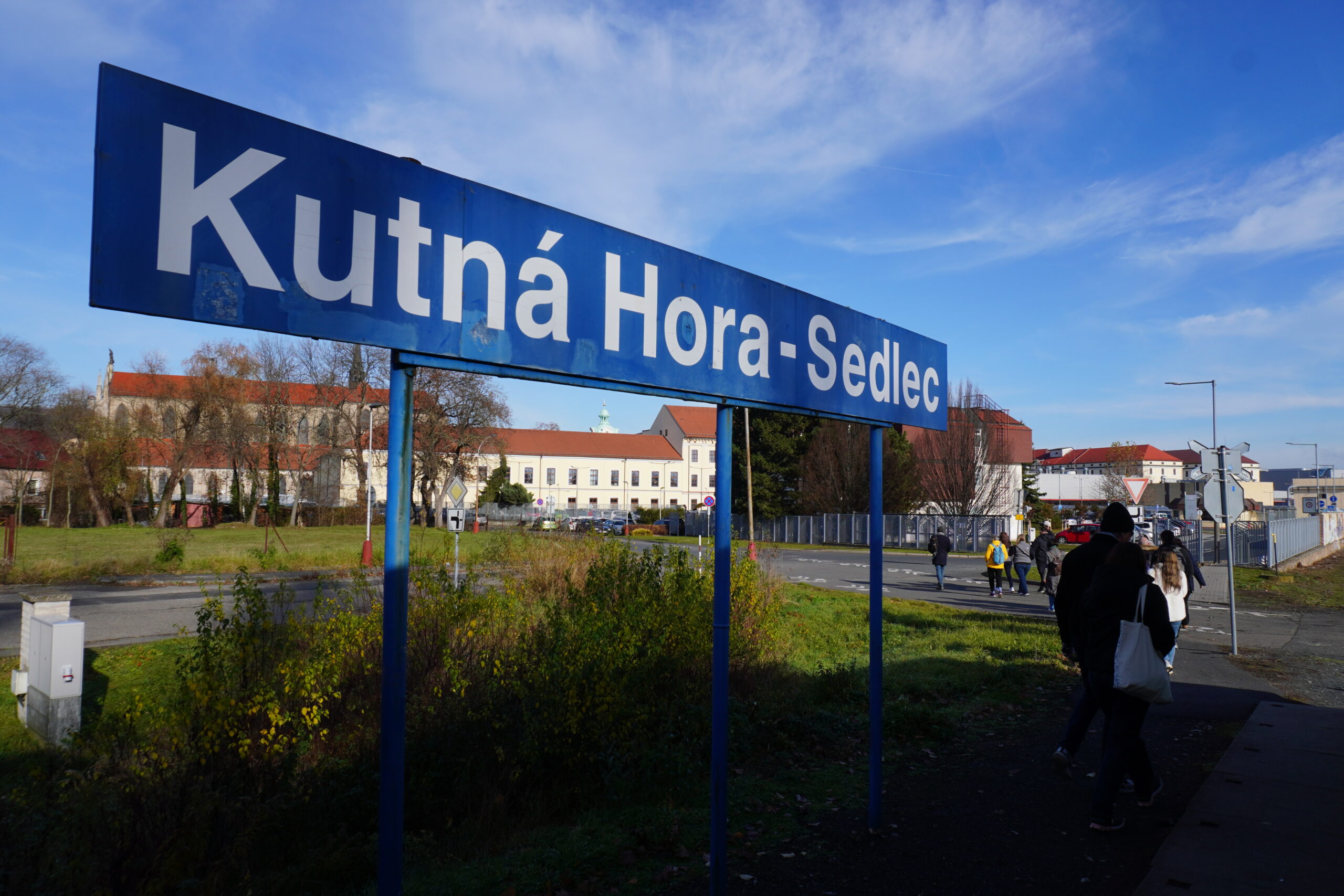
- Kutná Hora & Sedlec Ossuary — The most extraordinary small town in Bohemia, one hour from Prague by train: the Gothic Cathedral of St Barbara (the finest Gothic church in the country outside Prague), the Italian Court (the medieval mint where most of Europe’s silver coinage was struck), and — most unforgettably — the Sedlec Ossuary, where the bones of 40,000 people have been arranged by František Rint in 1870 into chandeliers, garlands, and heraldic decorations on the walls and ceiling of a Gothic chapel. One of the most astonishing interiors in central Europe.
- Karlštejn Castle — The most visited castle in the Czech Republic outside Prague, 30 kilometres southwest: a 14th-century Gothic castle on a limestone ridge, built by Charles IV to house the Czech Crown Jewels and Holy Roman Empire relics. The exterior — white towers above a forest ridge above the Berounka valley — is the quintessential Czech castle image.
- Terezín Memorial — The town of Terezín, 60 kilometres north of Prague, was used by the Nazis as a Jewish ghetto from 1941 to 1945: 33,000 people died there, and 88,000 more were transported to the death camps. The Small Fortress was a Gestapo prison; the main walled town was the ghetto itself. The memorial museums and the Columbarium (where the ashes of the dead were stored before the Nazis dumped them in the Ohře river) constitute the most important site of Holocaust memory in the Czech Republic.
- Konopiště Castle — The castle of Archduke Franz Ferdinand, assassinated in Sarajevo in 1914, 40 kilometres south of Prague: his extraordinary personal collection of bears (he shot 171,537 animals in his lifetime) and his rose garden are the two most memorable features. The castle’s connection to the event that triggered the First World War gives it a historical weight no other Czech castle possesses.
- Mělník — Wine Town at the Confluence — The old Bohemian wine town at the confluence of the Vltava and Elbe rivers, 35 kilometres north of Prague, with a Renaissance castle (its cellar houses the finest wine in Bohemia) and the Church of Saints Peter and Paul, beneath which an ossuary of medieval plague victims is arranged as informally as a forgotten attic. The view from the castle terrace over the two rivers joining is the finest in Bohemia outside Prague.
Český Krumlov & South Bohemia
- Český Krumlov Castle — The second-largest castle complex in Bohemia, in a hairpin bend of the Vltava in the South Bohemian hills: a Gothic and Renaissance castle with 40 buildings and a park theatre (the finest 17th-century Baroque theatre in Europe, with original stage machinery still operational), rising above a perfectly preserved UNESCO-listed medieval town of orange-roofed houses. Arrive before 10am to beat the coaches; stay overnight to have the town to yourself after dark.
- Česky Krumlov Old Town Walk — The town enclosed within the castle’s river bend has 300 protected historic buildings and a single pedestrianised main lane (Latrán, Náměstí Svornosti) that winds from the castle bridge to the main square. Eat at Nonna Gina’s for Czech-Italian fusion; drink at the Eggenberg brewery tap (the oldest continuously operating brewery in South Bohemia, 1560) on the town square.
- Vltava River Rafting, Šumava — The Upper Vltava above Český Krumlov offers the finest rafting in the Czech Republic: gentle but interesting Class I–II water through forests and past castle ruins, available from operators in Vyšší Brod or Lipno. The classic half-day section from Lipno to Loučovice passes the Vyšší Brod monastery (visible from the river) and a landscape of birch and spruce entirely unchanged from the Šumava of the 19th century.
- Šumava National Park — The ancient forest plateau on the German and Austrian border: the oldest national park in the Czech Republic, with the largest continuous forest area in Central Europe, primeval bog landscapes (the Boubínský prales old-growth forest is the finest), mountain lakes (the Black Lake and the Devil’s Lake), and the headwaters of the Vltava. The Šumava is deliberately under-publicised; it is the most wild and least commercial natural landscape in Bohemia.
- Třeboň & the Fish Ponds — A beautifully preserved Renaissance spa town in South Bohemia, surrounded by the largest artificial fish pond system in central Europe — built by the Rožmberk dynasty in the 15th–16th centuries and still producing the carp eaten at every Czech Christmas dinner. The ponds are also one of the finest wetland birdwatching landscapes in the country. Třeboň beer (Regent, founded 1379) is among the finest in Bohemia.
- Hluboká Castle — The 19th-century neo-Gothic castle above the Vltava south of České Budějovice, built in the Windsor Castle style for the Schwarzenberg family, with interiors of extraordinary Victorian eclecticism: English furniture, Flemish tapestries, and Meissen china alongside Czech folk art. The castle of the imagination of what a Czech castle should look like.
- České Budějovice (Budweis) & the Budvar Brewery — The birthplace of the original Budweiser: the Budvar (Budějovický Budvar) brewery, in production since 1895, gives the most complete tour of any Czech brewery — including the lager cellars where the beer conditions for 90 days at 0°C. The original name dispute with Anheuser-Busch is explained in full. The beer itself, drunk at the brewery tap after the tour, is one of the finest lagers in the world.
Bohemian Paradise & Northern Bohemia
- Bohemian Paradise (Český ráj) — The first protected landscape area in Bohemia: a forested plateau of sandstone rock towers, ruined castles on volcanic plugs, and the extraordinary Prachov Rocks — a labyrinth of sandstone columns 10–30 metres high, threaded by walking trails. The rock formations around Hrubá Skála and the ruins of Trosky Castle (twin volcanic columns visible for 40 kilometres) are the finest in central Bohemia.
- Prachov Rocks, Bohemian Paradise — The most visited sandstone rock formation in Bohemia: a 2-kilometre circuit through a maze of narrow gorges, arches, and columns that constitute one of the finest geological walking experiences in central Europe. The 19th-century observation pavilion on the highest column gives a view over the forest and rock landscape of the entire Jičín region.
- Bohemian Switzerland National Park (České Švýcarsko) — The Czech part of the Elbe Sandstone Mountains on the German border, with the Pravčická Brána — the largest natural sandstone arch in Europe (26.5 metres wide) — and the Edmundova gorge (navigable by boat). The ferry through the Kamenice Gorge between vertical sandstone walls is the finest river experience in northern Bohemia.
- Adršpach-Teplice Rock Formations — The finest rock landscape in the Czech Republic after Bohemian Paradise: pillars of sandstone rising 60–80 metres from the forest floor in the northeastern corner of the country, with a walking circuit through the narrow gorges, past the Wolf Gorge (accessible only by swimming or wading), and to the top of the highest column. The least-visited major rock landscape in the country.
- Krkonoše (Giant Mountains) & Sněžka — The highest mountain range in the Czech Republic, on the Polish border, with Sněžka (1,603 metres, the highest Czech peak) accessible by cable car from Pec pod Sněžkou or on foot. In summer the plateau is covered in Alpine meadows; in winter it is the finest ski destination in Bohemia.
West Bohemia: Beer & Spas
- Pilsner Urquell Brewery, Plzeň (Pilsen) — The birthplace of pilsner lager: the Pilsner Urquell brewery, in production since 1842, offers the finest brewery tour in Europe — through the original underground cellars where the beer still conditions in oak barrels, to the tapping room where unfiltered, unpasteurised tank beer straight from the cellar is poured. The difference between the brewery tap version and the bottle is the argument for visiting.
- Plzeň Old Town & the Great Synagogue — The capital of West Bohemia has the largest historic underground tunnel network in Bohemia (guided tours from the tourist office), the Renaissance Town Hall, and the Great Synagogue — the second-largest in the world (after Budapest), in a state of beautiful and melancholy partial restoration.
- Karlovy Vary (Carlsbad) — The most famous spa town in central Europe: 13 mineral springs, Art Nouveau colonnades along the Teplá river, the tradition of drinking hot spring water from a porcelain drinking vessel (lázeňský pohárek), and the summer film festival (the Karlovy Vary International Film Festival, held in July, is one of the most important in central Europe). The colonnade walk and the waters are free; the grand spa hotels are not.
- Mariánské Lázně (Marienbad) — The most elegant of the West Bohemian spa towns: a Belle Époque resort of yellow and white buildings around a singing fountain (a programmed water-and-light show), with the finest park in the Czech spa triangle and the neoclassical colonnades where Goethe, Chopin, Wagner, and King Edward VII all took the waters.
- Loket Castle & the Ohře River — The most dramatically sited small castle in Bohemia: on an almost entirely encircled rock of the Ohře river, with the perfectly preserved Gothic interior, a collection of Meissen porcelain, and a view of the horseshoe bend entirely surrounding the castle. Goethe visited 13 times and wrote part of Faust here.
Moravia: The Country’s Other Half
Brno & the Southeast
- Brno: Czechia’s Most Underrated City — The capital of Moravia and the Czech Republic’s second city is consistently voted one of the most liveable cities in central Europe by its residents and consistently underestimated by visitors. The Vegetable Market (Zelný trh) — the oldest continuously operating market in the Czech Republic — the Art Nouveau train station, the Spilberk Castle, the Ossuary of St James (discovered in 2001, with 50,000 skeletons), and a nightlife and restaurant scene more genuine and more innovative than Prague’s make it essential.
- Villa Tugendhat, Brno (UNESCO) — The masterpiece of Ludwig Mies van der Rohe, built in 1930 for the Jewish-German Tugendhat family, is one of the most important buildings of the 20th century — a defining statement of the International Style with the first floor-to-ceiling retractable glass wall in architectural history. A UNESCO World Heritage Site since 2001; guided tours only, book months in advance.
- Ossuary of St James, Brno — Discovered beneath the Church of St James in the city centre in 2001, the baroque ossuary contains the bones of approximately 50,000 Brno residents arranged in an 18th-century Viennese style, now opened as the finest ossuary museum in the Czech Republic. The conservation, curation, and historical interpretation are exceptional.
- Spilberk Castle & Prison, Brno — The 13th-century castle on the hill above Brno, which served as the Habsburg Empire’s most feared political prison from the 17th to 19th centuries. The prison cells (the Kasematy) where Napoleon’s political opponents were held, the castle’s Baroque and Renaissance courtyards, and the museum of Brno’s history combine into the finest single site in the city.
- Mahen Theatre, Brno — The neo-Rococo theatre of 1882, designed by Fellner and Helmer (the Austro-Hungarian empire’s premiere theatre architects), was the first theatre in Europe to be lit by Edison’s electric light. The programme of opera, ballet, and drama makes it the finest performing arts venue in Moravia.
Olomouc & the North
- Olomouc — Moravia’s Baroque Gem — The most important city in Moravia that most international visitors never visit: a compact historic core with six Baroque fountains, three UNESCO-listed Holy Trinity Columns (the finest is the Column of the Holy Trinity, one of the largest single Baroque sculptures in Europe), the Romanesque foundations of St Wenceslas Cathedral, and a student population that gives it more evening energy than any Czech city outside Brno. Far less crowded than Prague and far more genuinely Bohemian.
- Holy Trinity Column, Olomouc (UNESCO) — The Baroque plague column on Horní náměstí (Upper Square): 35 metres high, completed in 1754, covered in gilded figures of the saints and the Trinity. Recognised by UNESCO as the finest Baroque plague column in central Europe. The surrounding Upper Square, with the Town Hall Astronomical Clock (rebuilt after Soviet soldiers shot it in 1945 to deny it as a Nazi propaganda image), is the most beautiful square in Moravia.
- Kroměříž Archbishop’s Palace & Gardens (UNESCO) — Forty kilometres south of Olomouc: the Bishop’s Palace and its two gardens — the Flower Garden (the finest formal Baroque garden in the Czech Republic) and the Archbishop’s Garden (a landscaped English park) — are a UNESCO World Heritage Site. The Palace Picture Gallery (a 17th-century collection donated by Charles II of England) contains one of the finest collections of Dutch and Flemish masters in central Europe, including Titian’s Flaying of Marsyas.
- Rožnov pod Radhoštěm Open-Air Museum — The largest open-air folk museum in the Czech Republic: 150 traditional Wallachian wooden buildings — farmhouses, mills, workshops, a church, and a pub — relocated from across Moravia onto a hillside site and presented with craftspeople demonstrating traditional skills. The finest preserved example of the Wallachian folk culture of the Carpathian foothills.
South Moravia: Wine & Landscapes
- Mikulov — The White Baroque Town — The most beautiful town in Moravia: a white Baroque castle on a limestone hill above a town of baroque palaces, Renaissance arcades, and the largest Jewish cemetery in Moravia, at the meeting point of the Czech, Austrian, and Slovakian borders. The surrounding Mikulov wine subregion produces the finest Pálava and Riesling in the Czech Republic.
- Moravian Wine Trail Cycling — The network of marked cycling routes through the South Moravian vineyards — from Znojmo through Mikulov to Lednice and Valtice — is the finest wine-country cycling experience in central Europe: gentle rolling terrain, every few kilometres a wine cellar open for tasting, and the extraordinary landscape of the Dyje and Morava rivers framed by vine-covered slopes.
- Lednice-Valtice Complex (UNESCO) — The most extensive landscape park in Europe: 283 square kilometres of designed landscape in South Moravia, created by the Liechtenstein family between the 17th and 20th centuries, with the neo-Gothic Lednice Castle (the finest neo-Gothic building in the Czech Republic), the Classical Valtice Castle, and 20 follies, obelisks, temples, and arches scattered across the floodplain. A UNESCO World Heritage Site.
- Znojmo Underground Tunnels & Wine Cellars — The historic town of Znojmo, on the Dyje River above the Podyjí National Park, sits above 27 kilometres of underground tunnels dug by generations of wine merchants and brewers. Tours of the medieval tunnel network beneath the town combine with wine tastings in the active cellars of the Znojmo subregion — whose Sauvignon and Riesling are among the finest in the country.
- Podyjí National Park — The most biodiverse national park in the Czech Republic, in the deep meander valley of the Dyje river on the Austrian border: ancient oak forests, rare steppe grasslands, and the only naturally forming hot spring in Bohemia-Moravia. The hiking trail along the river through the park, from Znojmo to Vranov nad Dyjí, is the finest valley walk in Moravia.
- Burčák Season — Young Wine (September) — Each September, the partially fermented young wine (burčák or federweißer) is released for a brief season across South Moravia, drunk from plastic cups at street stalls and market tables throughout the wine villages. With a sweetness that belies its alcohol content, it is one of the most culturally specific seasonal food experiences in the Czech Republic. Available only for a few weeks; worth timing a trip around.
- Valtice National Wine Salon — The former wine cellar of the Liechtenstein family beneath Valtice Castle is now the National Wine Salon of the Czech Republic — a permanent exhibition of the 100 best Czech wines selected annually by a panel of experts. Open year-round; the most comprehensive and most reasonably priced wine tasting experience in the country.
- Telč Old Town Square (UNESCO) — One of the most perfectly preserved Renaissance town squares in Europe: a long rectangular square in southern Moravia, enclosed by a continuous arcade of Renaissance and Baroque houses in white, ochre, pink, and green, each with a different decorative gable. Built after a fire in 1530 by the lord of the town, Zacharias of Hradec, who wanted to rebuild it in the Italian Renaissance style — and succeeded entirely. A UNESCO World Heritage Site; the most beautiful small town square in the Czech Republic.
- Moravian Karst (Moravský kras) — The finest cave system in the Czech Republic: the Punkva Caves (accessible by boat on an underground river), the Macocha Abyss (a 138-metre deep pit gorge, the deepest in central Europe), the Kateřinská Cave, and the Sloupsko-Šošůvské Caves. The Punkva tour — descending to the cave floor, boarding a boat, and gliding through the underground river — is one of the finest natural experiences in Moravia.
Czech Beer Culture
- Czech Beer (Pivo) Essentials — The Czech Republic produces more beer per capita than any country on earth: 150 litres per person per year. But beyond the statistics, Czech lager is in a different category from any other: the cold-fermented bottom-fermenting pilsner, produced from Saaz (Žatec) hops and Moravian malt, and poured with technical precision (the Pilsner Urquell-trained system of tap masters) produces a beer of extraordinary freshness and balance. Drinking it in the country of its origin, in the correct glass, poured correctly, is a genuinely different experience.
- Pilsner Urquell, Plzeň — The original pilsner, brewed since 1842: a brewery tour, an unfiltered tank beer in the cellar, and the understanding of what pilsner lager was before it became an international industrial product.
- Budvar (Budějovický Budvar), České Budějovice — The other great Czech lager brewery, in continuous dispute with the American Budweiser brand over the name: a 90-day cold-conditioning process produces a clean, malt-forward lager of considerable distinction. The brewery tour is the most technically detailed in the country.
- Kozel Brewery, Velké Popovice — The brewery producing Kozel (Goat) beer, 35 kilometres south of Prague: a working farm brewery in a 19th-century setting, with tours showing the full production process and the Tmavý (dark) Kozel — one of the finest Czech dark lagers.
- Bernard Brewery, Humpolec — A family brewery in the Vysočina highlands, producing an unfiltered amber lager and a range of seasonal beers that have made it the most awarded Czech craft brewery of the past decade. The brewery tap and the adjacent restaurant are the finest beer-food combination in the Czech highlands.
- Craft Beer Prague: Vinohradský Pivovar & Queer Brewery — Prague’s craft beer scene is now international quality: Vinohradský Pivovar (a neighbourhood brewery in Vinohrady, with Czech IPAs and seasonal ales), and the Half-Day Brewery (Matuška) in suburban Prague are the finest examples of a scene that has produced 20 working city breweries in five years.
History, Architecture & Culture
- Romanesque Rotunda of St Martin, Vyšehrad — The oldest surviving building in Prague: a Romanesque rotunda on the Vyšehrad promontory, built in the late 11th century, small enough to span in four paces, and still standing after nearly 900 years. The most direct encounter with pre-Gothic Czech history in the capital.
- Kroměříž State Castle & Titian’s Flaying of Marsyas — Titian’s final painting, completed the year he died (1576), hung in the Archbishop’s Gallery at Kroměříž and considered one of the most powerful works of late Renaissance art. Seeing it in its original setting — in a 17th-century palace gallery in Moravia — rather than a modern museum is an experience of extraordinary cultural specificity.
- Třebíč Jewish Quarter & Basilica (UNESCO) — The Třebíč Jewish Quarter is the finest example of a preserved Jewish community in central Europe outside Josefov: a complete urban landscape of the Jewish ghetto, with the Rear Synagogue (now a museum), the Front Synagogue (still in use), and the Jewish cemetery, all preserved since the 18th century. The adjacent Romanesque-Gothic Basilica of St Procopius (12th century) is the finest Romanesque building in Moravia.
- Litomyšl Castle (UNESCO) — A Renaissance arcade castle in eastern Bohemia — the finest example of the Italian arcade castle type (arcaded courtyards on all four sides) in central Europe — and the birthplace of Bedřich Smetana. The castle houses the most extensive collection of Czech Baroque ceramics in the country; the courtyard is used as the venue for the Smetana’s Litomyšl opera festival in June and July.
- Bouzov Castle, North Moravia — The medieval fortress in the Olomouc hills, rebuilt as a neo-Gothic fantasy for the German Order of Knights (the Teutonic Knights) in the late 19th century: towers, drawbridge, stables, chapel, and the finest medieval armoury in Moravia. One of the most theatrically impressive castles in the country.
- Wallenstein Palace & Gardens, Prague Malá Strana — The largest Baroque palace in Prague, built for the military genius Albrecht von Wallenstein in the 1620s with three courtyards and a salla terrena (open arcade) overlooking the finest Baroque garden in the city. The Astronomer’s bronze statues on the Loggia’s balustrade are casts of the originals, stolen by the Swedes in 1648.
Outdoor Adventures & Nature
- Hiking in Šumava: Boubín Primeval Forest — The Boubínský prales, a 666-hectare old-growth forest reserve in the centre of Šumava, contains trees over 400 years old and untouched fallen timber that creates a forest ecosystem of extraordinary complexity. The 3.8-kilometre circuit through the forest is the finest ancient forest walk in central Europe.
- Sandstone Climbing at Adršpach — The Adršpach-Teplice rock city has the finest traditional climbing in the Czech Republic: established routes on sandstone towers using the Czech tradition of knotted sling anchors (metal anchors are forbidden to preserve the rock surface). The climbing ethics here predate those of Yosemite and are taken equally seriously.
- Macocha Abyss Gorge Walk, Moravian Karst — The hiking trail from Blansko through the Moravian karst to the Macocha Abyss — descending into the gorge from the upper rim and walking the canyon floor past the lower Punkva cave entrance — is the finest natural walking trail in Moravia. The 138-metre pit is visible from two observation platforms on the rim; the scale is genuinely shocking.
- Cycling the Greenway Prague–Vienna — A 450-kilometre cycling trail from Prague to Vienna through South Bohemia and South Moravia, following river valleys and the wine-country roads of the Znojmo and Mikulov regions. The finest multi-day cycling experience in the Czech Republic, combining river landscapes, historic towns, and the wine cellars of the Austrian border.
- White-Water Kayaking on the Ohře and Berounka — The rivers of West Bohemia offer the finest accessible white-water kayaking in Bohemia: the Berounka from Plzeň to Beroun and the Ohře through the Doupov hills produce Class II–III water through continuous agricultural and wooded valley landscape. Canoe hire is available at most river access points.
- Krkonoše Ski & Summer Trails — The Giant Mountains offer the finest skiing in Bohemia at Pec pod Sněžkou, Špindlerův Mlýn, and Harrachov — reasonable alternatives to Austrian and Swiss resorts at a fraction of the cost. In summer the meadows above the treeline contain the richest mountain flora in the Czech Republic.
Czech Food, Wine & Culture
- Svíčková na smetaně (Beef in Cream Sauce) — The most beloved traditional Czech dish: beef braised in a spiced vegetable broth, served with a cream sauce, bread dumplings, cranberries, and lemon. Every Czech restaurant worth visiting serves it; the version at Lokál in Prague and at Restaurant Moravská Chalupa in Brno are benchmarks.
- Trdelník in Český Krumlov & Prague — The spiral pastry baked on a rotating spit, brushed with sugar and cinnamon, sold at Christmas markets and year-round in tourist areas. The Trdelník debate (whether it is traditionally Czech or a tourist invention) is lively; the pastry itself, eaten hot from the spit, is genuinely excellent.
- Czech Christmas Carp — Christmas Eve Tradition — Every Czech Christmas Eve, the traditional dinner is fried carp (kapr) served with potato salad. In December, live carp are sold from large barrels on street corners across the country — a tradition unchanged for centuries. Seeing the street carp sellers in Prague in mid-December is the most specific seasonal experience the country offers.
- Moravian Wine Tasting at a Family Cellar — The wine cellars of South Moravia — particularly in the cellar street (sklep) villages of Petrov, Blatnice, and Mikulčice — are open to visitors who knock and say “degustace” (tasting). For €5–10 you sit in a chalk-carved cellar, eat homemade chléb (bread) with lard and pickles, and taste five wines directly from the barrel. The most direct and the most authentic wine experience in the country.
- Pálenka (Slivovitz) at a Moravian Distillery — The Moravian fruit brandy (pálenka) — most famously slivovitz (plum brandy), but also apricot, pear, and cherry varieties — is produced by family distilleries across the Slovácko and Zlín regions of eastern Moravia. Visiting a working distillery during the autumn pressing season is one of the most culturally specific rural experiences in the country.
- Lokšt (Traditional Potato Pancakes), Moravia — The lokše of Moravia — thin potato pancakes, filled with duck fat and fried onion, or rolled with poppy seeds and icing sugar — are street food specific to Moravia and one of the finest small plates in Czech regional cooking.
Festivals, Events & Czech Life
- Karlovy Vary International Film Festival (July) — One of the five most important film festivals in Europe: held for two weeks each July in Karlovy Vary, with premieres, retrospectives, and the Grand Prix Crystal Globe awarded to the finest film in competition. The resort town, filled with film-goers in the Art Nouveau colonnade, is at its most animatedly international.
- Strážnice International Folklore Festival (June) — The most important folk music and dance festival in the Czech Republic, held in the Slovácko village of Strážnice each June: 10,000 participants from across Europe and the world, with the richest expression of Moravian folk culture — the cimbalom music, the folk costumes of the Slovácko region, the wine, and the dancing — available anywhere in the country.
- Smetana’s Litomyšl Opera Festival (June–July) — Open-air opera performed in the arcaded courtyard of the UNESCO-listed Litomyšl Castle, under the stars, in the birthplace of Bedřich Smetana. The finest alfresco opera experience in the Czech Republic and one of the finest in Europe.
- Prague Spring International Music Festival (May–June) — One of the oldest and most prestigious classical music festivals in Europe, held annually in Prague since 1946: the festival opens each year with a performance of Smetana’s Má vlast (My Homeland) on the anniversary of Smetana’s death. The finest classical music programming in the Czech Republic.
- Christmas Markets: Prague, Brno & Olomouc — The Prague Christmas market on Old Town Square (one of the finest in central Europe, with the smells of trdelník and svařák — mulled wine — filling the square beneath the Týn towers) and the Brno and Olomouc markets (more local, more affordable, more genuinely Czech) together represent the full range of the Czech Christmas market tradition.
Hidden Gems & Unexpected Czechia
- Znojmo’s Underground Tunnels — The town of Znojmo has 27 kilometres of underground passages and wine cellars beneath its streets — more than any other town in the Czech Republic. Guided tours descend five floors below street level through Gothic and Renaissance tunnel networks that were used for wine storage, water supply, and refuge during medieval sieges.
- Prachatice — The Silent Renaissance Town — A small South Bohemian town on the Šumava forest edge with the most completely preserved Renaissance main square outside Telč: painted facades, Gothic arcades, and the largest functioning late Gothic church in South Bohemia, all in a town that receives a fraction of the visitors of Český Krumlov.
- Liberec & the Ještěd Tower — The capital of northern Bohemia, at the foot of the Jizerské Mountains, with the extraordinary Ještěd Tower (1973) — a combined television tower and hotel on the summit of the Ještěd mountain, shaped like a hyperboloid rotational shape that blends with the mountain profile. The most architecturally distinctive building in the Czech Republic outside Prague, winner of the Perret Prize of the International Union of Architects in 1969.
- Velká Amerika — The Czech Grand Canyon — A flooded quarry in the Bohemian Karst south of Prague that has been described as the Czech Grand Canyon: an emerald-green lake 800 metres long and 50 metres below the quarry rim, with white limestone walls supporting ferns and wild orchids. Free to visit; entirely unknown to most visitors to Prague.
- Slavkov u Brna (Austerlitz) Battlefield — The site of Napoleon’s greatest victory (2 December 1805) is 20 kilometres east of Brno: the Mohyla míru (Peace Monument, a striking Art Nouveau structure by Josef Fanta) marks the highest point of the battle. The battlefield landscape — the Pratzen Heights, the frozen Satchan lakes where Austrians drowned in retreat — can be walked or cycled from the monument.
- Lidice Memorial & Village — The village of Lidice, 20 kilometres west of Prague, was entirely destroyed by the Nazis on 10 June 1942 in reprisal for the assassination of Reinhard Heydrich: all 173 male residents were shot, the women sent to Ravensbrück, the children gassed at Chelmno. The memorial museum, the memorial garden with its sculptural installation of the 88 children, and the visible outline of the original village are the most emotionally devastating site in Bohemia.
- Cheb & the Eger Heartland — The westernmost city of the Czech Republic, formerly a Free Imperial City of the Holy Roman Empire, with a medieval market square of outstanding quality and the Cheb Castle where Wallenstein was assassinated in 1634. The surrounding Eger (Ohře) river valley is the heart of the Czech hop-growing region — source of the Saaz hops that flavour Pilsner Urquell.
- Moravia’s Wine Cellar Streets (Sklepní Ulička) — The villages of Petrov na Moravě and Blatnice pod Sv. Antonínkem have entire streets of wine cellars carved into the hillside — 150 or more in a row, each belonging to a different family, each with its own carved doorframe and its own wines. Walking the cellar streets on a Sunday afternoon in October, when the cellar doors are open and the families are gathered outside, is the most quintessentially Moravian experience available.
- Baroque Pilgrimage Route: Zelená Hora (UNESCO) — The pilgrimage church of St John of Nepomuk at Zelená Hora (Green Mountain), near Žďár nad Sázavou in the Vysočina highlands, designed by the Baroque architect Jan Blažej Santini-Aichel in 1719: a star-shaped cloverleaf plan of extraordinary symbolic complexity, incorporating Gothic and Baroque forms in a composition unlike any other sacred architecture in Europe. UNESCO World Heritage Site; entirely under-visited.
- Olomouc Cheese (Tvarůžky) Tasting — The Olomouc tvarůžky — a small, cylindrical, aged cheese with an ammonia-intense smell and a flavour that polarises opinion entirely — is the most local of all Czech regional foods, produced only in the Olomouc district. Eating it with dark rye bread, butter, and a cold Kozel at a traditional pub in Olomouc is an experience of complete regional specificity.
- Průhonice Park & Château — The most botanically diverse park in central Europe, 12 kilometres south of Prague: an English landscape park of 246 hectares containing 1,600 tree species and the finest collection of rhododendrons in Bohemia, surrounding a neo-Gothic château. A UNESCO World Heritage Site (2010) and completely ignored by most Prague visitors despite being 20 minutes from the city.
- Blaník Mountain & the Sleeping Knights Legend — The mountain above the Sázava valley southeast of Prague, where according to Czech legend, the Knights of Wenceslas sleep inside the mountain waiting to emerge in Czechia’s darkest hour and save the country. Smetana composed one of the finest movements of Má vlast about it. The hill is unimpressive; the legend and what it says about Czech national feeling are not.
- Velehrad Basilica — Heart of Czech Christianity — The Romanesque-Gothic pilgrimage basilica in the Slovácko region, on the site of the Great Moravian civilisation’s capital, where Saints Cyril and Methodius brought Christianity and literacy (the Glagolitic alphabet) to the Slavic world in the 9th century. Pope John Paul II celebrated mass here in 1990 before 200,000 people. The most historically significant Christian site in the Czech Republic.
- Sit in a Czech Pivnice at Closing Time — On your last evening in the Czech Republic, find a traditional pivnice — a beer hall in the oldest available building, with wooden benches, a list of three beers, a menu of four dishes — and stay until closing. Order the dark lager. Eat the bread with lard and pickles. Watch the regulars. Listen to the language. The last thing the Czech Republic offers is not a castle or a cave or a wine cellar — it is this room, this beer, this particular quality of Central European ordinariness that has been protecting everything extraordinary behind it. The greatest things in this country have always been hidden just past the door.
Quick Facts for Visitors
| Best time to visit | April–June (spring, fewer crowds) · September–October (wine harvest, autumn) |
| Summer | July–August — busy in Prague and Český Krumlov; regional towns are quieter |
| Winter | December — Christmas markets; January–February quietest and coldest |
| Currency | Czech Koruna (CZK) — not Euro; exchange at banks or ATMs, not airports |
| Language | Czech (German useful in Bohemia; English spoken in cities and tourist areas) |
| Getting around | Train (excellent between cities) · Bus (Flixbus, Student Agency) · Car (essential for Moravia and Šumava) |
| Capital | Prague |
| Country name | Czech Republic / Czechia (both official; Czechs prefer Czechia) |
| Beer note | Czech Republic = highest beer consumption per capita in the world. Pivo costs €1–2 in most towns outside Prague |
| Ideal trip length | 3–4 days Prague · 7–10 days adds Moravia and South Bohemia · 14 days for the full country |
The Czech Republic is a country where almost every serious pleasure is affordable, almost every historic building is intact, and almost every good experience outside Prague is shared with no one but the locals. Go beyond Prague — not because Prague is disappointing, but because everything beyond it will change what you thought you already knew about the country.