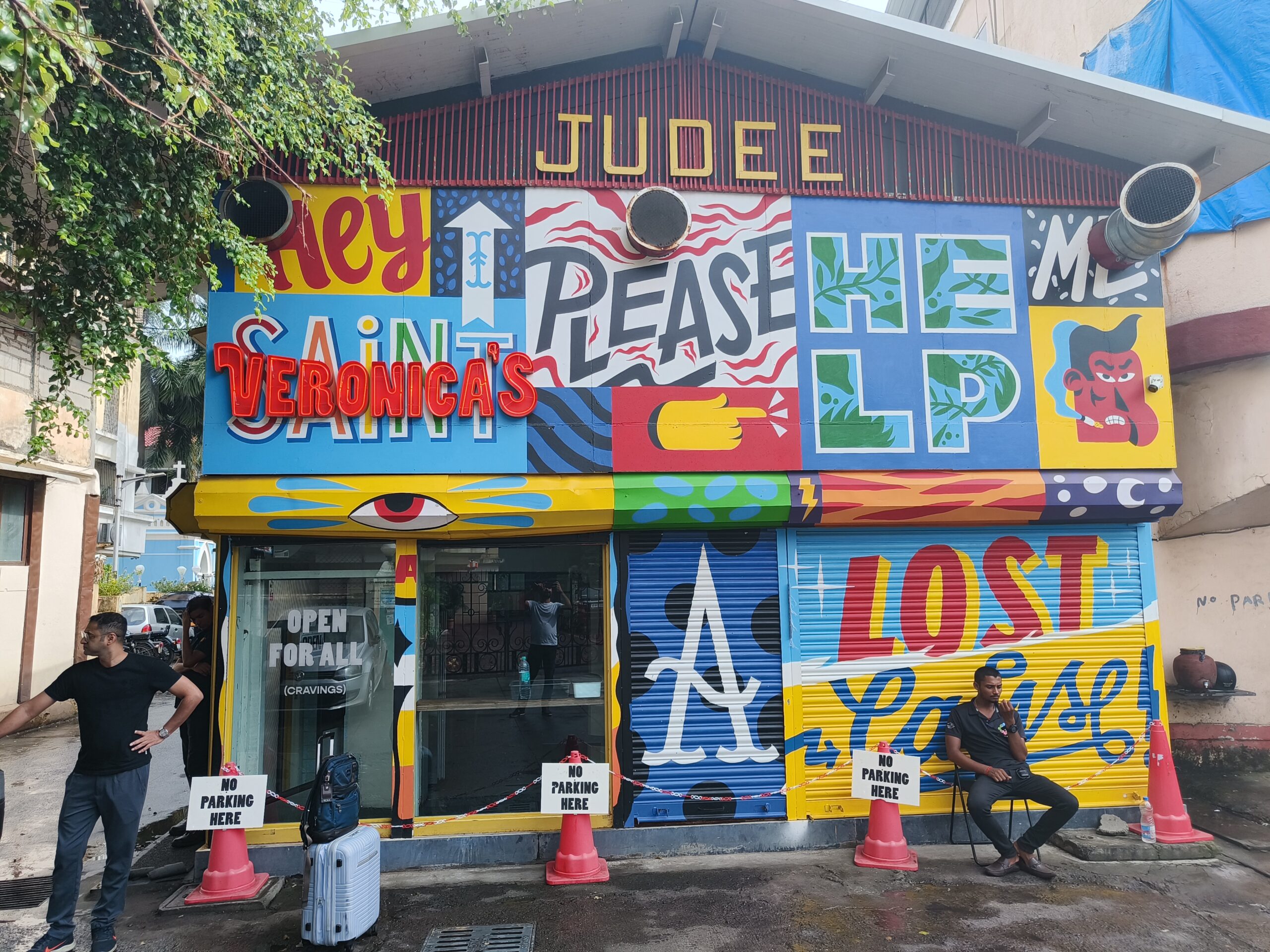
Mumbai does not ease you in gently. From the moment you step out of the airport, it hits you with full force: the heat, the noise, the impossible density, the smell of the sea and the street food and something harder to name — the energy of 21 million people all pursuing the same dream in different directions at the same time. This is India’s financial capital, its entertainment capital, its fashion capital, and its port to the world. It is the city that invented Bollywood, that runs on vada pav and cutting chai, that has a fishing village inside a city inside a megalopolis, that built Gothic cathedrals and Art Deco cinemas and gave them both to the sea.
Maximum City, the writer Suketu Mehta called it. He was not exaggerating.
This guide covers 101 things to do across Mumbai’s extraordinary neighbourhoods — from the colonial grandeur of South Mumbai to the Bollywood energy of Andheri, the Portuguese lanes of Bandra, the buzzing Koli fishing communities, and the places that most guidebooks have never found.
South Mumbai: The Historic City
Colonial Landmarks & Heritage
- Gateway of India — The great basalt arch on the Apollo Bunder waterfront, built to commemorate the 1911 visit of King George V, is Mumbai’s defining monument. In the morning, when the fishing boats return and the light comes off the harbour, and in the evening when the illuminated arch reflects in the water, it is genuinely majestic. The Last British troops departed through it in 1948 — the Empire’s last exit from India.
- Taj Mahal Palace Hotel — Jamsetji Tata built the Taj in 1903 across the road from the Gateway, partly as a response to a “Europeans Only” policy at another hotel. The original heritage wing, with its Moorish and Florentine architecture, its corridors of paintings and silver and history, is one of the finest hotel buildings in Asia. The Sea Lounge for afternoon tea or a cold Kingfisher as the harbour light fails is a Mumbai classic.
- Chhatrapati Shivaji Maharaj Terminus (CSMT) — The most extravagant railway station in the world: a UNESCO World Heritage Site of Victorian Gothic stonework, stained glass, turrets, gargoyles, carved animals, and a central dome that owes more to Venetian architecture than to anything British. Built between 1878 and 1888, it still handles over three million passengers per day. Stand in the main hall during the morning rush and watch the city flow through it.
- Fort & the Kala Ghoda Precinct — The former British fort district, now Mumbai’s cultural and financial heartland, with the High Court, the Rajabai Clock Tower, the University Library, and the Kala Ghoda arts precinct clustering around a network of arcaded streets. The Kala Ghoda Arts Festival each February transforms the area into one of the finest public art events in India.
- Chhatrapati Shivaji Maharaj Vastu Sangrahalaya (CSMVS) — Mumbai’s principal museum, in a magnificent Indo-Saracenic building in the Fort district, with collections spanning Indian sculpture, decorative arts, miniature paintings, and natural history from across the subcontinent. The Mughal and Deccan art collection is among the finest in the country.
- Jehangir Art Gallery, Kala Ghoda — The oldest public art gallery in Mumbai, at the centre of the Kala Ghoda arts district, with a programme of changing exhibitions by established and emerging Indian artists. The pavement outside — where artists sell work informally on Saturdays — is as interesting as anything inside.
- Rajabai Clock Tower & the University of Mumbai — The 85-metre neo-Gothic clock tower on the university campus, modelled on Big Ben, is one of the finest Victorian buildings in Asia. The adjacent University Library, with its carved stone staircase and medieval-style hall, is equally remarkable.
- Horniman Circle Garden — A perfectly circular formal garden in the Fort district, surrounded by a ring of Victorian commercial buildings, with a bandstand at its centre and the facade of the Town Hall (now the Asiatic Society Library) at its head. One of Mumbai’s finest public spaces, and largely unknown to visitors.
- Asiatic Society of Bombay Library — A magnificent neoclassical building on Horniman Circle, housing one of the finest research libraries in India — 800,000 volumes, ancient manuscripts, and a collection of rare maps. The grand double staircase, the reading room, and the collection are open to visitors.
- Crawford Market (Mahatma Jyotiba Phule Mandai) — The great Victorian covered market north of the Fort, designed by Lockwood Kipling (Rudyard’s father, who carved the friezes above the entrance), with a Norman and Flemish exterior housing a chaotic, wonderful interior of fresh fruit, vegetables, spices, poultry, pets, and everything else. The approach through the crowded lanes outside is as memorable as the market itself.
Colaba: Mumbai’s Tourist Heart
- Colaba Causeway Market — The long street market running south from the Gateway of India, lined with stalls selling everything from silver jewellery and carved boxes to Kashmiri shawls, fake designer goods, and genuine antiques. The name “Thieves’ Market” is a joke — mostly. Bargain firmly and enjoy the process.
- Leopold Café, Colaba — Mumbai’s most famous old café, open since 1871, a surviving institution of the colonial era that has been frequented by travellers, journalists, traders, and writers for over 150 years. Scarred in the 2008 terror attacks and reopened within days. Order the cold coffee and the keema pav.
- Sassoon Docks at Sunrise — The oldest wet dock in Mumbai, at the south tip of Colaba, comes alive at dawn when the Koli fishing fleet returns with the night’s catch — an extraordinary scene of ice, fish, colour, and noise that has been photographed by everyone from Henri Cartier-Bresson to every photographer who follows. Arrive by 5:30am.
- Afghan Memorial Church of St John the Evangelist — A Gothic church in Colaba built in 1858 to commemorate British and Indian soldiers who died in the First Afghan War (1838–43). The stained-glass windows, the carved marble tablets, and the profound quietness of the interior in the middle of the city’s chaos make it one of Mumbai’s most affecting buildings.
- Colaba to Kala Ghoda Walking Tour — The 2-kilometre walk from the Gateway of India north through Colaba and into the Kala Ghoda precinct passes more significant architecture per metre than almost any street walk in India: the Taj, the old Yacht Club, the Police Commissioner’s Office, Elphinstone College, the High Court, and the University, all in a single unbroken belt of Victorian Gothic magnificence.
Marine Drive & Malabar Hill
- Marine Drive at Night — The 3.6-kilometre crescent of Art Deco apartments curving along Back Bay from Nariman Point to Chowpatty Beach, lit at night with a double chain of streetlamps, is known as the Queen’s Necklace. Walk it at 11pm when the city has thinned and the sea breeze comes off the Arabian Sea and the lights reflect in the water. One of the great free pleasures of Mumbai.
- Chowpatty Beach & Street Food — The beach at the north end of Marine Drive is less for swimming than for eating: bhel puri, sev puri, pani puri, kulfi, and freshly squeezed sugarcane juice from a line of beach stalls that do not close. Come at sunset and join the city.
- Malabar Hill & the Hanging Gardens — The wealthy residential hill above Marine Drive, with the Hanging Gardens (their beds shaped into animal topiaries) at the top, and the Kamla Nehru Park adjacent — a series of terraced gardens with a shoe-shaped house. The view of Marine Drive and Back Bay from the park’s northern edge at sunset is the finest free view in South Mumbai.
- Walkeshwar Temple & Banganga Tank — One of Mumbai’s oldest temple complexes, in a densely residential corner of Malabar Hill: a sacred tank (Banganga) surrounded by temples and stepped ghats, with daily bathing rituals that have taken place here for over 1,000 years. Completely unvisited by tourists, entirely authentic, and deeply moving.
- Marine Lines & the Art Deco Ensemble — The Marine Lines district along Marine Drive contains the finest concentration of Art Deco architecture in the world outside Miami — the curved facades, the ornate lift lobbies, the stepped rooflines, and the Aztec detailing of 1930s apartment buildings running the full length of Back Bay. The Marine Drive Art Deco collective has been recognised by UNESCO.
Dhobhi Ghat, Dharavi & Central Mumbai
- Dhobi Ghat (Mahalaxmi Dhobi Ghat) — The world’s largest outdoor laundry: 1,000 open-air stone wash pens spread across a valley below the Mahalaxmi railway station, where 5,000 to 7,000 dhobis wash the linen of the city’s hotels, hospitals, and residents. The view from the bridge above is one of Mumbai’s most photographed — a visual essay in the city’s working reality.
- Dharavi Walking Tour — The most instructive experience in Mumbai: a guided walk through Dharavi — one of Asia’s largest informal settlements — with a resident guide who explains the functioning, self-organised economy of a community producing recycled plastics, pottery, textiles, and food products with collective resourcefulness. This is not poverty tourism if done correctly; it is civic education. Book with a social enterprise like Reality Tours.
- Haji Ali Dargah — The marble tomb of the Sufi saint Haji Ali Syed Peer Shah Bukhari, connected to the mainland by an 8-metre-wide causeway that disappears at high tide. At evening, when the dargah is illuminated and the faithful line the causeway for prayers, with the Arabian Sea on both sides and the city skyline rising behind, it is one of the most atmospheric spiritual sites in India.
- Mahalaxmi Temple — One of the most important Hindu temples in Maharashtra, in a dramatic seafront location on Bhulabhai Desai Road, dedicated to the goddess Mahalaxmi. On Navratri, the festival of nine nights, the temple is the centre of the most vibrant religious celebrations in the city.
- Mahalaxmi Racecourse & the Derby Season — The Royal Western India Turf Club has run at Mahalaxmi since 1883. The Derby season (from November to April) draws the city’s society to the grandstand. The March Derby weekend is one of Mumbai’s great social occasions — hats, horses, and champagne beside the Arabian Sea.
- Chor Bazaar (Thieves’ Bazaar) — Mumbai’s great flea market, spread across several streets in the Muslim quarter of Bhendi Bazaar, with antique furniture, Bollywood memorabilia, Victorian crockery, clocks, brassware, old photographs, and the entire accumulated detritus of the city’s history for sale. Friday mornings are the best time. Come to browse and be patient.
- Bhendi Bazaar & Mohammed Ali Road — The heart of Mumbai’s Muslim community: a dense network of lanes full of street food stalls, fabric shops, and the extraordinary ongoing redevelopment of the Bhendi Bazaar neighbourhood — one of the most ambitious urban renewal projects in Indian history, replacing 250 crumbling chawls with 17 new towers while keeping the community in place. The street food here during Ramadan — naan khatai, mawa jalebi, sheer khurma — is the finest in the city.
The Sea: Ferries, Islands & the Waterfront
- Elephanta Caves (UNESCO World Heritage Site) — A ferry from the Gateway of India (one hour) to a wooded island in Mumbai Harbour, where a group of 6th and 7th century Hindu rock-cut cave temples contain some of the finest Shaivite sculpture in India. The Trimurti — the three-faced Shiva in the main cave — is one of the great works of classical Indian art. The walk up from the jetty through a bazaar of vendors is half the experience.
- Ferry Across the Harbour to Mora & Elephanta — The public ferry from Bhaucha Dhakka (Ferry Wharf) takes an hour and carries workers, families, and the occasional tourist in a crossing that shows Mumbai from the water as no other mode of transport does: the skyline receding, the harbour opening, the mangroves of the western shore approaching.
- Worli Seaface & the Bandra-Worli Sea Link — The Worli Seaface promenade, below the cluster of new residential towers, has the finest direct view of the Bandra-Worli Sea Link — a cable-stayed bridge of real beauty connecting the mainland to the Bandra peninsula across the open sea. At dusk, lit against the darkening sky, it is one of Mumbai’s finest modern images.
- Bandstand Promenade, Bandra — The seafront promenade below the Bandstand residential area runs from the Bandra Fort ruins to the steps below the sea rocks, with fishermen, lovers, joggers, kite flyers, and the occasional film crew occupying different sections of the same strip of coastline. The Bandra-Worli Sea Link is directly visible from here.
- Versova Beach & the Koli Village — Mumbai’s fishermen — the Koli community — have been here since before the city. The Versova Koli village at the northern end of Versova Beach is one of the most intact original communities in the city, with brightly painted boats, fish drying on lines, and a communal life centred on the sea. The beach clean-up movement that began here transformed it into one of the cleanest in the city.
- Mangrove Walk, Bhandup & Thane Creek — Mumbai’s eastern shore, along the Thane Creek and the Mithi River, still has extensive mangrove forests that are home to flamingos, herons, and wading birds. Guided mangrove walks from Bhandup Pumping Station or Vikhroli are available and offer a completely unexpected natural escape within the city limits.
Bollywood & the Entertainment City
- Film City (Goregaon) — Mumbai’s sprawling studio complex in Goregaon, the heart of the Bollywood production world, with themed sets — a Mughal palace, a rural village, a hill station, a courthouse — available on guided tours. The sheer scale of Indian cinema’s physical infrastructure is extraordinary.
- National Museum of Indian Cinema, Pedder Road — The only museum in India dedicated to the history of Indian cinema, recently reopened in a stunning new building on the site of the Films Division of India. The collection spans from the Lumière brothers’ first Indian screening in 1896 through the golden age of studio cinema to contemporary Bollywood.
- Watch a Film at a Single-Screen Cinema — Mumbai’s great single-screen cinemas — Regal in Colaba, Eros near Churchgate, Maratha Mandir in Mumbai Central — are the original Bollywood dream palaces: Art Deco facades, ceiling fans, interval samosas, and an audience that participates. Maratha Mandir has screened Dilwale Dulhania Le Jayenge every Friday for decades without interruption.
- Prithvi Theatre, Juhu — The finest theatre in Mumbai, founded by the Kapoor family — Bollywood’s first dynasty — in 1978, with a programme of Hindi, Marathi, and English productions and a café outside where the industry meets. The venue is tiny (200 seats), the productions often extraordinary.
- Juhu Beach at Sunset — Mumbai’s most famous beach: long, wide, and extremely crowded by late afternoon, with beachside food stalls, cricket games, horse rides, and the sunset over the Arabian Sea directly ahead. Bollywood celebrities have been photographed here for 70 years. The vada pav at the stalls along the beach road is the finest in north Mumbai.
- Bollywood Dance Class — Several studios in Andheri and Bandra offer drop-in Bollywood dance classes, where a choreographer teaches the signature arm movements, hip work, and facial expressions of Hindi film dance. An entirely fun and surprisingly physical two hours.
- Bandra’s Hill Road & Bollywood’s Neighbourhood — Bandra West has been the address of choice for Bollywood’s stars since the 1970s. Hill Road, Turner Road, and the lanes around Pali Hill — with their coffee shops, boutiques, and street murals — have a creative energy specific to this suburb. Shah Rukh Khan’s Mannat bungalow on Bandstand and Salman Khan’s Galaxy apartments on Carter Road are the most visited fan landmarks.
Bandra & the Western Suburbs
- Bandra Fort (Castella de Aguada) — A ruined Portuguese watchtower above the Arabian Sea at the north end of Bandra’s seafront, built in 1640, with a view across the Mahim Creek to Mahim Causeway and north to Versova. The view at sunset — with the creek mouth, the boats, and the western sky — is the finest in Bandra.
- Mount Mary Basilica, Bandra — An imposing Baroque church on the Bandra hillside, rebuilt in 1761 on the site of a Portuguese chapel, famous for the Bandra Fair each September — a week-long celebration drawing hundreds of thousands of pilgrims and fairgoers from across Maharashtra.
- Ranwar Village & Chuim Village, Bandra — The narrow lanes of Ranwar and Chuim, behind the Bandra commercial streets, still have the Portuguese-era bungalows, old Catholics families, and the pace of village life that existed before the suburb was absorbed into the city. Walking them with a local guide is the best way to understand Bandra’s layered identity.
- Pali Market & Bandra Bazaar — The vegetable and fruit market at Pali Naka and the Saturday street bazaar on Turner Road are among the most local and least-touristed markets in the western suburbs — a working neighbourhood market where chefs and residents shop.
- Linking Road & Hill Road Shopping — Mumbai’s best mid-range shopping strip: Linking Road and Hill Road in Bandra have everything from designer-copy jeans and leather bags to electronics, shoes, and street food at a price and density that makes Colaba Causeway feel gentive. Bargain on Linking Road; pay fixed prices on Hill Road.
Temples, Mosques & Spiritual Mumbai
- Siddhivinayak Temple, Prabhadevi — The most popular Ganesha temple in Mumbai, drawing tens of thousands of devotees every day including celebrities, politicians, and ordinary Mumbaikars. The queue on Tuesday mornings — the auspicious day for Ganesha worship — winds around the block, but moving through it slowly is itself a kind of pilgrimage.
- Mumba Devi Temple, Bhuleshwar — The temple of the goddess Mumbadevi, from whom the city takes its name, in the old bazaar district of Bhuleshwar. One of Mumbai’s oldest temples and its tutelary deity — the goddess who has watched over the city since before the British or the Portuguese arrived.
- St Thomas Cathedral, Fort — The oldest British building in Mumbai, consecrated in 1718, with the original box pews, the tablets to East India Company traders and soldiers, and the churchyard where the city’s first European residents are buried. A profound encounter with Mumbai’s deepest colonial layer, and entirely free.
- Juma Masjid & the Muslim Quarter, Bhendi Bazaar — The great Friday mosque in the heart of Mumbai’s Muslim neighbourhood — one of the city’s largest mosques, with a courtyard that accommodates thousands for Juma prayers — anchors a district of extraordinary religious and commercial density.
- Magen David Synagogue, Byculla — One of the finest synagogues in India, built by the Baghdadi Jewish community in 1861, with blue and white tile work, a wooden gallery, and a history of the Sassoon family and the Jewish merchants who made Mumbai one of the most cosmopolitan cities in Asia. The Jewish community is tiny now but the building is extraordinarily maintained.
- Global Vipassana Pagoda, Gorai — A magnificent marble stupa on the Gorai island in north Mumbai, visible for miles, containing relics of the Buddha and housing a meditation hall capable of seating 8,000 people. Free to visit; the boat from Borivali pier adds a river crossing to the experience.
- Iskon Temple, Juhu — The Hare Krishna movement’s Mumbai temple, beside Juhu Beach, is one of the largest ISKCON complexes in India, with daily aarti, an excellent vegetarian restaurant (Govinda’s), and a programme of cultural events open to visitors.
Food: The Real Mumbai
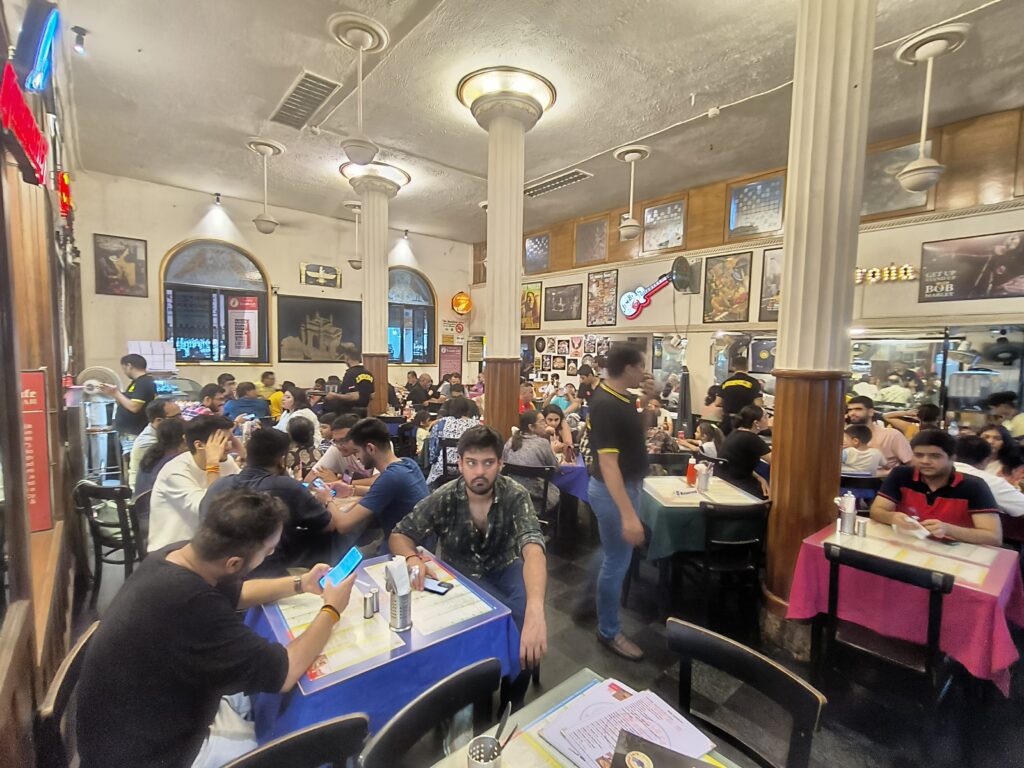
- Vada Pav at a Street Stall — Mumbai’s street food is one of the great urban cuisines of the world, and the vada pav is its supreme expression: a spiced potato ball in a batter of chickpea flour, deep-fried and wedged into a soft bread roll with green chutney, tamarind chutney, and dry garlic powder. Any good street stall; specifically the ones outside CSMT and Dadar station.
- Irani Café Breakfast — The Irani cafés of Mumbai — Kyani & Co. near Metro Cinema, Café Irani Chaii near CSMT, and the legendary Britannia & Co. in Ballard Estate — are a remnant of the Zoroastrian Persian community’s extraordinary contribution to Mumbai’s urban culture. The bun maska (bread roll with butter) and chai at a marble-topped table under a ceiling fan is the finest Mumbai breakfast.
- Britannia & Co., Ballard Estate — The most beloved restaurant in Mumbai, run by the Kohinoor family since 1923, serving the unique cuisine of the Parsi Irani community: berry pulao (basmati rice with barberries and chicken), dhansak (lentil and lamb stew), and sali boti (lamb with crispy potato sticks). The atmosphere — old photographs, plastic flowers, ceiling fans, the proprietor’s commentary on life — is irreplaceable.
- Trishna, Fort — The seafood restaurant that has fed Mumbai’s food-obsessed upper class for 40 years: the butter-pepper-garlic crab and the black tiger prawn are the two dishes that have defined Mumbai fine-dining seafood. Essential booking; exceptional cooking.
- Khau Galli (Food Lane), Girgaon & Fort — Mumbai’s khau gallis — food lanes — are the finest street eating in the city. The lanes behind Vir Nariman Road in Fort, and the Mohammed Ali Road Ramadan strip, concentrate the full range of Mumbai’s street food: kebabs, bhaji pav, dahi puri, keema pav, and the famous egg bhurji.
- Mohammed Ali Road Ramadan Street Food — During Ramadan, the Mohammed Ali Road neighbourhood transforms every evening after iftar into the finest street food festival in India: mutton seekh kebabs, naan khatai, mawa jalebi, phirni in earthen pots, and every variety of meat-based street food imaginable, served on the pavement until 3am.
- Fish Thali at a Koli Restaurant, Versova or Mahim — The Koli fishing community’s cuisine — surmai (king mackerel) or bombil (Bombay duck) fried in rawa (semolina), rice, sol kadhi (coconut milk with kokum), and a prawn curry — is Mumbai’s most deeply local food. The small restaurants near the Versova and Mahim fishing colonies serve it with no concession to visitors.
- Café Mondegar, Colaba — A Colaba institution since 1932, with cartoon murals by Mario Miranda covering every wall, cold Kingfisher beer, and a menu that has served travellers, journalists, and Mumbai regulars for decades. The most convivial bar in South Mumbai.
- Masala Chai at a Cutting Chai Stall — Mumbai’s chai — the cutting chai, served in small half-glasses at roadside stalls — is the city’s social lubricant and its best drink. The perfect cup is strongly brewed, heavily spiced, and barely sweet enough. Order it at any railway station stall, any khau galli, anywhere.
- Crawford Market Fruit & Spice Shopping — The ground floor of Crawford Market sells the finest seasonal fruit in the city — chikoo, custard apple, sitaphal, mangoes in season — alongside every spice used in Indian cooking, in quantities ranging from 100 grams to sacks. The mango season (May–June) transforms the market into a spectacle.
Art, Culture & Mumbai’s Creative Life
- Kala Ghoda Arts Festival (February) — Nine days each February, the Kala Ghoda precinct hosts one of India’s finest urban arts festivals: street installations, film screenings, music, theatre, craft stalls, and food pop-ups across the entire Fort–Colaba district. Free to attend; unmissable if you are in Mumbai in February.
- National Gallery of Modern Art (NGMA), Fort — India’s pre-eminent modern art institution, in a restored building in the Fort district, with a collection covering Indian Modernism from Jamini Roy and Amrita Sher-Gil to M.F. Husain and contemporary Indian art. The building itself — a former garden house of the Maharaja of Mysore — is as interesting as the collection.
- Experimenter & Gallery Chemould, Bandra & Fort — Mumbai’s most serious contemporary art galleries: Gallery Chemould (the oldest private gallery in India, founded 1963) in Fort, and Experimenter in Bandra, programme international-quality shows of Indian and South Asian contemporary art. Entry is free and the quality is consistently high.
- Dr Bhau Daji Lad Mumbai City Museum (Byculla) — The finest museum in the city: a restored Victorian structure housing an exceptional collection on Mumbai’s history, art, crafts, and urban culture, and a garden of recovered city sculptures. The restoration itself — every tile, every exhibit case, every inch of the cast-iron staircase — is a model of how a historic collection should be cared for.
- Cinemax & PVR Juhu: Bollywood at the Multiplex — Watching a first-day-first-show of a major Bollywood release at a Mumbai multiplex — audience reaction, interval samosas, the song sequences experienced collectively — is one of the city’s most purely pleasurable communal events.
- Horniman Circle Book Market, Sunday — Every Sunday morning, pavement booksellers spread their collections across the footpaths of Horniman Circle and the Fort district: second-hand paperbacks, old film magazines, Bollywood biographies, Indian fiction, and occasionally rare finds at prices that make every other bookshop feel dishonest.
Parks, Nature & Green Mumbai
- Sanjay Gandhi National Park, Borivali — A 104-square-kilometre national park entirely within Mumbai’s city limits, with leopards, deer, crocodiles, 251 species of birds, and the ancient Kanheri Caves at its centre. The park is a 45-minute train ride from Churchgate and a complete escape from the city — and the only major urban national park in the world with apex predators.
- Kanheri Caves, Sanjay Gandhi National Park — A complex of 109 Buddhist cave temples carved between the 1st and 9th centuries AD in a basalt hillside inside the national park. The largest cave — the Chaitya Hall — has 34 carved pillars and a vaulted ceiling of extraordinary delicacy. One of Mumbai’s most significant and most tranquil historical sites.
- Powai Lake & Hiranandani Forest — The large artificial lake in Powai, surrounded by the hills of the national park, is home to crocodiles, kingfishers, and migratory birds, with a walking trail and the occasional unexpected leopard sighting in the Aarey Colony forest to the east.
- Aarey Colony & the Aarey Forest — The green lung of north Mumbai, a remnant of the original forest that once covered the entire island, with walking trails, adivasi (indigenous) communities, and a biodiversity of birds and butterflies that has survived despite constant development pressure. A political, ecological, and natural history all in one walk.
- Flamingos at Thane Creek & Sewri Mudflats — Every winter, between November and May, tens of thousands of flamingos feed on the algae-rich mudflats at Sewri and Thane Creek — one of the largest urban flamingo aggregations in the world, visible from the Eastern Freeway and accessible from Sewri railway station. A completely extraordinary natural spectacle in an entirely industrial landscape.
- Madh Island & Manori — The islands at the northern edge of Mumbai, accessible by ferry from Malad or Marve, where Portuguese-era churches, fishing villages, beach shacks, and the pace of a different century coexist with the city just visible across the creek. Manori has no cars; the lanes between the coconut palms are navigable only on foot or bicycle.
Neighbourhoods: Mumbai’s Many Worlds
- Dharavi: The Self-Made City — With an estimated population of over a million in 2.1 square kilometres, Dharavi is one of the world’s most densely inhabited places and one of Asia’s largest informal economies, with a GDP estimated at over $650 million annually. A guided walk with Reality Tours is the most honest and most illuminating experience in Mumbai.
- Bhuleshwar Bazaar & the Old Hindu Quarter — The neighbourhood between Crawford Market and the Mumbadevi Temple is Mumbai’s oldest Hindu commercial district: silver jewellers, flower sellers, fabric merchants, puja (prayer) supplies, and the extraordinary Jama Masjid, all within 500 metres of each other. The density and colour of the streets here are the pre-colonial city in permanent motion.
- Cuff Parade & Nariman Point — The reclaimed land at the southern tip of Mumbai, with the National Centre for the Performing Arts (NCPA) — the city’s finest concert hall — and the seafront promenade of Cuffe Parade, where office workers walk at lunchtime with the bay on one side and the towers on the other.
- Dadar Flower Market — Every morning before dawn, the wholesale flower market at Dadar railway station distributes marigolds, roses, and jasmine across the city for temples, weddings, and street shrines. The colour and the smell, in the dark before sunrise, are one of Mumbai’s secret daily spectacles.
- Breach Candy & Peddar Road — South Mumbai’s most exclusive residential neighbourhood, where pre-Independence bungalows and Art Deco apartment buildings coexist with contemporary luxury towers, the Breach Candy Club (the finest private swimming pool in Asia), and the French Bakery at the Breach Candy Trust.
- Mohammed Ali Road to Bhendi Bazaar Walk — Walk from Masjid Bunder station north through Mohammed Ali Road, into the heart of the Muslim commercial quarter, through the tailoring lanes and tiffin shops of Bhendi Bazaar, to the great Null Bazaar market — a two-kilometre walk through one of the most densely lived human environments in the world.
Day Trips & Beyond Mumbai
- Elephanta Island: More Than the Caves — Beyond the main cave temples, Elephanta Island has a forest walk, a small museum, a village of island residents, and the climb to the top of the hill for views across Mumbai Harbour that no tourist information mentions. Combine the caves with the rest of the island for a full day.
- Karnala Bird Sanctuary — A 12th-century fort on a dramatic basalt plug, 60 kilometres from Mumbai, surrounded by a bird sanctuary with over 150 species of resident and migratory birds. A good morning walk, a proper birding site, and an easy drive through the Konkan landscape.
- Matheran Hill Station — A car-free hill station 90 kilometres from Mumbai, reached by a heritage narrow-gauge toy train from Neral, with colonial-era paths through forests, viewpoints over the Western Ghats, and a complete absence of motor vehicles — the greatest contrast to Mumbai available within a half-day’s journey.
- Lonavala & the Karla and Bhaja Caves — The hill station of Lonavala is 80 kilometres from Mumbai on the old Pune road: chikki (brittle toffee), monsoon waterfalls, and the extraordinary 2nd-century BC rock-cut Buddhist caves at Karla and Bhaja — among the finest examples of early Buddhist architecture in Maharashtra.
- Alibaug Beach & the Konkan Coast — A ferry from the Gateway of India (45 minutes) or a drive (2 hours) south to Alibaug, the nearest beach town to Mumbai: calm brown sand, Kulaba Fort visible at low tide, fresh fish at the beachside restaurants, and a pace that could not be further from the city.
Music, Nightlife & Live Mumbai
- NCPA (National Centre for the Performing Arts), Nariman Point — India’s finest performing arts complex, on the seafront at Cuffe Parade, with regular programmes of classical Indian music, dance, Western classical concerts, theatre, and opera. The main hall — Jamshed Bhabha Theatre — is architecturally one of the finest concert spaces in India.
- Classical Indian Music Concert at Shanmukhananda Hall — Shanmukhananda in Sion has hosted the finest Hindustani classical music concerts in Mumbai for decades. Catch a late-night performance of Raga Yaman or Bhairav here, and understand the city’s relationship with music that has nothing to do with Bollywood.
- Blue Frog (History) & Anti-Social, Bandra — Mumbai’s live music scene is centred in Bandra and Lower Parel. Anti-Social at Bandra is the finest mid-size live music venue; the Bombay Adda and the basement bars of Khar Danda host the most interesting original acts in the city.
- Jazz by the Bay, Marine Drive — The jazz bar at the Intercontinental Marine Drive is one of the few places in the city with a consistent live jazz programme, in a room with direct views of the illuminated Queen’s Necklace. Sunday brunch jazz is the best session.
- Late Night at a Permit Room — Maharashtra’s “permit rooms” are the original Indian bar: a government-licensed establishment serving Indian Made Foreign Liquor (IMFL) with snacks. The best in South Mumbai — at Gokul in Colaba, or the Military Hotel in Bandra — close very late, serve excellent rum and soda, and have no conceit about what they are.
Hidden Gems & Unexpected Mumbai
- Bhau Daji Lad Museum Garden & the Recovered City — The museum’s garden contains a remarkable collection of cast-iron and stone sculptures, lamps, and architectural fragments recovered from demolished Mumbai buildings — an open-air graveyard of the city’s lost architecture, entirely free to walk through.
- Mount Mary Steps & the Lane Behind — The lane descending from Mount Mary Basilica through the old Bandra village to Ranwar Square: tiled-roof bungalows, old Catholics, a cake shop that has been there since 1920, and the feeling of Goa transported to Mumbai’s most famous suburb.
- Banganga Tank at Dawn (again) — Worth mentioning twice: Banganga at 6am, when the priests are performing morning aarti, the city birds are landing on the ghats, and the light comes through the temple gopurams onto the water, is among the most authentic religious experiences available in Mumbai and among its most beautiful.
- The Victoria Terminus (CSMT) Gargoyle Hunt — The exterior and interior of CSMT is covered in a population of carved animals — peacocks, lions, dogs, monkeys, fish — designed by the school of art attached to the construction project and carved by local craftsmen. Most visitors see the building; few notice its extraordinary zoological imagination.
- Roli Booksellers & Kitab Khana, Fort — Kitab Khana, on Dr DN Road in Fort, is the finest independent bookshop in Mumbai — a beautifully designed space with the best selection of books on India, Indian fiction, and Mumbai specifically. The weekly events programme brings the finest Indian writers to the store.
- Dharavi Pottery Quarter (Kumbharwada) — The potter community within Dharavi has been making clay products — cups, pots, lamps, festival items — for generations. The alleyways of Kumbharwada, with their kilns and drying pots, are one of the most photogenic and most overlooked corners of the settlement.
- The Ferry from Mazgaon to Trombay — The public ferry from Mazgaon Docks to Trombay takes 40 minutes and carries almost no tourists. The crossing gives the finest view of Mumbai’s eastern harbour: the shipyards, the mangroves, the industrial port, and the city reflected in water that no other transport mode reaches.
- Parsi Colony, Dadar — The Parsi community’s residential colony in Dadar, with its Art Deco apartment blocks, the Rustom Agiary (fire temple), and the Parsi Gymkhana, is a beautiful and almost entirely unvisited enclave of Mumbai’s oldest merchant community. Walking it with a local guide gives access to stories about the Tatas, the Wadias, and the Godrej families that built modern India.
- Elphinstone Technical High School & Watson’s Hotel — Watson’s Hotel on Esplanade Road in Fort, built in 1869 in cast iron, is the oldest cast-iron building in India and one of the most extraordinary industrial buildings in Asia — a pre-fabricated structure shipped from England and bolted together in Mumbai. It is locked and deteriorating, which makes the view of its facade all the more melancholy.
- A First-Class Season Ticket Holder on the 7.42 Fast Train, Churchgate — The Mumbai local railway — the city’s circulatory system, carrying 7.5 million people daily — is the fastest and most efficient way to understand the city and the least comfortable way to travel. Take the 7.42 Churchgate to Virar fast train on a weekday morning, pressed into a compartment of hundreds of identical urgencies, and understand what Maximum City asks of every person it contains.
- Watch the Sun Set Over the Arabian Sea from Marine Drive — On your last evening, walk to the seawall on Marine Drive at Nariman Point as the sun goes down over the Arabian Sea. The fishermen lean over the wall. Children chase each other along the promenade. Old couples sit on benches. Vendors move through the crowd. The light on the water turns copper and then rose and then gone. The Queen’s Necklace begins its slow illumination. And Mumbai — impossible, exhausting, exhilarating, heartbreaking, magnificent Mumbai — reveals that it has been beautiful all along, right there at the edge of the sea where it has always been, waiting for you to look.
Quick Facts for Visitors
| Best time to visit | November to February (cool, dry, 20–30°C) |
| Monsoon | June–September — heavy rain, dramatic skies, flooded streets; the city at its rawest |
| Summer | March–May — hot and humid (35–40°C); early mornings only for outdoors |
| Currency | Indian Rupee (INR) |
| Language | Marathi (official), Hindi, English (widely spoken in all tourist and business contexts) |
| Getting around | Local train (fastest) · Uber/Ola (most comfortable) · Kaali-peeli taxis (most atmospheric) |
| Areas to stay | Colaba / Fort (heritage, central) · Bandra West (creative, suburban) · Juhu (beach, Bollywood) |
| Safety | Mumbai is one of India’s safest major cities for visitors; standard urban awareness applies |
| Ideal trip length | 3–4 days for highlights · 7 days to explore neighbourhoods properly |
Mumbai will overwhelm you before it wins you over. Give it time. Walk more than you plan to. Eat from the stalls. Take the train. The city does not reveal itself in taxis and tourist circuits — it reveals itself in the moments between destinations, in the lanes and the staircases and the light on the water at the end of a long day. Go slowly, and it gives you everything.