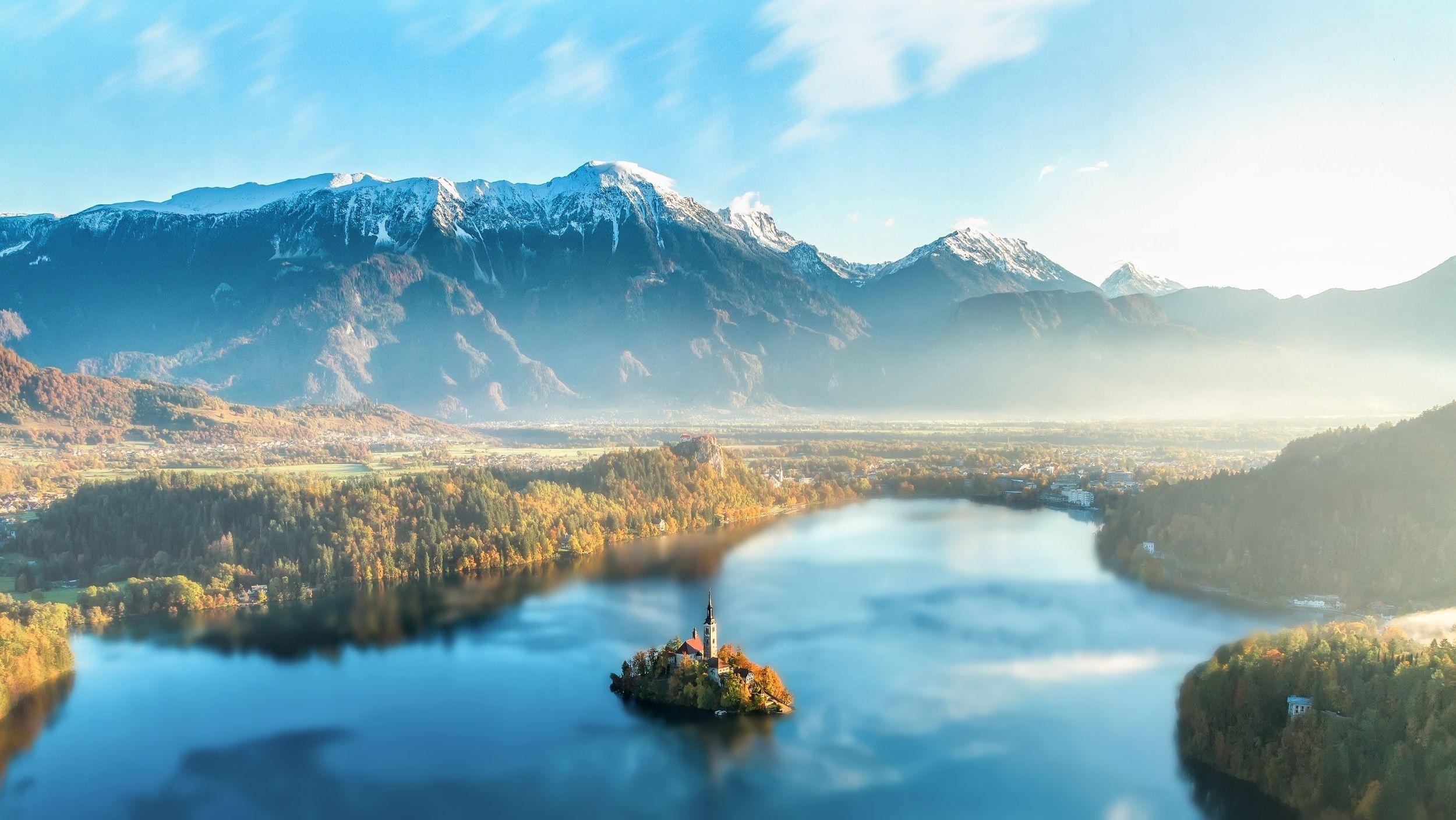
Slovenia is Europe’s best-kept secret, and most of the continent still hasn’t noticed. A country the size of Wales, wedged between Austria, Italy, Hungary, and Croatia, it contains within its compact borders one of the Alps’ finest national parks, the most beautiful lake on the continent, a river so turquoise it looks computer-generated, the world’s largest karst cave system, a medieval capital that car-free and canal-lined and delightful, a strip of Venetian Adriatic coastline, ancient wine regions, and forests so dense they cover 60% of the country’s entire surface area.
Slovenia was the first country in the world to declare itself a green destination at a national level. Its rivers and lakes are clean enough to drink from. It has more caves than roads in some regions. And it receives a fraction of the visitors of its neighbours — which means that even in the height of summer, you can stand in a mountain meadow with no one else in sight.
This guide covers 101 things to do across Slovenia: the iconic, the wild, and the quietly extraordinary experiences that make this the most rewarding small country in Europe.
Ljubljana: The Car-Free Capital
Old Town & Architecture
- Triple Bridge (Tromostovje) & Prešeren Square — The heart of Ljubljana: three parallel bridges crossing the Ljubljanica river at the city’s most photogenic point, designed by Jože Plečnik — Slovenia’s greatest architect — in 1932. The adjacent Prešeren Square, with its pink Franciscan church and bronze statue of the national poet, is the most beautiful public space in the capital. Stand here at night when the old town is illuminated.
- Ljubljana Castle — The medieval hilltop castle overlooking the old town is reached by funicular or foot, and houses a history museum, a contemporary art gallery, the Watchtower (the finest panoramic view of the capital), and a restaurant for a very complete afternoon. The castle’s origins go back to the 12th century; the views go back further.
- Old Town Walk: Mestni trg to Gornji trg — The three linked squares of the old town — Mestni trg (Town Square), Stari trg (Old Square), and Gornji trg (Upper Square) — form a single pedestrianised street of baroque and renaissance townhouses running from the river to the castle hill. Every façade is different; the whole is one of the finest small-city streetscapes in central Europe.
- Plečnik’s Ljubljana — The architect Jože Plečnik transformed Ljubljana between the 1920s and 1950s, leaving behind a unique urban landscape of bridges, markets, colonnades, fountains, lamp posts, and public spaces that are found nowhere else. The National and University Library, the covered market, the Meat Bridge, and the Žale cemetery are all part of a single creative vision of extraordinary richness.
- Ljubljana Central Market (Plečnik’s Market) — The covered market hall and open-air stalls along the Ljubljanica, designed by Plečnik in the 1940s, is the finest farmers’ market in Slovenia: local cheese, honey, dried mushrooms, hand-picked herbs, pumpkin seed oil, and produce from every Slovenian region. Open daily except Sunday.
- Dragon Bridge (Zmajski most) — Ljubljana’s most beloved landmark: a 1901 Art Nouveau bridge whose four corners are guarded by four cast-iron dragons, the symbol of the city. Local legend says the dragons’ tails wag when a virgin crosses the bridge. The legend’s frequency of occurrence is debated.
- National Museum of Slovenia — The principal history museum of the country, in a neo-Renaissance palace near the city centre, with collections covering Slovenian prehistory, Roman antiquities (the famous Vače Situla), medieval history, and natural history. The Roman glass collection is extraordinary.
- Museum of Modern Art & Metelkova — Ljubljana’s contemporary and modern art institutions are concentrated around Metelkova, a former Yugoslav army barracks turned autonomous cultural zone. The Museum of Modern Art and Museum of Contemporary Art Metelkova together constitute the most serious visual arts address in Slovenia.
- Ljubljana Botanic Garden — The oldest botanic garden in the region, founded in 1810, with a remarkable collection of alpine and sub-Mediterranean plants, a rock garden of Slovenian flora, and a greenhouse of tropical species. Free entry, and one of Ljubljana’s most peaceful escapes.
- Evening on the Riverbank Terraces — In summer, the entire Ljubljanica riverbank from the Triple Bridge to the market becomes a long terrace of outdoor restaurants and bars, with the castle lit on the hill above and the sound of conversation and occasional jazz carrying across the water. A glass of local Rebula white wine and a plate of Carniolan sausage here is the essential Ljubljana evening.
Lake Bled & the Julian Alps
- Lake Bled at Dawn — The most iconic image in Slovenia: a glacial lake of impossible blue-green clarity, a fairytale church on a tiny island, a medieval castle on the cliff above, and the Julian Alps reflected in the still morning water. It is exactly as beautiful as every photograph suggests. Arrive before 7am, walk the 6-kilometre lakeside path, and have it almost to yourself.
- Bled Island (Blejski Otok) & the Wishing Bell — The only natural island in Slovenia, reached by traditional flat-bottomed pletna boats rowed by oarsmen standing at the stern. The Baroque Church of the Assumption on the island contains a wishing bell: climb the 99 steps, ring the bell three times, and make a wish. The tradition dates to the 15th century.
- Bled Castle (Blejski Grad) — A cliff-perched medieval castle directly above the lake, with a museum of Slovenian medieval history, a working printing press, and the finest panoramic view of Lake Bled, the island, and the Karavanke and Julian Alps behind. Best visited in the late afternoon when the light comes from the west.
- Vintage Point: Ojstrica & Mala Osojnica — Two steep but short trails above the western end of Lake Bled climb to viewpoints that offer the postcard view of the entire lake with the island church in the centre and the castle on the cliff. Ojstrica is the steeper and more dramatic of the two; both are excellent.
- Triglav National Park — Slovenia’s only national park and its greatest natural treasure, covering 840 square kilometres of the Julian Alps — 4% of the country’s entire area. Named for Mount Triglav, Slovenia’s highest peak and its national symbol, the park encompasses alpine meadows, glacial valleys, waterfalls, glacial lakes, and some of the finest mountain scenery in central Europe. The park is accessed from Bled, Bohinj, Kranjska Gora, and Bovec.
- Vintgar Gorge (Blejski Vintgar) — A 1.6-kilometre gorge carved by the Radovna river through vertical limestone walls, accessible via a series of wooden boardwalks and bridges that lead through rapids, waterfalls, and pools of luminous turquoise water. One of the most accessible and most spectacular natural walks in Slovenia. Arrive before 9am to beat the crowds.
- Lake Bohinj — The largest lake in Slovenia, 26 kilometres west of Bled, is everything Bled is not: wilder, less developed, with no island and no castle, but with the full force of Mount Triglav directly above and water of extraordinary clarity. The lakeside village of Ribčev Laz, the church of St John the Baptist, and the walk to the Savica waterfall make it essential.
- Savica Waterfall — A 78-metre waterfall at the edge of Triglav National Park above Lake Bohinj, reached by a 20-minute climb from the car park. The waterfall plunges through a narrow rocky cleft into a deep pool of vivid green water. One of Slovenia’s most celebrated natural sights.
- Mount Triglav Summit (2,864m) — The ascent of Triglav — Slovenia’s highest peak and its most sacred mountain — is a rite of passage for every Slovenian. The two-day climb from the Bohinj side via the Kredarica mountain hut requires some experience and a head for heights, but every Slovenian is expected to climb it at least once. The summit view, on a clear day, covers a sixth of the country.
- Seven Lakes Valley (Dolina Triglavskih Jezer) — One of the finest high-altitude valley walks in the Eastern Alps: a route through seven glacial lakes in the high plateau of Triglav National Park, accessible from Bohinj in a full-day walk or two-day hut trail. The lakes range from deep blue to emerald green, and the surrounding landscape is among the most beautiful in Slovenia.
- Vogel Cable Car, Bohinj — A cable car rising from Lake Bohinj to the Vogel ski area at 1,800 metres, where in summer the view of the Julian Alps and the Bohinj basin is extraordinary, and trails fan out in every direction across the high plateau. In winter, Vogel is one of Slovenia’s best ski areas.
- Kranjska Gora & the Vršič Pass — The alpine village of Kranjska Gora, in the upper Sava valley under the Karavanke, is the gateway to the Vršič Pass — the highest mountain pass in Slovenia at 1,611 metres, with 50 hairpin bends (built by Russian prisoners of war in 1915) and views of the entire Julian Alps chain. Drive it slowly, stopping at every bend.
The Soča Valley: The Emerald River
- Kayaking the Soča River — The Soča is one of the most beautiful rivers in Europe: a luminous emerald-green glacial river running through limestone gorges and alpine meadows in the western corner of Slovenia. Kayaking or canoeing its middle section, between Bovec and Kobarid, is the definitive Soča experience and among the finest river paddling in central Europe.
- White Water Rafting, Bovec — The upper Soča near Bovec offers grade III–IV white water, and several operators run guided half-day and full-day rafting trips through the most dramatic section of the gorge. The combination of technical water, canyon scenery, and the extraordinary colour of the river makes this the best rafting destination in the Alps.
- Bovec & the Soča Valley Floor Hike — The valley floor trail between Bovec and Trenta follows the river through its most dramatic gorge section: limestone walls, turquoise pools, emerald shallows, and the steady thunder of water in a landscape unchanged since the Ice Age.
- Napoleon Bridge (Napoleonov Most), Kobarid — An ancient stone bridge in a deep Soča gorge below Kobarid, built by Napoleon’s engineers in 1750, with a short hiking trail from the town along the gorge wall. The combination of the old bridge, the emerald river far below, and the mountain walls is one of the finest compositions in Slovenia.
- Kobarid Museum (WWI Isonzo Front) — The finest First World War museum in central Europe, in the town of Kobarid (Caporetto), where the decisive Austro-German breakthrough of October 1917 ended the Isonzo campaign. The museum’s sensitive, humanising approach to the losses on both sides won the Council of Europe Museum Prize. Essential visiting for anyone with an interest in the First World War.
- Canyoning in the Soča Tributaries — The side gorges of the Soča — Fratarica, Sušec, and the Učja canyon — offer canyoning through narrow slot gorges, over natural rock slides, and into pools of extraordinary clarity. Several Bovec operators run guided half-day trips for beginners and experts alike.
- Tolmin Gorges (Tolminska Korita) — Two converging gorges at the southern end of the Soča Valley, carved through limestone to a depth of 100 metres, with a river walk through tunnels and over bridges in a slot canyon of eerie beauty. The Bear’s Head rock formation and the warm river pool at the bottom are the highlights.
- Paragliding from Kanin, Bovec — The highest ski area in Slovenia, above Bovec at 2,293 metres, is also one of the finest paragliding launch sites in the country, with the full panorama of the Julian Alps, the Soča valley below, and the Adriatic visible on clear days.
The Karst & Underground Slovenia
- Postojna Cave (Postojnska Jama) — The most visited cave in Europe and one of the world’s great natural wonders: a 24-kilometre karst cave system carved over two million years by the Pivka river, with a five-kilometre electric railway that carries visitors through chambers of extraordinary scale and formation. The Concert Hall — 10,000 square metres, acoustically perfect — hosts occasional events. The cave’s resident olm (Proteus anguinus) — a pale, blind, cave-dwelling salamander that can live over 100 years — is a UNESCO-recognised wonder.
- Predjama Castle — The most dramatic castle in Europe: a 16th-century fortified palace built into the mouth of a cave in a 123-metre cliff face, 9 kilometres from Postojna. The castle used the cave behind as an escape route during sieges; the cave system extends for 13 kilometres into the cliff. Standing in front of it from the valley below is one of Slovenia’s genuinely jaw-dropping sights.
- Škocjan Caves (UNESCO World Heritage Site) — Arguably more spectacular than Postojna — and certainly more dramatic — the Škocjan cave system contains the world’s largest known underground canyon: a cavern of such scale that the light from your torch doesn’t reach the walls. The river Reka crashes through it 163 metres below the suspended walkway. A UNESCO World Heritage Site since 1986.
- Lipica Stud Farm & Lipizzaner Horses — The birthplace of the Lipizzaner horse, bred here since 1580 for the Habsburgs and still the source of the white horses of the Spanish Riding School in Vienna. The classical riding performances, stable tours, and the sight of the horses — born dark and turned white with age — cantering in the karst pastures are a unique experience.
- Karst Wine Region & Teran Wine — The Karst plateau around Lipica produces Teran, a deeply coloured, high-acidity red wine from the Refošk grape, one of Slovenia’s most distinctive and oldest wines. Visit the wine cellars of Štanjel or Dutovlje for a tasting with views over the plateau.
- Štanjel — Karst Village on a Hill — A beautifully restored medieval village on a karst hilltop, with a Venetian tower, the extraordinary Ferrari Garden (designed in the 1920s by the architect Maks Fabiani), and a panorama of the karst plateau and the Vipava Valley below. One of the most architecturally elegant small villages in Slovenia.
- Rakov Škocjan Natural Bridge — A short, spectacular karst landscape walk through a collapsed cave system in the Notranjska region, with two natural stone arches — Great Natural Bridge and Small Natural Bridge — spanning the Rak river in a forested gorge. Free to visit and remarkably little-known.
- Cerknica Lake — The Disappearing Lake — Europe’s largest intermittent lake, in the Notranjska karst, that fills with water in winter and spring and virtually disappears in summer as it drains through the porous karst floor. The wildlife — cranes, herons, otters — and the surreal seasonal transformation make it one of Slovenia’s most unusual natural phenomena.
Piran & the Slovenian Adriatic
- Piran Old Town — Slovenia’s jewel on the Adriatic: a compact Venetian Gothic town on a narrow peninsula, with medieval walls, a cathedral tower offering the finest coastal view in Slovenia, and the atmosphere of a smaller, quieter Dubrovnik. The warren of lanes behind Tartini Square, the old Venetian cistern, and the town walls are all essential.
- Tartini Square, Piran — The main square of Piran, named after the local-born Baroque violinist Giuseppe Tartini, is a beautiful oval piazza of Venetian architecture directly on the sea. Sit at a café in the late afternoon as the light turns golden on the stone and the fishing boats rock in the harbour.
- Piran Town Walls & Cathedral Bell Tower — Climb the medieval walls and the tower of the Cathedral of St George above the town for the finest panoramic view of Piran’s terracotta rooftops, the old harbour, and the Gulf of Trieste stretching to the Italian and Croatian coastlines.
- Strunjan Nature Reserve & Cliff Walk — The Strunjan clifftop, a few kilometres north of Piran, is the longest flysch cliff on the eastern Adriatic: a 4-kilometre protected coastline of white and ochre cliffs above the sea, with a walking trail from the salt pans to the Strunjan lagoon. The finest coastal walk in Slovenia.
- Sečovlje Salt Pans & Museum — The traditional salt pans at Sečovlje, on the Croatian border, have been producing salt since the 14th century using a method unchanged since the Venetian period. The open-air museum within the salt pans tells the full story of salt production in the Adriatic, and the pans themselves are a remarkable ecological landscape and bird sanctuary.
- Portorož Beach & Bathers — Slovenia’s main beach resort, adjacent to Piran, with a long sandy beach, salt-therapy spa hotels (a tradition since the 19th century), and the most reliably warm sea in the country. The Slovenian Adriatic is only 47 kilometres long, but Portorož makes the most of every metre.
- Sea Kayaking from Piran — Paddle along the Slovenian coast from Piran towards the Strunjan cliffs or across to the cape at Ronek, with the town’s Venetian skyline visible from the water and the Italian coastline across the gulf. Several operators offer half-day guided tours.
Wine Regions & the Slovenian Table
- Brda Wine Region (Goriška Brda) — The finest wine region in Slovenia, on the Italian border above the Soča valley: rolling hills of vineyards, olive groves, and cherry orchards producing Rebula (Ribolla Gialla), Pinot Gris, and Merlot of European quality. The hill town of Šmartno and the village of Dobrovo, with its castle and wine cooperative, are the finest bases.
- Rebula Wine Tasting, Brda — The Rebula grape — golden-green, mineral, and complex — is the signature variety of Goriška Brda and one of Slovenia’s finest white wines. Tasting it at a small estate in the hills above the Soča, with Italy visible across the valley, is one of Slovenia’s great food-and-wine pleasures.
- Vipava Valley Wine & Food — The warm, windswept Vipava Valley between the Karst and the Soča grows Zelen and Pinela — two grape varieties found nowhere else in the world — alongside excellent Cabernet Sauvignon and Merlot. The local cuisine (lamb, cured meats, polenta) perfectly matches the wines.
- Štajerska Wine Region, Maribor — The hills around Maribor in northeast Slovenia produce the Šipon (Furmint) and the oldest cultivated vine in the world. The Maribor Wine Road through Slovenian Hills offers excellent tastings in a landscape of medieval towns and forested ridges.
- Potica & Traditional Slovenian Baking — Potica is Slovenia’s national cake: a rolled dough filled with walnuts, tarragon, poppy seeds, or cottage cheese and honey, served at every celebration from Christmas to weddings. Find it at Ljubljana’s central market, or join a cooking class to make it yourself — the most Slovenian food experience available.
- Carniolan Sausage (Kranjska klobasa) at a Local Gostilna — The protected Carniolan sausage — a fat, smoked pork sausage served sliced with mustard, horseradish, and a bread roll — is Slovenia’s most beloved snack food. The best place to eat it is standing at the counter of a traditional gostilna (inn), with a glass of Union or Laško beer.
- Idrija Žlikrofi (Dumplings) — The stuffed potato dumplings of Idrija — filled with potato, lard, onion, and marjoram — have EU protected status and are among the finest regional dishes in central European cooking. Find them at restaurants in Idrija or the Ljubljana old town.
- Slovenian Honey & Beekeeping Tradition — Slovenia has the highest density of beekeepers per capita in Europe and one of the world’s most distinctive hive designs (the Slovenian painted panel hive). The Carniolan bee is the second most widespread honeybee in the world. Visit the Beekeeping Museum in Radovljica or buy honey directly from a beekeeper at any market.
Maribor & Eastern Slovenia
- Maribor Old Town & the Old Vine — Slovenia’s second city, on the Drava river below the Pohorje hills, with a charming baroque old town, a medieval castle, and — on the Lent waterfront — the world’s oldest cultivated vine, recorded in 1681, still producing several hundred bottles of Žametovka wine each year.
- Maribor Lent & the Waterfront — The Lent (riverbank) district of Maribor is one of the finest waterfront promenades in Slovenia, with old wine cellars, medieval towers, and the Lent Festival (June–July) — one of the biggest open-air festivals in Europe, with free concerts across multiple stages for two weeks.
- Ptuj — Slovenia’s Oldest Town — An hour from Maribor, Ptuj is Slovenia’s oldest documented town, with a castle on a hill above the Drava, a remarkable collection of Roman and medieval artefacts in the city museum, and the Kurentovanje carnival — one of the most extraordinary folk festivals in Europe, held each February.
- Pohorje Hills & Rogla Ski Resort — The gentle, forested plateau of the Pohorje hills above Maribor offers year-round outdoor recreation: skiing and snowboarding at Rogla in winter, cycling and hiking on 300 kilometres of trails in summer, and the renowned Terme Zreče spa at the base of the hill.
- Thermal Spas of Dolenjska & Panonska — Eastern Slovenia’s thermal springs have been exploited since Roman times: the Terme Olimia, Terme Čatež, and Terme Ptuj are among the finest wellness complexes in the country, with indoor and outdoor thermal pools, medical treatments, and accommodation in a landscape of gentle wine-country hills.
- Jeruzalem Wine Road, Prekmurje — The sunny hills above the Mur river in Slovenia’s northeast corner produce the finest whites in eastern Slovenia. The road through Jeruzalem (named by Crusaders who found the landscape reminiscent of the Holy Land) passes small wine estates, a baroque church, and views over the three-country border with Austria and Hungary.
Adventures & the Outdoors
- Hiking the Alpe Adria Trail — A 750-kilometre long-distance trail running from the Grossglockner in Austria through the entire length of Slovenia to Muggia on the Italian Adriatic, crossing every landscape the country contains. The Slovenian section, particularly from Kranjska Gora to Bovec and from Bovec to the coast, is among the finest continuous walking in the Alps.
- Triglav Lakes Valley Circuit — A two-day hut-to-hut walk through the high plateau of Triglav National Park, from Bohinj to the Seven Lakes and back via the Triglav Lakes hut. One of the finest alpine multi-day walks in central Europe, with glacial lakes, rocky passes, and chamois grazing the ridges above.
- Mountain Biking at Kranjska Gora or Bovec — Both the Julian Alps region and the Soča Valley have developed excellent mountain biking infrastructure, with marked trails from gentle valley rides to technical alpine descents. The Bovec MTB Festival each September is one of the most celebrated mountain bike events in Slovenia.
- Cycling the Drava Cycling Path (Dravska Kolesarska Pot) — A 400-kilometre trail along the Drava river from the Karavanke mountains to the Croatian border, passing through Maribor and the wine-country hills of Styria. One of Slovenia’s finest multi-day cycling routes, combining nature and culture along a historic river valley.
- Ski Touring in the Julian Alps — The high plateau above Bohinj and the ridges of the Triglav massif offer exceptional ski touring in late winter and spring, with routes accessible from Vogel, Kranjska Gora, and Kanin. Slovenia’s ski touring culture is serious and well-developed.
- Rock Climbing at Osp & Mišja Peč, Karst — The limestone walls of the Karst, particularly at Osp and Mišja Peč near the Slovenian coast, are among the finest sport climbing crags in Europe, attracting elite climbers from across the continent. The routes — up to 9b — are world-class; the crags are set above olive groves and the Adriatic.
- Fly Fishing the Soča — The Soča river holds the marble trout (Salmo marmoratus) — one of the rarest and most beautiful freshwater fish in Europe, endemic to the river and its tributaries. Guided fly fishing with a licensed guide is permitted on certain sections and is a deeply rewarding experience on one of the world’s most beautiful rivers.
- Via Ferrata on Mount Triglav (Tominšek Route) — The Via Ferrata approach routes to Triglav’s summit — particularly the Tominšek route from the north — combine assisted climbing with spectacular alpine scenery and are graded for those with some rock scrambling experience. The most adventurous way to reach Slovenia’s highest peak.
- Bear Watching, Notranjska — Slovenia has one of the highest densities of brown bears in Europe, with an estimated 1,000 animals in the forests of the Dinaric karst. Guided evening bear-watching excursions from Kočevje, with a local guide and a forest hide, offer a very high encounter rate and a completely wild experience.
- Cave Diving & Caving, Slovenian Karst — Slovenia’s karst contains over 12,000 registered caves. Beyond the tourist caves, specialist operators offer introductory caving experiences in the less-developed systems near Postojna and Škocjan, and full cave-diving courses in the underwater cave systems of the region.
History, Heritage & Hidden Slovenia
- Radovljica Old Town & Beekeeping Museum — A beautifully preserved baroque old town above the Sava gorge, with Slovenia’s Beekeeping Museum (the tradition is on UNESCO’s Intangible Cultural Heritage list) and the finest concentration of 18th-century merchant townhouses in Slovenia. The weekly market and the gingerbread (lectarstvo) tradition make it one of the most complete heritage experiences in the country.
- Idrija Mercury Mine (UNESCO) — The second-largest mercury mine in the world, operational from 1490 to 1994, is now a UNESCO World Heritage Site alongside the mine at Almadén in Spain. Guided tours descend into the mine shafts; the associated Idrija bobbin lace tradition (also UNESCO-listed) is demonstrated in the town’s workshops.
- Kamnik & Kamnik–Savinja Alps — A small medieval town at the foot of the Kamnik–Savinja Alps, one of the finest and least-visited sections of the Slovenian Alps, with Mali Grad (a two-chapel medieval castle on a town-centre rock), the Franciscan monastery, and access to the Velika Planina high plateau.
- Velika Planina Highland Pasture — A unique landscape of traditional herdsmen’s huts on a high Alpine plateau above Kamnik, reached by cable car and a short walk. The wooden huts, still used for summer cattle grazing, are the most intact example of Alpine pastoral architecture in Slovenia — a landscape that looks medieval and has been largely unchanged for centuries.
- Bogenšperk Castle & Janez Vajkard Valvasor — A fine 16th-century castle in the Dolenjska hills, associated with Janez Vajkard Valvasor — the Baroque polymath whose encyclopaedic work The Glory of the Duchy of Carniola (1689) remains the foundational text of Slovenian cultural history and a remarkable piece of 17th-century scientific curiosity.
- Ptuj Castle & Kurentovanje Carnival (February) — Ptuj’s medieval castle houses the most important collection of Roman, medieval, and folk artefacts in eastern Slovenia. In February, the Kurentovanje carnival fills the town with Kurents — furry, bell-festooned figures from pre-Christian Slavic mythology — in one of the most striking folk festivals in Europe.
- Soča Front Outdoor Museum, Walk of Peace — A 100-kilometre trail following the line of the First World War Isonzo Front through the Soča Valley, passing preserved trenches, bunkers, military cemeteries, and the extraordinary Kobarid Museum. The Walk of Peace (Pot miru) connects the monuments and cemeteries of 12 countries’ soldiers.
- Žiče Charterhouse Ruins, Štajerska — The ruins of the first Carthusian monastery north of the Alps, founded in 1160, in a forested valley above Zreče. The haunting roofless nave, the intact cellarer’s building (now a restaurant), and the beech forests surrounding the ruins create one of the most atmospheric monastic sites in Slovenia.
Winter Slovenia
- Skiing at Kranjska Gora — The most popular ski resort in Slovenia, in the Julian Alps at the head of the Sava valley, with 20 kilometres of pistes, a World Cup slalom course, and the traditional alpine village at its base. The Vitranc slalom race each January is one of the classic events on the Alpine Ski World Cup calendar.
- Skiing at Kanin, Bovec — The highest ski area in Slovenia at 2,293 metres, connected by cable car from Bovec, with exceptional snow conditions and the most dramatic scenery of any Slovenian ski resort: the Soča valley below and the Italian Dolomites visible across the border.
- Cross-Country Skiing at Pokljuka Plateau — The high plateau of Pokljuka in Triglav National Park is the finest cross-country skiing landscape in Slovenia and the regular venue of the Biathlon World Cup. The groomed trails through the spruce forests are also excellent for snowshoeing.
- Ljubljana Christmas Market — The Kongresni trg (Congress Square) and the old town in December: an illuminated baroque city with traditional wooden market stalls, mulled wine, roasted chestnuts, Slovenian handicrafts, and concerts through the Advent season. One of the most intimate and genuinely beautiful Christmas markets in central Europe.
- Ice Climbing in the Kamniška Bistrica Gorge — In cold winters, the waterfalls of the Kamniška Bistrica gorge above Kamnik freeze into ice climbs of varying grades, accessible to beginners and experts alike. The gorge is one hour from Ljubljana; guided ice climbing courses are available.
Hidden Gems & Unexpected Slovenia
- Logarska Dolina (Logar Valley) — One of the most beautiful Alpine valleys in central Europe, enclosed on three sides by 2,000-metre peaks in the Kamnik–Savinja Alps, accessible only by road through a narrow limestone gateway. The Rinka waterfall at the valley head, the hay meadows, and the traditional farm guesthouses make it a perfect escape from tourist Slovenia.
- Bela Krajina & the Kolpa River — The remote southeast corner of Slovenia, bordering Croatia, where the warm Kolpa river flows through forested hills in a landscape unchanged for centuries. The river’s clear water is warm enough for swimming from June to September; the region’s folk architecture and birch-grove landscapes are entirely their own.
- Snežnik Castle, Notranjska — A beautifully preserved medieval castle rising from the forested Notranjska karst, with its original 19th-century furnishings intact — the most complete castle interior in Slovenia. The surrounding Snežnik forest is one of the finest primeval forests in central Europe, home to brown bears, lynx, and wolves.
- Franja Partisan Hospital (UNESCO) — A secret field hospital hidden in a gorge in the Notranjska forest during the Second World War, where wounded partisan fighters were treated under the noses of German occupying forces. The hidden hospital — with operating theatres, wards, and a hydroelectric power plant carved into the gorge — is one of the most remarkable stories of wartime ingenuity in Europe.
- Kozjansko & Apple Orchards, Eastern Slovenia — The Kozjansko region in eastern Slovenia, part of the Kozjansko Regional Park, is one of the finest traditional orchard landscapes in Europe, with hundreds of varieties of apple, pear, plum, and cherry cultivated on hillside meadows. The autumn apple festival and the regional food culture — cider, apple brandy (jabolčni žganje), and fruit preserves — are exceptional.
- Šmarna Gora, Ljubljana — The local mountain of Ljubljana: a 669-metre hill rising directly from the city’s northern suburbs, with a 13th-century pilgrim church at the summit and a view of the whole Ljubljana basin, Triglav on the western horizon, and the Kamnik Alps to the northeast. The 45-minute ascent is a daily ritual for hundreds of Ljubljanans.
- Soča River Source Trek, Trenta — A two-hour walk from the Trenta valley up to the source of the Soča river: a cold, crystal-clear spring in a limestone cave at 926 metres, where the emerald river begins its journey to the Adriatic. One of the most moving and least visited natural sites in Slovenia.
- Jalovec & the Hidden Peaks, Julian Alps — While Triglav receives most of the attention, the neighbouring peaks of the Julian Alps — Jalovec (2,645m), Prisank (2,547m), and Razor (2,601m) — offer technically more challenging and far less crowded mountaineering routes through some of the finest alpine scenery in Slovenia.
- Murkova hiša (Murko’s House) & Rural Heritage, Prekmurje — The flat, agricultural landscape of Prekmurje in Slovenia’s far northeast feels like a different country: a Hungarian cultural influence, stork nests on chimneys, and a cuisine (gibanica, a layered pastry of poppy seeds, walnuts, cottage cheese, and apple) that has no equivalent elsewhere in Slovenia.
- Night Train: Ljubljana to the Coast — A summer evening train from Ljubljana to Koper and Piran, descending through the karst as the light fails and the sea appears below — a very Slovenian way to understand the country’s extraordinary geographic compression, from Alpine city to Mediterranean coast in two hours.
Food, Wine & the Slovenian Table
- Wine Tasting in the Vino Kupljen Cellar, Jeruzalem — The largest private wine cellar in Slovenia, cut 40 metres deep into the Jeruzalem hill, with a collection of Slovenian wines going back decades and a tasting programme that covers the full geographic and varietal range of Slovenian winemaking.
- Trüffel Hunting with Dogs, Istria Border Region — Slovenian Istria, bordering Croatia, produces both black and white truffles. Guided truffle hunts with trained dogs in the oak forests above the Dragonja valley, ending with a tasting lunch of truffle pasta and local wine, are one of the most exclusive food experiences in Slovenia.
- Open Kitchen (Odprta Kuhna), Ljubljana — From April to October, Ljubljana’s central market square transforms every Friday afternoon into Slovenia’s finest food market: 40-50 chefs and food producers cooking and serving across the outdoor stalls, with Slovenian wine, craft beer, and the full range of the country’s regional cuisines.
- Bled Cream Cake (Kremna rezina) — The Bled cream cake — layers of vanilla cream and whipped cream between crisp pastry, served in every café on the lakefront since 1953 — is Slovenia’s most beloved regional pastry. The original recipe belongs to the Park Hotel; every other version is an imitation.
- Foraging Walk with a Local Guide — Slovenia’s extraordinary biodiversity — 60% forest cover, alpine meadows, karst grasslands — makes it one of Europe’s finest foraging landscapes. Guided mushroom, herb, and wild food walks are available from operators in Bohinj, the Soča Valley, and the Notranjska forest.
Practical Slovenia
- The Ljubljana Card & Bike Hire — Ljubljana’s city bike scheme (BicikeLJ) has over 36 stations and is one of the finest urban cycling systems in central Europe. The Ljubljana Card covers entry to all major attractions and unlimited public transport. The combination of the two — cycling the car-free old town and the river parks — is the best way to spend a day in the capital.
- Spa at Terme Olimia or Terme Čatež — Slovenia’s thermal spas are among the finest in central Europe, combining genuine therapeutic hot springs with modern wellness facilities. Terme Olimia in the Kozjansko hills and Terme Čatež in the Sava valley are the two finest, with outdoor thermal rivers, spa programmes, and hotel accommodation in beautiful rural settings.
- The Green Slovenia Experience: Eco Lodges & Farm Stays — Slovenia offers Europe’s most complete eco-tourism infrastructure: certified green accommodation in converted farmhouses (turistične kmetije), sustainable outdoor operators, organic food producers, and a national commitment to low-impact travel that is backed by genuine policy. Staying on a working farm in the Soča Valley, Brda, or Dolenjska gives an entirely different and more honest experience of the country.
- Stand at the Tripoint: Austria, Italy, Slovenia (Peč Summit) — On the summit ridge of Mount Peč (Ofen), at 1,509 metres above the Karavanke, a stone marker identifies the point where Austria, Italy, and Slovenia share a common border. Getting here requires a two-hour walk from Rateče near Kranjska Gora. The panorama of three Alpine countries from a single stone is Slovenia compressed to its most essential: small, green, and positioned precisely at the intersection of European worlds.
Quick Facts for Visitors
| Best time to visit | June–September (warm, all activities accessible) |
| Spring | April–May — wildflowers, fewer crowds, waterfalls at their fullest |
| Winter | December–March — skiing, Christmas markets, fewer tourists everywhere |
| Currency | Euro (€) |
| Language | Slovenian (English very widely spoken, especially among under-40s) |
| Getting around | Car hire recommended (public transport limited outside cities) · Buses connect major towns |
| Capital | Ljubljana |
| Size | 20,273 km² — smaller than Wales, larger than Kuwait |
| Ideal trip length | 5–7 days for the highlights · 10–14 days to explore properly |
| Green credential | First country in the world to declare itself a Green Destination at national level |
Slovenia asks nothing of you except attention. Walk more slowly than you think you need to. Stop when the river is particularly turquoise. Accept the wine when it is offered. The country’s pleasures are not scaled to impress — they are scaled to keep — and the ones that stay with you longest are nearly always the ones you did not plan.