Spain is the country that contains multitudes without contradiction. The most visited country in Europe hosts ancient Moorish palaces and cutting-edge architecture, one of the world’s great art museum collections and a street food culture that has reinvented fine dining, snow-capped mountains and Mediterranean beaches within a morning’s drive of each other, and a regional diversity so deep that Catalonia, Andalusia, the Basque Country, and Galicia each feel like separate countries sharing a peninsula. The flamenco dancer in Seville and the pintxos bar in San Sebastián are both authentically, emphatically Spanish — and they have nothing else in common.
Spain also has the quality that makes it endlessly revisitable: it is a country best understood slowly. The siesta still exists, the late dinner at 10pm is not an affectation, and the unhurried pleasure of a long lunch under a grapevine pergola is not something you can replicate anywhere else in the world.
This guide covers 101 things to do across the full length and breadth of Spain — from the Gaudí spires of Barcelona to the white villages of Andalusia, from the pintxos bars of the Basque Country to the pilgrimage road to Santiago de Compostela.
Barcelona: Gaudí & the Gothic City
Architecture & Gaudí
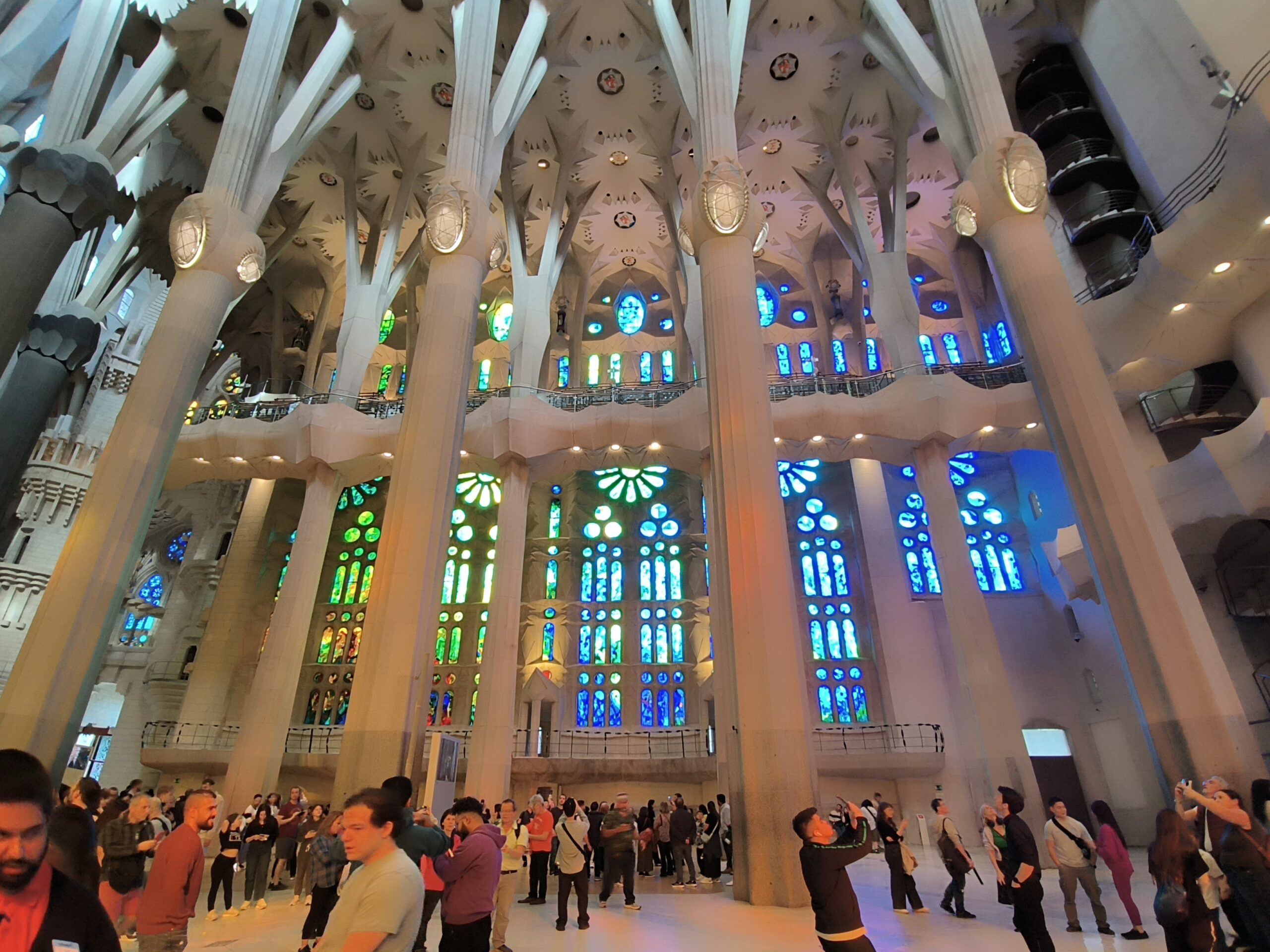
- Sagrada Família — Gaudí’s Masterpiece (Now Complete) — The most extraordinary church in the world, under construction since 1882 and completed in 2026, is Gaudí’s supreme achievement: a basilica of stone that grows from Gothic roots into something entirely its own, with facades of astonishing sculptural complexity, a forest of hyperbolic vaults inside, and the stained-glass windows that fill the nave with colour that shifts through the day. The completion of the towers in 2026 makes this the most significant architectural event in Spain this century. Book months in advance.
- Park Güell — The extraordinary hilltop park designed by Gaudí for the unbuilt Güell housing estate, now a UNESCO World Heritage Site with the tiled terrace, the mosaic salamander (the Dragon Stairway), and the forest of stone columns sheltering the market hall. The free lower park is genuinely beautiful; the ticketed monumental zone rewards early booking.
- Casa Batlló & La Pedrera (Casa Milà) — The two great residential buildings Gaudí created on the Passeig de Gràcia: Casa Batlló’s dragon-scaled roof and bone-like balconies face La Pedrera’s undulating stone facade and rooftop of warrior chimneys. Both are now UNESCO World Heritage Sites; both reward the audio guide and the rooftop. The Passeig de Gràcia block containing Batlló, Puig i Cadafalch’s Casa Amatller, and Domènech i Montaner’s Casa Lleó Morera is the finest stretch of Modernista architecture in the world.
- Palau de la Música Catalana — The concert hall designed by Lluís Domènech i Montaner, completed in 1908, is the finest interior space in Barcelona and one of the most beautiful concert halls in the world: a riot of stained glass, mosaics, stone flowers, and the extraordinary skylight of inverted glass that floods the auditorium with coloured light. Attend a concert; the architecture performs alongside the musicians.
- Casa Vicens & Gaudí’s First House — The house Gaudí built for Manuel Vicens in 1885 — his first major commission — is now open to visitors in the Gràcia neighbourhood, and shows the origins of his extraordinary style in Moorish and Orientalist motifs that he would later transform into something entirely personal.
Barrios & Street Life
- Gothic Quarter (Barri Gòtic) Walk — The densest medieval quarter in Europe: Roman walls, a 14th-century cathedral (the Catedral de Barcelona, with its cloister of 13 white geese), narrow lanes, and the Plaça Reial — all within a ten-minute walk. Come at dawn when the lanes are empty and you have it to yourself.
- El Born & the Mercat de Santa Caterina — The most stylish neighbourhood in Barcelona: the 12th-century Basílica de Santa Maria del Mar (the finest Gothic church in Catalonia), the Born Cultural Centre (built over the ruins of houses demolished in 1714), and the Enric Miralles–designed Santa Caterina market, whose ceramic mosaic roof is visible from the Barceloneta rooftops.
- La Barceloneta & the Waterfront — The former fishing neighbourhood on the port, with a long sand beach backed by passeig restaurants, the W Hotel’s spectacular architecture, and the 1992 Olympic Port marina. Walk the Passeig Marítim at dusk and continue along the Barceloneta waterfront to the extraordinary Frank Gehry sculpture of a golden fish.
- Gràcia: Barcelona’s Village — The independent neighbourhood annexed by Barcelona in 1897 and still distinctly its own: small plazas, vermouth bars, independent boutiques, and the Festa Major de Gràcia in August — when every street is decorated with a different theme in paper, recycled materials, and collective creativity for a week.
- Montjuïc: Castle, Pavilion & Views — The hill above the port with the Fundació Joan Miró (the finest collection of Miró’s work), the Spanish Pavilion of the 1929 International Exposition (Mies van der Rohe’s Barcelona Pavilion, now reconstructed — the single most influential building of the 20th century), the Olympic Stadium, and the castle with the finest panoramic view of Barcelona and the sea.
Madrid: Art, Royalty & the Capital
- The Prado Museum — The greatest collection of Spanish and European Old Masters in the world: Velázquez’s Las Meninas, Goya’s Third of May 1808, El Greco’s Nobleman with his Hand on his Chest, Hieronymus Bosch’s Garden of Earthly Delights, Raphael, Titian, and Rubens — all in a single neoclassical building on the Paseo del Prado. Allow a full day; return for what you missed.
- Museo Reina Sofía — Spain’s national museum of modern art, in a converted hospital beside Atocha station, with Picasso’s Guernica — the defining anti-war painting of the 20th century — at its heart, alongside major works by Dalí, Miró, and the full history of Spanish modernism. The permanent collection is extraordinary; the temporary programme is among the finest in Europe.
- Thyssen-Bornemisza Museum — The private collection assembled by the Thyssen family, filling the gaps between the Prado and the Reina Sofía with the finest privately assembled art collection in the world: Duccio, Caravaggio, Holbein, Monet, Hopper, Lichtenstein — the full sweep of Western art in a single building. The three museums together make the Paseo del Arte the densest concentration of great art per kilometre in the world.
- Royal Palace of Madrid (Palacio Real) — The largest royal palace in Western Europe: 3,418 rooms, 135,000 square metres, and an interior of baroque magnificence that reflects the full resources of the Spanish Habsburgs and Bourbons. The Throne Room, the Royal Armoury (with the finest collection of armour in the world), the Royal Chapel, and the Stradivarius instruments are the highlights.
- Retiro Park — The great royal park of Madrid: 350 acres of formal gardens, boating lake, the magnificent Palacio de Cristal, sculpture galleries, and the Sunday art market by the Estanque lake. At any hour, the park contains the full social life of the city — dog walkers, chess players, families, and an outdoor book fair that has operated every Sunday for decades.
- Mercado de San Miguel & Madrid’s Food Culture — The beautiful cast-iron market hall near the Plaza Mayor, now a gourmet market of tapas, wine, and Spanish specialities, is the finest food market in central Madrid. The Plaza Mayor itself — with its uniformity of arcaded facades, the equestrian Philip III, and the balconies — is the finest outdoor theatre in Spain.
- El Rastro Sunday Market, La Latina — Madrid’s great weekly flea market, spreading from the Ribera de Curtidores down through La Latina every Sunday morning: antiques, vintage clothing, ceramics, coins, and the entire accumulated material culture of the city, with the tapas bars of La Latina at its edges serving the finest vermouth in Madrid.
- Flamenco at a Madrid Tablao — Madrid’s flamenco tablaos — particularly Las Carboneras and Villa Rosa — offer the most concentrated exposure to the full range of flamenco styles (from Sevillanas to deep cante jondo) outside Andalusia. Come without expectations of spectacle and let the music do what it does.
- Churros at Chocolatería San Ginés — Madrid’s oldest chocolatería, operating in the Pasadizo de San Ginés since 1894, serving nothing but churros and hot chocolate. Open 24 hours, most memorable at 4am after a night on the streets of La Latina. The churros are thin and crisp; the chocolate is thick enough to stand a spoon in.
- Madrid’s Barrio de las Letras — The literary quarter behind the Prado, where Lope de Vega and Cervantes once lived on adjoining streets, now the finest neighbourhood in the city for bookshops, wine bars, and the Calle Huertas’ evening culture. The Lope de Vega house is open as a museum; the neighbourhood deserves a slow evening.
Andalusia: The Deep South
- Alhambra Palace, Granada — The most visited monument in Spain and one of the great buildings of the world: a Nasrid palace complex of extraordinary delicacy, built between the 13th and 15th centuries on the Sabika hill above Granada, with the Palacios Nazaríes (the Throne Room, the Court of the Lions, the Hall of the Ambassadors), the Generalife gardens, and the Alcazaba fortress together creating the finest surviving example of Moorish architecture anywhere. Tickets sell out months in advance; book the moment you decide to go.
- Albayzín & Sacromonte, Granada — The Moorish quarter on the hill opposite the Alhambra, with whitewashed lanes, Mudéjar churches built over mosques, the Mirador de San Nicolás (the finest view of the Alhambra with the Sierra Nevada behind), and the Sacromonte cave district where the Romani community settled after the Reconquista and where the deepest, most serious flamenco in Andalusia is performed in cave venues.
- Flamenco in Granada’s Sacromonte Caves — Watching a performance of cante jondo (deep song) in a whitewashed cave in Sacromonte — intimate, unmediated, the echo of the cave adding something the concert hall cannot — is one of the most culturally specific experiences in Spain. Choose the smallest and least commercial venue; the music is the thing.
- Seville’s Real Alcázar — A UNESCO World Heritage Site: a royal palace of extraordinary beauty, built by Pedro I of Castile in the 14th century in the Mudéjar style — a fusion of Islamic craftsmanship and Christian iconography. The Patio de las Doncellas, the Ambassadors’ Hall, and the gardens of orange trees and fountains rank among the finest spaces in Spain.
- Seville Cathedral & the Giralda — The largest Gothic cathedral in the world, built on the site of a great Almohad mosque (whose minaret — the Giralda — survives as the cathedral bell tower, climbed via a ramp rather than stairs because the caliph rode his horse to the top). Columbus’s tomb, the Sacristy of the Chalices, and the view from the Giralda over Seville are the highlights.
- Barrio de Santa Cruz, Seville — The old Jewish quarter of Seville: a labyrinth of whitewashed lanes, hidden plazas draped in orange trees and jasmine, and the finest concentration of flamenco tablaos and tapas bars in the city. The Plaza de Santa Cruz, the Callejón del Agua, and the lanes radiating from the Alcázar walls at dusk are Spain at its most romantically concentrated.
- Semana Santa, Seville (Holy Week) — The most spectacular religious procession in the world: during the week before Easter, 60 brotherhoods carry enormous floats (pasos) bearing sculptures of Christ and the Virgin through the streets of Seville while hooded penitents process beside them, and the crowds watch in a silence that is more intense than any applause. The Friday night procession of La Macarena is the emotional peak. Unique in human culture.
- Córdoba’s Mezquita-Catedral — The Grand Mosque of Córdoba: a forest of 856 red-and-white-striped arches built by the Umayyad caliphs, and at its centre — inserted without permission by Charles V in the 16th century — a Renaissance cathedral. The Mezquita is the most beautiful building in Spain and one of the most extraordinary in the world. Visit at dawn, in the silence before the crowds.
- Córdoba’s Patio Festival (May) — Every May, the private patios of Córdoba — traditionally planted with geraniums, roses, and jasmine — are opened to the public for the Festival de los Patios: a UNESCO Intangible Cultural Heritage event in which the city’s residents compete to create the most beautiful flower-filled courtyard. The combination of white walls, cobblestones, and cascading colour is entirely specific to Córdoba.
- Ronda & the Gorge — A white town on a plateau divided by the 100-metre El Tajo gorge, with Spain’s oldest bullring (1785), a Moorish bridge, and the Puente Nuevo (New Bridge, 1793) spanning the gorge in a position of extraordinary drama. The view from the Alameda del Tajo at sunset — the bridge, the gorge, the mountains of the Ronda province beyond — is the finest in Andalusia.
- White Villages of Andalusia (Pueblos Blancos) — The string of whitewashed hilltop villages in the sierras between Ronda and Jerez — Arcos de la Frontera, Zahara de la Sierra, Grazalema, Vejer de la Frontera, Setenil de las Bodegas — are among the most beautiful small towns in Europe. Cycling or driving the Ruta de los Pueblos Blancos is the finest day-trip circuit in southern Spain.
- Jerez de la Frontera: Sherry, Horses & Flamenco — The birthplace of sherry, the Spanish horse, and one strand of flamenco: Jerez is the most densely traditional Andalusian city, with the Real Escuela Andaluza del Arte Ecuestre (classical riding performances on Thursdays), the bodegas of González Byass and Osborne (sherry tours and tastings), and the Peña La Buena Gente for the most authentic flamenco in Spain outside Seville.
- Costa de la Luz & Tarifa — The Atlantic coast of Andalusia — from Huelva to the Straits of Gibraltar — has some of the finest and emptiest beaches in Spain: Bolonia (with a preserved Roman city in its dunes), Zahara de los Atunes, and Tarifa, the windsurf and kiteboard capital of Europe, where on clear days you can see the Rif mountains of Morocco across the 14-kilometre strait.
The Basque Country & the North
- Guggenheim Museum Bilbao — Frank Gehry’s titanium-clad building, opened in 1997, is the most celebrated piece of architecture of the late 20th century — a structure that single-handedly transformed Bilbao from post-industrial rust to one of the most visited cities in Spain. Inside, the collection includes Koons’s Puppy (a 13-metre topiary dog outside), Serra’s enormous steel sculptures, and a programme of world-class temporary exhibitions.
- Pintxos Tour, San Sebastián (Donostia) — The finest food city in the world per capita: San Sebastián has more Michelin stars per square kilometre than anywhere on earth, but its greatest pleasures are in the pintxos bars of the Parte Vieja — the old quarter — where small pieces of bread topped with bacalao, txangurro (spider crab), morcilla, and anchovies are consumed standing at the bar with a glass of txakoli. The crawl from bar to bar between 7 and 10pm is the essential Basque evening.
- La Concha Beach, San Sebastián — Consistently voted the finest city beach in Europe: a perfect crescent of golden sand enclosed between two headlands, with the island of Santa Clara at its centre, the Miramar Palace on one hill and the Monte Urgull on the other, and the promenade of the Paseo de la Concha curving its entire length. Swimming, paddleboarding, and sunset cocktails on the Kontxa beach bar.
- Camino de Santiago: The French Route — The most famous pilgrimage road in Europe: 800 kilometres from Saint-Jean-Pied-de-Port in France over the Pyrenees to Santiago de Compostela in Galicia. Walked by 300,000 pilgrims a year, in its essence unchanged since the 11th century. You need not be religious to find the Camino transformative; you need only be willing to walk. Allow 30–35 days for the full route; the Meseta stage and the final approach through Galicia are the most affecting.
- La Rioja Wine Country — The most famous wine region in Spain: the Ebro valley vineyards producing Tempranillo, Garnacha, and the aged Reserva and Gran Reserva wines that define Spanish red. The bodegas of Haro (La Rioja Alta, CVNE, López de Heredia) and the wine architecture of Marqués de Riscal (Frank Gehry) and Ysios (Santiago Calatrava) in the Rioja Alavesa make it the finest wine-and-architecture combination in the country.
- San Fermín & the Running of the Bulls, Pamplona (July) — Eight days each July, the city of Pamplona dedicates itself entirely to the Festival of San Fermín: the daily running of the bulls through the medieval streets at 8am, the corridas in the afternoon, and the street parties that continue until dawn. The running itself is dangerous and morally complex; the festival as a whole is one of the most intense collective experiences in Europe.
- Picos de Europa National Park — The limestone peaks of the Cantabrian Mountains between Asturias and Cantabria, with deep gorges, glacial lakes, Cabrales blue cheese made in mountain caves, and the finest hiking in northern Spain. The Cares Gorge (the Divine Gorge) is a 12-kilometre walk between walls 1,000 metres high and is one of the great mountain walks in Iberia.
Catalonia: Beyond Barcelona
- Dalí Triangle: Figueres, Cadaqués & Púbol — Three museums in three towns in the Costa Brava countryside, each dedicated to a different facet of Salvador Dalí’s extraordinary life and work. The Dalí Theatre-Museum in Figueres (the most visited museum in Spain after the Prado) is housed in the theatre where Dalí had his first exhibition and contains his tomb; Casa Dalí in Cadaqués and Púbol Castle together complete the most personal and most surreal museum experience in Spain.
- Costa Brava & Cadaqués — The wild rocky coast of northern Catalonia, between France and Barcelona: Cap de Creus (the easternmost point of the Iberian Peninsula, a nature reserve of extraordinary desolation), the medieval fishing village of Calella de Palafrugell, and Cadaqués — the whitewashed Catalan village where Picasso, Miró, Man Ray, and Marcel Duchamp all stayed, and where Dalí lived for most of his adult life.
- Montserrat Monastery & Mountain — The serrated mountain of Montserrat, 50 kilometres from Barcelona, with the Benedictine monastery containing the Black Madonna (La Moreneta) — the patron saint of Catalonia — and a cable car and funicular to the high trails. The views from the Sant Joan hermitage over the Catalan plain and the Pyrenees are extraordinary; the monastery itself has been a pilgrimage site since the 9th century.
- Girona Old City — One of the finest preserved medieval cities in Catalonia: a cathedral on a hill with the widest Gothic nave in Europe, the Arab Baths, the Jewish Quarter (Call) — one of the most intact in Spain — and the river walk along the Onyar with the coloured facades of the houses reflected in the water. Used as a filming location for Game of Thrones; the reality exceeds the production.
- Penedès Wine Region & Cava — The wine country immediately south of Barcelona produces Spain’s finest sparkling wine (Cava) and increasingly interesting still wines. The bodegas of Sant Sadurní d’Anoia (the cava capital) and the estates of Torres, Jean Leon, and Gramona are accessible in a half-day from Barcelona.
Valencia & the East Coast
- La Valencia City of Arts & Sciences — Santiago Calatrava’s extraordinary complex on the dry Turia riverbed: the Hemisfèric (an IMAX planetarium in the form of a giant eye), the Museu de les Ciències Príncep Felip (the finest science museum in Spain), the L’Umbracle (a garden arcade), and the L’Oceanogràfic (Europe’s largest aquarium) — the most ambitious urban architectural project in Spain since the Sagrada Família.
- Paella in Valencia — The original paella — rice cooked in a flat pan over orange-wood fire with rabbit, chicken, and garrafón beans, and nothing else — was created in the rice-growing fields south of Valencia. Eat it at La Pepica on the Malvarrosa beach, at Restaurante La Riua in the city, or at a family restaurant in the Albufera lagoon villages. A paella that arrives in under 30 minutes was not made for you; it was made earlier.
- Albufera Nature Reserve, Valencia — The freshwater lagoon south of Valencia, surrounded by rice fields that supply the city’s paella culture, with boat tours through the channels and the finest sunset viewpoint in the province. The lagoon supports 90 species of nesting and migrating birds; the traditional fishing communities at El Palmar serve the freshest all-a-i-oli rice you will eat.
- Las Fallas Festival, Valencia (March) — Five days of extraordinary spectacle: giant satirical sculptures of papier-mâché and wood installed on every street corner, a night-time firecracker ceremony (La Mascletà) at 2pm every day that shakes the city, the flower offering to the Virgin, and the cremà on the final night when all 800 sculptures are simultaneously burned. The most pyrotechnically intense festival in Europe.
- Peñíscola: The Sea Pope’s Castle — A medieval walled town on a rocky promontory above the Mediterranean, with the castle of the antipope Benedict XIII (the Castillo del Papa Luna, 1307), extraordinary views of the Costa del Azahar from the battlements, and a perfectly intact old city. One of the finest coastal medieval towns in eastern Spain and largely unknown internationally.
The Islands: Mallorca, Ibiza & the Canaries
- Serra de Tramuntana, Mallorca (UNESCO) — The limestone mountain range along the northwest coast of Mallorca, a UNESCO World Heritage Site: the road from Sóller to Deià (Robert Graves’s village, where he wrote I, Claudius and is buried in the churchyard) and on to Valldemossa is the finest coastal mountain drive in the Balearics. The villages, the olive groves, the sea-level views, and the hiking trails of the Ruta de Pedra en Sec are extraordinary.
- Formentera’s Ses Illetes Beach — The most beautiful beach in Europe by some accounts: a two-kilometre sandbar with turquoise seagrass water on both sides, accessible only by ferry from Ibiza, with almost no development. The water colour — a result of Posidonia seagrass beds — is genuinely Caribbean in appearance but entirely Mediterranean in character.
- Ibiza Old Town (Dalt Vila, UNESCO) — The fortified hilltop town of Ibiza, a UNESCO World Heritage Site with 16th-century walls, a cathedral with a small collection of Balearic treasures, and the finest sunset terrace in the Balearics at the Portal de ses Taules. The Ibiza that matters least to most visitors is the most historically significant.
- Teide National Park, Tenerife — The summit of Mount Teide (3,715 metres) is the highest point in Spain, the highest point in the Atlantic, and the third-tallest volcanic structure in the world. The cable car reaches 3,555 metres; the view from the summit crater over the cloud layer and the neighbouring Canary Islands is one of the most otherworldly in Spain. UNESCO World Heritage Site.
- Maspalomas Sand Dunes, Gran Canaria — A protected nature reserve of 400 hectares of sand dunes at the southern tip of Gran Canaria, where the dunes meet the sea in a landscape that resembles the Sahara more than Spain. The nudist beach at Playa del Inglés, the flamingo lagoon, and the sunset light on the dunes are the finest free experiences on the island.
- Lanzarote: César Manrique’s Island — The artist and architect César Manrique transformed Lanzarote in the 1960s and 1970s into the only Canary Island to have maintained strict architectural standards: a completely white, low-rise settlement law, a prohibition on billboards, and the extraordinary Jameos del Agua (a volcanic cave with an underground lake), the Jardín de Cactus, and the Mirador del Río — all designed by Manrique in the volcanic landscape.
Food, Wine & Spanish Culture
- Tapas Culture: La Latina, Madrid — The Madrid institution of the evening tapas crawl — from bar to bar in La Latina’s Cava Baja and Cava Alta, eating patatas bravas, croquetas, gambas al ajillo, and jamón ibérico while drinking Rioja or Mahou — is the finest expression of Spanish social eating. The meal is beside the point; the movement between bars and the accumulation of small plates and conversation is the thing.
- Jamón Ibérico de Bellota — The finest cured meat in the world: Iberian pigs fed exclusively on acorns (bellota) during the montanera season in the dehesa oak forests of Extremadura, Huelva, and Salamanca, cured for 36 to 48 months until the fat has become liquid at room temperature and the meat carries a nuttiness and depth unlike any other ham on earth. Eat it sliced paper-thin from the bone at a jamón bar in Madrid or Seville.
- Pintxos Crawl, Parte Vieja, San Sebastián — The social ritual of San Sebastián’s old quarter, from 7pm: visiting four or five bars in sequence, at each standing for a single drink and a selection of the pintxos on the bar counter — a Basque institution so deeply embedded that the city’s social life is largely organised around it. The quality of the pintxos — elaborately constructed small bites — matches any restaurant in the city.
- Rioja Wine Tasting at a Bodega, Haro — The wine town of Haro in La Rioja contains the finest cluster of traditional Rioja bodegas in Spain: La Rioja Alta (founded 1890), CVNE, López de Heredia (whose cellars look unchanged since the 19th century), and Muga. A tutored tasting at any of them, in the actual cellar, with aged Reserva and Gran Reserva wines direct from the barrel, is one of the great wine experiences of Europe.
- Market Lunch at La Boqueria or Mercat de l’Abaceria, Barcelona — La Boqueria on Las Ramblas is the most famous market in Spain; the Mercat de l’Abaceria in Gràcia is the most local. At either, the correct move is to stop at a counter stall for a plate of Galician octopus, Catalan cured meats, and a glass of house cava at noon, surrounded by the city’s professional cooks doing their shopping.
- Cocido Madrileño at a Traditional Restaurant — The slow-cooked chickpea, chorizo, morcilla, and meat stew of Madrid, served in three courses — first the broth with noodles, then the chickpeas, then the meat — is the definitive Madrid winter dish. La Bola, in operation since 1870, serves the finest version in a ceramic pot direct from the fireside.
- Cider Houses (Sidrerías) of Asturias — The natural cider culture of Asturias: a tart, unfiltered, still cider poured from a height (escanciar) to oxygenate it into the waiting glass below. The sidrerías of Gijón and Oviedo serve it with fabada asturiana (bean stew), cachopo (breaded veal), and smoked cheese in a setting of riotous informality.
- Sherry Tasting in Jerez — A tutored tasting of fino, manzanilla, amontillado, palo cortado, and Pedro Ximénez sherries at a Jerez bodega — González Byass (Tío Pepe), Lustau, or Bodegas Tradición — gives a comprehensive understanding of the most complex fortified wine in the world. The VORS (Very Old Rare Sherry) expressions — 30 to 40 years old — are among the finest wines in Spain.
- Galician Seafood: Percebes, Pulpo & Padrón Peppers — The Galician coast produces the finest seafood in Spain: percebes (goose barnacles, scraped from Atlantic rocks and eaten hot with sea salt), pulpo á feira (boiled octopus on a wooden board with olive oil and pimentón), and the pimientos de Padrón (small green peppers fried in olive oil, one in ten of which is powerfully hot). Eat them in a marisquería in Santiago or the ría towns of Cambados or O Grove.
History, Art & Architecture
- Toledo: Spain’s Former Capital — The entire city of Toledo is a UNESCO World Heritage Site: the city where Christians, Muslims, and Jews coexisted during the medieval tolerance that produced some of Spain’s greatest cultural achievements. El Greco lived and worked here (the Museo del Greco is the finest El Greco collection), the Alcázar sits above the dramatic Tagus gorge, and the 13th-century cathedral is among the finest Gothic buildings in Iberia.
- Segovia: Aqueduct, Cathedral & Castle — The Roman aqueduct of Segovia — 163 arches, 28 metres high, built without mortar in the 1st century AD and still standing in the centre of the city — is the finest surviving Roman structure in Spain. The Alcázar, a fairy-tale castle on a rocky spit that inspired Walt Disney’s Cinderella Castle, and the Gothic cathedral complete a city of extraordinary historical density.
- Salamanca: The Golden City — The finest university city in Spain, with the most beautiful Plaza Mayor in the country (the finest baroque civic square in Spain), the Plateresque facade of the University (the richest stone carving in Spain), the Old and New Cathedrals sharing a cloister, and a student culture that has animated the city since 1218.
- Burgos Cathedral — The finest Gothic cathedral in Spain and one of the great Gothic buildings of Europe: a forest of spires and flying buttresses, with the tomb of El Cid and Doña Jimena in the nave, the Golden Staircase by Diego de Siloé, and the carved wood choir stalls that occupied generations of craftsmen. The Camino de Santiago passes directly through the city.
- Mérida’s Roman Ruins — The finest Roman city in Spain, founded in 25 BC as Augusta Emerita, with a theatre (capacity 6,000) that still hosts the Classical Theatre Festival in summer, an amphitheatre, a circus, a temple, a triumphal arch, and the extraordinary Roman bridge — the longest surviving Roman bridge in the world at 792 metres.
- Guggenheim Effect: Bilbao’s Transformation — Walking the Nervión river waterfront in Bilbao from the Guggenheim to the Casco Viejo (Old Town) traces the complete arc of the city’s transformation: from the rusting industrial port of the 1970s to the design-driven, gastronomically celebrated city it has become. The Zubizuri footbridge (Santiago Calatrava), the Isozaki towers, and the Azkuna Zentroa (a Basque cultural centre in a former wine warehouse) fill the gap.
Adventure, Nature & the Outdoors
- Ordesa y Monte Perdido National Park — The Spanish Pyrenees at their most dramatic: the Ordesa canyon (a valley of vertical limestone walls rising 1,000 metres above the Arazas river) and the Monte Perdido (3,355 metres) together form one of the most spectacular mountain landscapes in Europe. UNESCO World Heritage Site. The Faja de Pelay trail above the canyon is the finest walk in the Spanish Pyrenees.
- Picos de Europa: Cares Gorge Walk — The 12-kilometre path cut into the walls of the Cares Gorge — with the river 1,000 metres below and the limestone walls rising sheer above — is the finest day walk in northern Spain. The gorge divides the eastern and central massifs of the Picos and passes through an extraordinary landscape of karst rock, rushing water, and complete silence.
- Sierra Nevada Skiing & Hiking — Europe’s southernmost ski resort: the Sierra Nevada above Granada offers skiing from November to April at 3,300 metres, with views of the Mediterranean and the Alhambra Palace from the slopes. In summer the same mountains offer excellent hiking through the last remaining glacier in Spain.
- Surfing the Basque Coast: Mundaka & Zarautz — Mundaka in the Ría de Mundaka is one of the finest left-hand surf breaks in the world — a long, tubular wave over a sandbar that attracts professionals from October to March. Zarautz, 20 kilometres west of San Sebastián, has the longest beach in the Basque Country and a surf school culture that operates year-round.
- Camino del Norte: The Coastal Pilgrim Route — The less-walked northern route of the Camino de Santiago, following the Atlantic coast from Irún on the French border to Santiago de Compostela: 825 kilometres of rugged coastal scenery, Romanesque churches, and Asturian cider, with a fraction of the traffic of the French Route. The stages between Santander and Oviedo are the finest.
- Cabo de Gata Natural Park, Almería — The only desert coastline in Europe: the volcanic headlands and transparent coves of Cabo de Gata, in the driest corner of Spain, with black-sand beaches, sea-stack formations, and the extraordinary landscape of the Tabernas Desert (the “Spanish Sahara,” location of hundreds of spaghetti westerns) just inland. Wild, empty, and entirely unlike any other Spanish coast.
- Pyrenees Walking: Vall de Boí & Aigüestortes — The Catalan Pyrenees national park of Aigüestortes i Estany de Sant Maurici, with its glacial lakes, granite peaks, and the extraordinary cluster of Romanesque churches in the Vall de Boí (UNESCO), produces the finest mountain and cultural walking combination in the Spanish Pyrenees.
Galicia & the Celtic Northwest
- Santiago de Compostela Cathedral & the Pilgrims’ Arrival — The end point of the Camino de Santiago, where the bones of Saint James are venerated beneath the high altar and where pilgrims who have walked for weeks arrive — in tears, in silence, in the arms of strangers — at the Praza do Obradoiro. The Cathedral, begun in 1075 and completed in its present form in the 18th century, is the finest Romanesque-Baroque monument in Spain. Come to the noon Pilgrim Mass whether you have walked or not.
- Rías Baixas & Albariño Wine Country — The drowned river valleys (rías) of Galicia’s southwest coast produce the finest white wine in Spain: Albariño, from the Rías Baixas appellation, is a mineral, stone-fruit white of great food-friendliness that is barely exported and best understood in the wine towns of Cambados and Vilanova de Arousa, with a plate of Galician shellfish.
- Cíes Islands, Galicia — Three granite islands at the mouth of the Ría de Vigo, accessible only by summer ferry, with white-sand beaches (voted the finest in the world by readers of The Guardian in 2007), turquoise water, seabird colonies, and no permanent inhabitants. The Playa de Rodas is the finest beach in Spain.
- O Grove & the Seafood Capital of Galicia — The peninsula of O Grove, in the Ría de Arousa, holds the annual Shellfish Festival (October) and the finest concentration of marisquerías in Galicia: percebes, navajas (razor clams), zamburiñas (variegated scallops), and the extraordinary Galician lobster, eaten at outdoor tables above the water.
Festivals, Events & Spanish Life
- Feria de Abril, Seville (April) — The April Fair of Seville: a week of horse parades, flamenco dancing in casetas (private tents along the Real de la Feria), fino sherry from noon, and a city turned entirely over to pleasure. The most glamorous popular festival in Spain, and the most impenetrable to outsiders — most casetas are private — which makes navigating it with a local contact the finest possible social introduction to Seville.
- La Tomatina, Buñol (August) — An hour west of Valencia, the town of Buñol holds the world’s largest food fight each last Wednesday of August: 40 tonnes of overripe tomatoes thrown in a one-hour free-for-all on the streets. Now ticketed (20,000 participants); wear clothes you intend to throw away.
- San Fermín & the Running of the Bulls, Pamplona (July) — Seven days of the most intense collective festival in Spain: the early-morning encierro (bull run) through the medieval streets, the corridas, and the street parties with red-and-white costumes, red handkerchiefs, and the porrón wine vessels. The experience is irreplaceable; the ethics of bullfighting are genuinely debated. Decide your position before you book.
- Carnival of Tenerife (February) — The second-largest carnival in the world after Rio: a week of street parties, costumed parades, the election of the Carnival Queen, and the extraordinary final event of the Burial of the Sardine. The Santa Cruz carnival is the finest in Spain and among the most spectacular in the world.
- Sonar Music Festival, Barcelona (June) — The most important electronic music and multimedia arts festival in Europe, drawing 100,000 people to Barcelona each June with a programme of international electronic artists, interactive installations, and music technology exhibitions that has defined contemporary music culture since 1994.
Hidden Gems & Unexpected Spain
- Extremadura: Spain’s Undiscovered Interior — The vast, empty dehesa plateau of Extremadura — birthplace of Hernán Cortés and Francisco Pizarro, homeland of the finest jamón ibérico in Spain — has Cáceres (the finest medieval walled town in the country after Toledo, UNESCO-listed) and Mérida’s extraordinary Roman theatre. Visited by almost no international tourists and containing some of Spain’s most significant heritage.
- Cuenca: The Hanging Houses — The Casas Colgadas of Cuenca — 15th-century houses cantilevered over the edge of the Huécar gorge — contain the best abstract art museum outside Madrid (the Museo de Arte Abstracto Español, founded by Fernando Zóbel) and a medieval city of considerable beauty. UNESCO World Heritage Site; two hours from Madrid.
- Alcalá de Henares: Cervantes’s City — The birthplace of Miguel de Cervantes, 30 minutes from Madrid: a beautifully preserved university city with Spain’s finest Renaissance building (the façade of the Colegio Mayor de San Ildefonso), the Cervantes house museum, and the corridors of the oldest university campus in Spain.
- Asturias: Sidra, Cheese & Pre-Romanesque Churches — The coastal villages and mountain valleys of Asturias have three things found nowhere else: the finest natural cider in Spain (drunk by scanciar, poured from height into the glass), the Cave Paintings of Altamira (the finest Palaeolithic art in the world), and a collection of 9th-century Pre-Romanesque churches — Santa María del Naranco, San Miguel de Lillo — that predate the Romanesque style itself.
- Las Médulas, El Bierzo (UNESCO) — The extraordinary landscape created by the largest open-cast gold mine in the Roman world: a surreal terrain of red earth, eroded rock towers, and chestnut forest at the edge of the Bierzo valley, on the Camino de Santiago. The viewpoint at Orellán at sunset turns the entire landscape copper and gold. One of the most otherworldly sites in Spain.
- El Rocío & the Romería (May) — The most extraordinary religious procession in Spain: on Whit Sunday, a million pilgrims arrive at El Rocío in the Doñana marshes on foot, on horseback, and in decorated wagons, for the procession of the Virgin of El Rocío through the streets of the Almadraba village in the small hours of Monday morning. The combination of religious fervour, flamenco music, horse culture, and the Doñana wetland setting makes it the most specifically Andalusian experience available.
- Caminito del Rey, Málaga — A 7.7-kilometre mountain path — originally built for workers at the Guadalhorce hydroelectric plants, pinned to the vertical walls of the Gaitanejo and Chorro gorges — reopened in 2015 after years of dangerous disrepair. The most spectacular gorge walk in Spain, with sections of concrete pathway over sheer drops and the turquoise reservoir visible far below.
- Doñana National Park, Huelva/Cádiz — The most important wetland in Europe: 543 square kilometres of marshland, dunes, and Mediterranean scrub at the mouth of the Guadalquivir, sheltering the largest wintering congregation of birds in Europe and the last refuges of the Iberian lynx and the Spanish imperial eagle. Jeep safaris from El Acebuche are the only way to enter the core zone.
- Consuegra Windmills, La Mancha — The row of ten 16th-century windmills on a ridge above the La Mancha plain, near the town of Consuegra, is the finest surviving landscape from Cervantes’s Don Quixote — the giants that the errant knight attacked. The view from the castle beside them, over the flat plateau to the Toledo mountains, is the most Quixotic in Spain.
- Cantabria: Santillana del Mar & Altamira — Santillana del Mar is the most perfectly preserved medieval town in northern Spain, and the Altamira Cave contains the finest Palaeolithic paintings in the world (access is strictly limited; the replica cave is open). Together, with the landscape of the Cantabrian coast, they make one of Spain’s most rewarding least-visited combinations.
- Morella: The Eagle’s Nest Town — A medieval walled city on a mountaintop in the Maestrazgo highlands of Castellón, with a castle, a Gothic basilica, an aqueduct, and a complete circuit of walls accessible on foot. Visited by almost no international tourists; entirely extraordinary. Three hours from Valencia.
- Setenil de las Bodegas — A white village in the Cádiz hills built into and underneath an overhanging cliff, so that the cliff forms the roof and walls of the main street. The cafés and wine bars of the Calle Cuevas del Sol — literally inside the rock — are the most surreal dining spaces in Andalusia.
- Sunset at the Alhambra, from Mirador de San Nicolás — Stand in the Albayzín quarter of Granada at the Mirador de San Nicolás, any evening between April and October, as the sun goes down behind the Sierra Nevada and the light on the Alhambra shifts from gold to amber to the deep red that gives it its Arabic name: Al-Hamra, the Red One. Below you, flamenco guitar drifts up from a café. A dog sleeps on the warm stone. The Sierra Nevada is rose-coloured and still. This is the moment that Spain has been building towards: ancient, beautiful, unhurried, and entirely alive.
- A Long Spanish Lunch — Find a restaurant in any Spanish town that serves the menú del día: three courses, a glass of wine, water, and bread. Sit down at 2pm, with no plan for the afternoon. Order the soup, then the fish, then the crema catalana. Drink the wine slowly. Let the conversation settle into silence. Watch the light change through the windows as the afternoon deepens and the town outside goes quiet. This is not laziness — it is a civilisational position. The long Spanish lunch is Spain’s greatest cultural achievement, and the most exportable argument for its way of life.
Quick Facts for Visitors
| Best time to visit | April–June and September–October (mild, festivals, olive harvest) |
| Summer | July–August — hot (35–40°C in the interior), busy, expensive; best for the Basque coast and Galicia |
| Winter | December–February — cool, quiet; excellent for Andalusia and the Canaries |
| Currency | Euro (€) |
| Language | Spanish (Castilian); also Catalan (Barcelona/Catalonia), Basque (Bilbao/San Sebastián), Galician (Santiago) |
| Getting around | AVE high-speed trains (excellent between major cities) · Car (essential for rural areas, Andalusian villages) |
| Capital | Madrid |
| Ideal trip length | 7–10 days for one or two regions done properly · 3 weeks for a north-south arc |
| Alhambra | Book at least 2 months ahead; tickets sell out entirely |
| Dinner time | 9:30–11pm is normal; arriving at 8pm marks you immediately as foreign |
Spain is a country that rewards every additional hour you give it. The longer you stay in a single place, the more it reveals: the afternoon rhythm, the evening paseo, the midnight meal. The best version of Spain is not the one you can see from a bus window — it is the one you find when you slow down to match the country’s pace, which is always, unhurriedly, its own.